These days, the line between a Nobel-worthy peace gesture and a missile strike feels alarmingly thin. In just seven days, the world has seen events play out like a thriller, with high-stakes diplomacy, public spectacle, and the looming threat of military action all tangled together.
The Price of Peace: Trump, Machado, and the Shifting Global Game
At the center of it all are two of the world’s most combustible pressure points: Venezuela and Iran, where gestures of dialogue now sit side by side with the real possibility of conflict.
At the heart of this narrative is 2025 Nobel Peace Prize laureate María Corina Machado. Her recent suggestion — offered with the flourish of a political masterstroke — that she would “give” her Nobel honor to President Donald Trump has sent the Norwegian Nobel Committee into a tailspin. From their headquarters in Oslo, officials issued a sharp, rare clarification: the honor is not a baton to be passed in a relay of political gratitude. It cannot be shared, revoked, or transferred.
But for Trump, the prize is less about the gold medal and more about the ultimate validation of his “peace through strength” doctrine. While Machado views the gesture as a tribute to the U.S. operation that recently toppled Nicolás Maduro, the political optics are far more complex. Inside the Beltway, whispers suggest that Machado’s eagerness to defer to the American president may have actually undercut her standing as the organic leader of a new Venezuela.
The Caracas Precedent and the Tehran Threshold
The shadow of Venezuela looms large as the White House turns its gaze toward Iran. The capture of Maduro has set a daring, if controversial, precedent for how this administration handles adversarial regimes. As protests in Iran reach a fever pitch, with death tolls climbing into the hundreds, the administration is now staring down a familiar crossroads.
Pentagon officials have presented the president with a spectrum of “kinetic” and “non-kinetic” options. This is not just about boots on the ground — a move the administration has signaled it wants to avoid. Instead, the focus is on hitting Tehran where it stings most:
Surgical Strikes: Going after the security forces cracking down on protesters.
Digital Pressure: Using Starlink and cyber tools to break through the regime’s information lockdown.
Economic Chokehold: Targeted sanctions on energy and banking to squeeze the ruling elite.
The catch? Analysts warn of the “rally-around-the-flag” effect — a heavy-handed move could turn a domestic protest into a surge of nationalist support for the government.
The New Currency of Intervention
The most striking insight from this dual-theater crisis is the emergence of a new “Interventionist Reward System.” In Venezuela, the removal of a dictator was followed by the awarding of a Nobel Peace Prize to the opposition — an honor the winner immediately tried to leverage as diplomatic currency. In Iran, the promise of U.S. “help” is being framed not just as a liberation effort, but as a necessary step toward regional stability.
This creates a paradox for the Nobel Committee and the international community. If the path to a Peace Prize is paved with the assistance of a superpower’s military might, does the award still represent “civilian courage,” or has it become a tactical asset in a broader geopolitical game?
Escalation or Negotiation?
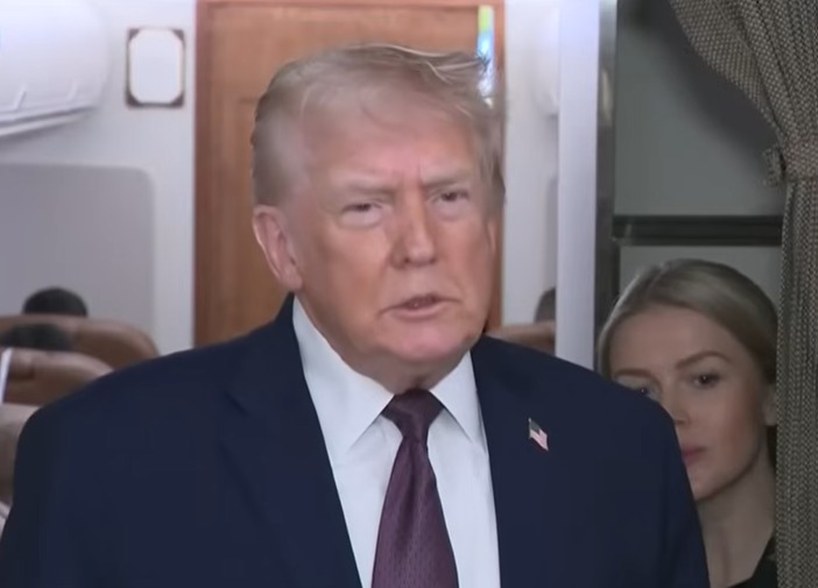
Even as the president struck a hard tone aboard Air Force One — warning that any Iranian strike on U.S. bases would trigger a response “like nothing seen before” — the familiar Trump pattern quickly re-emerged. For all the bluster, he also suggested Tehran was already feeling the pressure, saying Iranian officials had reached out and were “tired of being beat up.”
The core of Trump’s playbook is simple. He dials up the pressure and watches who gives in first. Right now, the real question is whether this gamble will yield a flashy peace agreement — or spark a regional crisis that is much harder to control.
Iran offers Trump an opportunity for a do-over, if he manages to pull it off, he could be a real contender for the 2026 Nobel Peace Prize. This time, he could win it on his own.