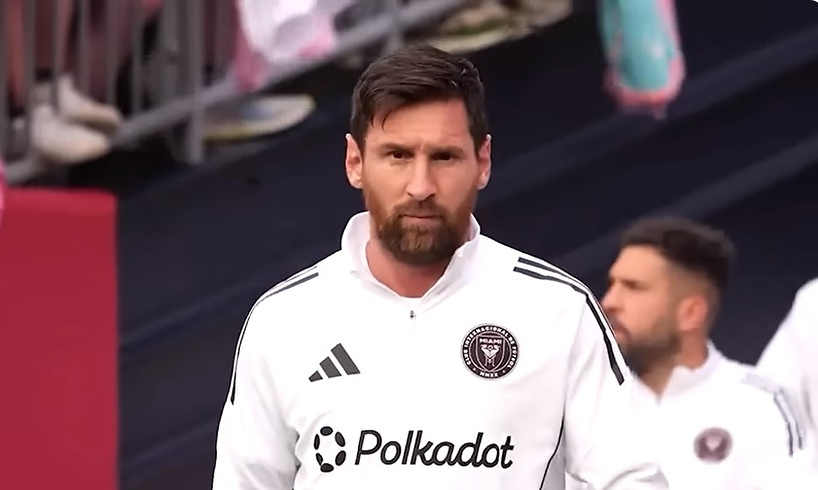
The World Cup has finished, and Lionel Messi’s hope for one last incredible achievement ended in disappointment.
But the ending was not the embarrassment some expected when the Argentine captain came to North America with an aging body, a worrying hamstring injury, and the heavy hopes of his country.
Messi did not win the World Cup again. Spain beat Argentina 1-0 in the final after extra time, with Ferran Torres scoring the winning goal in the 106th minute. Even so, Messi gave one of the best performances ever by a player his age at a major tournament.
Three and a half years after Argentina’s memorable win over France in the 2022 final in Qatar, Messi was just one win away from repeating that success.
https://www.youtube.com/watch?v=-yOp3L_hJQg&pp=ygUMbGlvbmVsIG1lc3Np
He scored eight goals, made four assists, led Argentina through tough knockout games, and played a key role in the dramatic semifinal comeback against England that took his country to another World Cup final.
In the end, he did not win the trophy. But his greatness remained.
The Perfect Ending Messi Refused to Accept
Winning the World Cup in Qatar seemed like the ideal place for Messi to bring down the curtain on his international career.
Argentina had defeated France in one of the most spectacular finals ever played. Kylian Mbappé scored a stunning hat trick, repeatedly dragging France back from the brink, but Messi scored twice and converted his penalty in the shootout as Argentina survived.
Thinking back on that historic night, Messi confessed: “Obviously, I wanted to finish my career with this. I can’t ask for any more.”
It turned out not to be true, but soccer fans did not mind. Messi could ask for more.
Instead of retiring with his legacy secure, the Barcelona legend kept playing for Argentina. He gave up a perfect ending for the chance at something even bigger.
That decision brought him to the 2026 World Cup, where he made a record sixth appearance in the tournament and attempted to lead Argentina to consecutive championships.
In the end, he was just one win short. But by reaching another final and scoring eight goals with four assists, Messi showed that he kept playing not just because of nostalgia or trouble letting go.
He came back because he could still make a difference in games.
The Injury Scare That Nearly Destroyed the Dream Before It Began
Messi’s tournament looked endangered before Argentina had even played its opening match. During Inter Miami’s 6-4 win over the Philadelphia Union, he signaled to the bench and asked to be substituted.
At first, it looked like he was just tired, but later it was called muscle fatigue in his left hamstring. Inter Miami warned: “His recovery time will depend entirely on his clinical and functional progress.”
The news caused a big reaction in Argentina. Messi was almost 39 years old. He had played over twenty years of top-level football, and the bigger World Cup meant Argentina had to play more matches than before.
The injury seemed to confirm the biggest worry about his last World Cup: Messi’s mind could still control games, but his body might not keep up.
Instead, he recovered and gave one of the tournament’s standout performances. The player whose fitness worried everyone before the first match went on to score eight goals, set up four more, and help Argentina reach the final.
The hamstring injury did not define his World Cup. His ability to keep going did.
Messi Dragged Argentina Through the Fire
Argentina’s path through the tournament was not easy. The defending champions often faced tough situations in the knockout rounds. They had to deal with emotional ups and downs, defensive mistakes, and opponents determined to spoil Messi’s last World Cup.
Against Egypt, Argentina recovered from a two-goal deficit with only 11 minutes remaining to win 3-2. Against England in the semifinal, Argentina trailed before producing another dramatic comeback, with Messi assisting both late goals in a 2-1 victory.
Those performances showed why coach Lionel Scaloni never considered replacing him. Addressing Argentina’s eventual transition away from its captain, Scaloni once declared: “There can’t be. There won’t be. There won’t be an heir to Messi, for sure.”
The 2026 World Cup showed exactly what Scaloni meant. Argentina was hardly short of talent. Lautaro Martínez carried a constant goal threat, while Enzo Fernández and Alexis Mac Allister drove the midfield. Emiliano Martínez once again provided authority and security in goal.
But when Argentina needed calm, creativity, or a moment to change the game, the team still turned to Messi. Relying on him took Argentina all the way to the final.
It also showed the limits of a team built around a 39-year-old star.
Spain Finally Silenced the Aging King
Spain succeeded where Argentina’s previous opponents had failed. Instead of letting Messi control the game or create another late comeback, Spain’s defense limited his space, broke up Argentina’s passing, and made Scaloni’s team struggle more and more.
Argentina did not have a single shot during regular time. Messi, who had been so important all tournament, was mostly isolated as Spain kept the ball and waited for Argentina to make a mistake.
The situation became even more difficult when Enzo Fernández was sent off in stoppage time, reducing Argentina to 10 men before extra time began.
Spain eventually delivered the fatal blow through substitute Ferran Torres, who scored in the 106th minute. For the first time in Argentina’s dramatic knockout run, Messi could not save the team.
No devastating pass. No late equalizer. No penalty-shootout rescue.
The final whistle made Spain world champion and Messi had to walk past the trophy he had lifted in Qatar four years before.
The American Compromise Was Not the Problem
Before the tournament, critics questioned whether Messi could still compete at the highest international level after spending the final phase of his club career in Major League Soccer.
He left European football in 2023 after two mixed seasons with Paris Saint-Germain. While he kept scoring and winning with Inter Miami, the weekly level of MLS was not as high as the Champions League or Europe’s top leagues.
The concern was legitimate. Messi had not won a Champions League knockout match since 2020, and the longer World Cup seemed especially tough for an older player dealing with muscle issues.
Yet the tournament destroyed the argument that playing in the United States had made him irrelevant.
Messi’s eight goals and four assists demonstrated that his vision, timing, and ability to punish mistakes remained elite.
He was no longer the explosive winger who once terrorized defenders at Barcelona. He could not dominate every minute or escape every physical challenge.
But he changed his style, saving energy, reading the game, and attacking when it mattered most. Spain stopped him in the final.
Most of the tournament could not.
The Crown Is Gone, but the Legacy Is Stronger
Messi arrived in North America with little left to prove. He left without the trophy, but his reputation grew.
Even at 39, Messi remained Argentina’s driving force. He marked his sixth World Cup with eight goals and four assists, helping the defending champions fight their way back to the final.
He finished the tournament with 21 career World Cup goals. Kylian Mbappé moved ahead of him by scoring twice in France’s third-place match against England, finishing the tournament with 10 goals and raising his career World Cup total to a record 22.
The ending was clearly harsh. Argentina came within one extra-time goal of becoming the first nation since Brazil in 1962 to win consecutive World Cups. Messi came within one victory of creating an ending even more extraordinary than Qatar.
Instead, Spain won the title, and Argentina was left with silver medals, tired players, and the hard truth that its best era might be ending.
Still, Messi’s loss does not take away from what he achieved. It makes his achievements even stronger. He gave up a perfect ending, came back at 39, overcame doubts about his fitness, and led Argentina to the biggest game in football.
The aging star finally lost his title. But he did not lose his greatness.
https://www.youtube.com/watch?v=v28zvPhXxBs&t=6s&pp=ygUMbGlvbmVsIG1lc3Np