The battle surrounding DiJonai Carrington and Sophie Cunningham has officially escaped the basketball court.
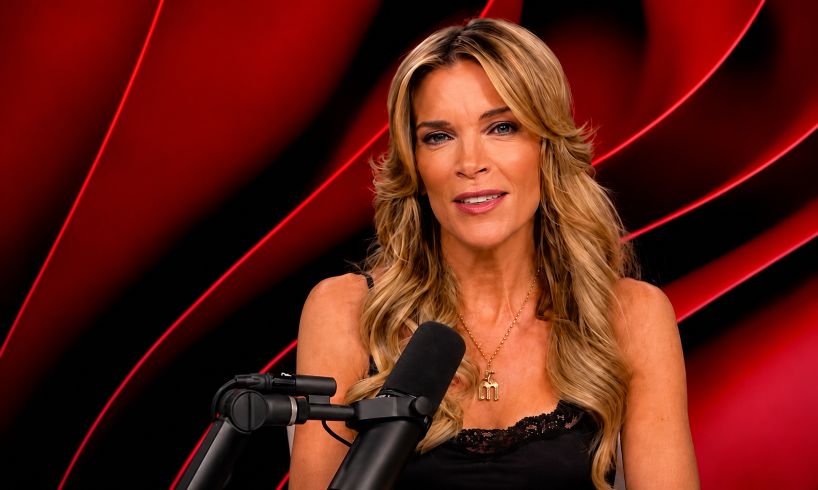
After several days of debate over Carrington’s “WHITE PRIVILEGE” social media post, Megyn Kelly joined the discussion by raising a provocative question about race, hair, and what she sees as a cultural double standard.
On the August 12 episode of The Megyn Kelly Show, Kelly talked about Carrington’s long, straight blonde hairstyle and used the idea of cultural appropriation to challenge the Chicago Sky player.
Carrington’s hair, Kelly argued, was “whiter than mine, straighter than mine,” before calling it “obviously white girl hair.”
Kelly took her argument further. “She’s allowed to culturally appropriate from me,” she said, adding that a white woman who wears traditionally Black hairstyles might be accused of racism or cultural appropriation. Kelly saw that contradiction as her main point.
“No, you can’t do it, but this is fine,” she said, before dismissing what she sees as a one-sided use of cultural appropriation as “bulls–.”
Megyn Kelly Turns DiJonai Carrington’s Race Argument Back on Her
Kelly’s comments were not really about claiming that blonde hair belongs to white culture. Instead, she was criticizing what she sees as inconsistent rules about race.
As a former Fox News and NBC anchor, Kelly often challenges progressive language as part of her independent media brand. The Carrington controversy gave her a high-profile topic involving race, women’s sports, and a WNBA feud that was already drawing national attention.
Kelly’s supporters say the hair argument shows why they keep watching her. She is willing to ask questions that many mainstream commentators avoid, such as: If it is offensive to borrow another group’s appearance, why do the rules seem to change depending on who is doing it?
Critics, however, have a quick answer to that question. Most people define cultural appropriation as more than just wearing something from another group. It generally means borrowing from a marginalized culture in a way that critics believe ignores its history, significance or struggles.
This history is especially important when talking about Black hair. Braids, locs, twists, and other hairstyles linked to people of African descent have often led to discrimination in schools and workplaces. That is one reason laws like the CROWN Act were created.
From this point of view, a Black woman wearing blonde extensions or straight hair is not usually seen as the same as a white person being criticized for wearing a culturally important Black hairstyle.
However, Kelly’s argument is less about the academic definition and more about what she sees as the way society now enforces cultural boundaries.
This difference is why the debate is unlikely to resolve anything. Instead, it has added another layer to a controversy that keeps growing.
DiJonai Carrington Still Facing Backlash Over ‘White Privilege’ Remark
Carrington’s problems began after the Chicago Sky’s August 8 game against the Indiana Fever.
During a fast break, Carrington made hard contact with Cunningham’s head and face as the Fever guard attempted a layup. Officials reviewed the play, upgraded it to a Flagrant 2 and automatically ejected Carrington.
Shortly afterward, Carrington posted a blunt message on Threads: “WHITE PRIVILEGE @indianafever.”
The timing caused many observers to conclude that Carrington was accusing officials of racial bias for ejecting a Black player after a foul against Cunningham, who is white.
Former NFL linebacker and sports commentator Emmanuel Acho strongly rejected that interpretation.
“This was not a race-based decision,” Acho said, arguing that describing the ruling as white privilege would undermine the meaning of the term.
He noted that Carrington hit Cunningham in the head, drew blood and failed to have meaningful contact with the ball.
“There was no white privilege involved in that specific call,” Acho concluded. Carrington fired back and insisted everyone was arguing against a claim she never actually made.
“I’ve never once claimed that the assessment of the foul was white privilege,” Carrington wrote, calling that Acho’s assumption.
She added that she had studied the subject academically and would not casually use “white privilege” as a rhetorical weapon without evidence.
Carrington later suggested that her concern involved a wider question of consistency, including why Cunningham was not assessed a technical foul after confronting and shoving her following the play.
“I would just love steadiness across the board,” Carrington said, arguing that enforcement should be consistent regardless of “the name on your jersey or your skin color.”
Even after Carrington explained her point, the backlash continued. Carrington’s challenge is clear. Posting “WHITE PRIVILEGE” and tagging the Fever right after her emotional ejection made it almost certain that people would link the two events.
Fair or not, the controversy was spreading faster than Carrington could explain her side.
Sophie Cunningham Rejects Race Explanation as Feud Gets Personal
Cunningham has rejected the suggestion that race ought to explain the incident.
After the game, she said there was “no reason to even play that card” and suggested Carrington was looking for attention. Cunningham also pointed to her own history of receiving punishment for highly physical plays as evidence that WNBA officials are capable of ejecting white players as well.
Carrington, for her part, maintained that she did not intentionally try to hurt Cunningham. “It was unfortunate that I made contact with her in the way that I did, but it was never intentional,” Carrington explained.
She also made clear that she has no intention of suddenly becoming less aggressive. “It might happen again. That’s just how I play,” Carrington said. “I’m gonna always go all out.”
Those words are not likely to calm the rivalry. Because Cunningham is now a major political figure in the WNBA, almost anything she does has meaning beyond basketball.
Cultural Appreciation vs Cultural Appropriation Becomes the New Fight
Kelly’s “white girl hair” comment works as a provocation because it pushes the debate into uncomfortable areas.
Cultures have always borrowed from one another. Clothing, music, language, hairstyles, food and fashion constantly cross racial and national lines.
The argument over cultural appreciation versus cultural appropriation centers on context.
Appreciation usually means engaging with another culture in a respectful way. What bothers critics is the double standard: one group may be praised for adopting a style or tradition while the people who originated it have been mocked or penalized for doing the same thing.
This is why Kelly’s comparison does not fully fit. In America, blonde or straight hair has not faced the same racial restrictions as Black protective hairstyles like braids, locs, and twists.
However, Kelly’s larger argument appeals to people who think today’s cultural appropriation rules are inconsistent, too strict, or unfairly applied.
Her critics say she is ignoring important historical context. Her supporters believe this criticism actually proves Kelly’s point: different racial groups are held to different cultural standards.
It is unlikely that these two sides will ever agree.
Sophie Cunningham and DiJonai Carrington Turn WNBA Into Culture-War Ground Zero
The bigger story is no longer just about a single foul. Now, it is about what Sophie Cunningham and DiJonai Carrington represent to two very different groups of people.
Cunningham has become increasingly popular among conservatives after saying she wants to “protect young girls” in sports and locker rooms from competing against biological males.
Vice President JD Vance publicly praised Cunningham for continuing to speak despite the backlash. “When you’re courageous in this country, some of the worst people in the world will try to attack you,” Vance said.
He encouraged Cunningham to “keep speaking your mind,” arguing that people willing to publicly defend controversial beliefs inspire others to do the same.
Cunningham says she does not hate transgender people and describes herself as politically moderate. Still, her willingness to question transgender participation rules has made her more than just a basketball player.
Conservative politicians have supported her, while critics say her comments hurt transgender athletes. Carrington stands on nearly the opposite side of the WNBA’s growing cultural debate.
By bringing up race and white privilege, Carrington is at the center of a debate about whether Black WNBA players are treated differently when it comes to discipline and public support.
Even the Fever’s own coach, Stephanie White, has become engulfed by the fight. White, who previously coached Carrington, said she did not believe Carrington intentionally targeted Cunningham’s neck. That assessment brought angry criticism and even boos from some Fever fans.
White eventually fired back. “The hate, the fear-mongering, the divisiveness, the stuff that’s trying to hijack our league will not win,” she said.
“We are united. We are connected. We will not be divided.” After that came the line that guaranteed another round of headlines: “Everybody else can go to hell.”
White may want to keep politics out of her locker room, but that is getting harder to do. Now, the WNBA is being talked about by the White House, conservative commentators, transgender rights advocates, sports figures, and political activists who rarely focused on women’s basketball before.
Cunningham herself has complained about that transformation, saying recently that she wants attention returned to basketball.
But the league may have already reached a point where it cannot go back. Carrington’s “WHITE PRIVILEGE” post turned a hard foul into a debate about race. Cunningham’s political views made the incident a national story. Kelly shifted the focus to cultural appropriation, and politicians pushed the controversy even further beyond basketball.
Now, almost every disagreement involving Cunningham or Carrington in the WNBA risks turning into a debate about issues much bigger than basketball.
As Kelly’s “white girl hair” comment shows, the next culture-war controversy might not even involve playing basketball at all.



Comments (0)