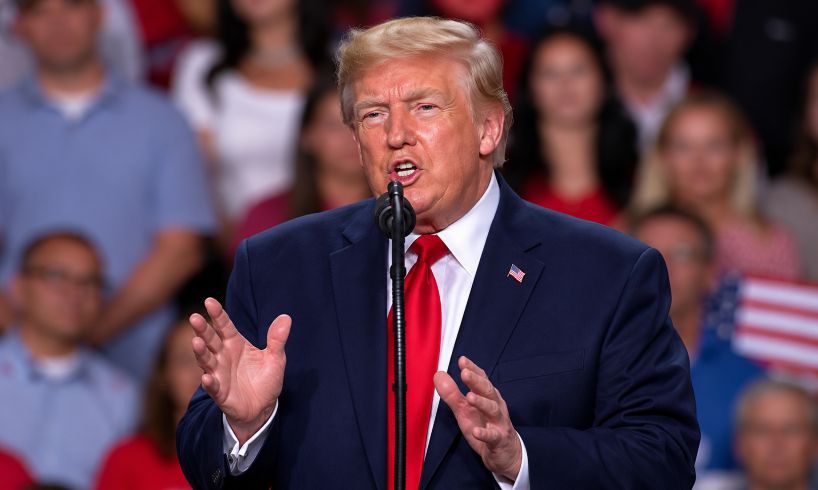
The obituaries for Trumpism began appearing almost as soon as Democrats secured control of Congress on Tuesday night.
Republicans had suffered a devastating defeat. Democrats captured both the House and Senate, made extraordinary gains in traditionally Republican territory and turned President Donald Trump’s second-term midterms into a sweeping rejection of his administration’s performance.
For Trump’s critics, the conclusion seemed obvious: The political movement that had dominated American life for more than a decade was finally collapsing. But history suggests they may be announcing its death prematurely.
Trumpism is wounded. It is diminished. After November 3, 2026, it is standing on one leg. But it has not yet faced the test that separates a powerful presidency from a lasting political era. That test arrives in November 2028.
Understanding why necessitates examining one of the rarest accomplishments in American presidential history: winning eight years in the White House and then persuading the country to elect a successor from your own party.
Only one president since World War II has completed two elected terms and immediately handed the presidency to another elected president from his party. His name was Ronald Reagan.
What happened afterward helps explain why Tuesday’s Republican defeat, however severe, cannot be considered the final judgment on Trumpism.
Reagan Left Office in 1989. His Political Revolution Never Really Left.
Ronald Reagan’s greatest political achievement may not have been winning the presidency in 1980 or securing a landslide reelection in 1984.
It may have been what happened in 1988. Eight years after Reagan entered the White House, his vice president, George H. W. Bush, defeated Democrat Michael Dukakis with 426 electoral votes and 53.4% of the national popular vote.
Republicans secured a third consecutive presidential term.
Bush’s victory provided another four years of Republican control, protecting much of Reagan’s governing agenda and giving his political philosophy additional time to take root.
The lasting impact of Reagan’s presidency becomes clearer when looking at what happened to federal tax policy.
In 1981, when he arrived at the White House, the highest federal income tax rate was 70%. Seven years later, after two major rounds of tax cuts and reform, that figure had dropped to 28%.
Subsequent presidents increased and decreased rates, but the pre-Reagan 70% top rate never returned.
More than 37 years after Reagan left office, major tax cuts remain central to Republican economic policy.
George W. Bush pursued them. Donald Trump pursued them. Congressional Republicans have continued championing them long after Reagan’s presidency passed into history.
The impact extended past his own party.
In 1996, Democratic President Bill Clinton declared that the era of big government was over.
Clinton was hardly a Reagan conservative. He raised taxes on high earners, defended important federal programs and disagreed with Republicans on major policy questions.
Nevertheless, his language reflected a political environment that Reagan had helped transform.
That is the ultimate expression of an enduring political philosophy.
A president’s ideas become truly consequential when they influence not only what his political allies believe, but also the choices his opponents must confront.
Reaganism survived Reagan because it became larger than the man who created it.
Bush’s 1988 victory did not accomplish that transformation on its own. But it provided political continuity that helped Reagan’s ideas become embedded in the country’s institutions, economic policies and partisan identity.
That is the standard against which Trumpism will eventually be measured.
The Rare Achievement Obama and Clinton Could Not Deliver
Winning the presidency is difficult. Winning reelection requires sustaining citizen trust. But handing power to a successor from your own party after eight years demands something different.
It requires building a coalition that can survive the departure of its central figure. Dwight Eisenhower could not accomplish it. Richard Nixon lost in 1960.
Bill Clinton could not accomplish it. Al Gore lost in 2000. George W. Bush could not accomplish it. John McCain lost in 2008.
Barack Obama could not accomplish it. Hillary Clinton lost in 2016. Clinton and Obama came remarkably close.
Gore won the national popular vote and lost the presidency after a Florida contest decided by just 537 votes.
Hillary Clinton also won the popular vote but failed to secure the necessary Electoral College majority.
Both departing presidents had the chance to extend their parties’ control of the White House.
Neither succeeded. And those defeats carried consequences far beyond election night.
A president from the opposing party can reverse executive actions, rewrite regulations, redirect federal agencies, and challenge legislation that previous administrations considered foundational.
Obama’s Affordable Care Act illustrates the distinction.
The legislation has remained in place for more than 16 years after its passage. Its central protections for Americans with preexisting medical conditions survived Republican efforts to repeal it.
Campaigning against Obamacare was one thing. Taking it away from millions of Americans who had come to depend on it was another. Republicans learned that distinction when they finally had the power to act.
But survival did not mean preservation lacking significant changes.
The law eliminated the individual-mandate penalty. Federal policies governing insurance marketplaces changed. Subsidy decisions, enrollment requirements, and subsequent legislation altered important aspects of its operation.
Had Hillary Clinton won in 2016, the ACA would have faced a very different political environment.
She had proposed expanding financial assistance and introducing a public insurance option. Congressional approval was far from assured, but her administration would have sought to strengthen the law rather than repeal it.
Obama established a historic healthcare reform whose core structure proved resilient enough to withstand a hostile successor.
Reagan achieved something different: He successfully transferred the White House to someone committed to extending much of his agenda.
The ACA demonstrates that major reforms can become entrenched even without successful succession. Reaganism demonstrates how succession can provide additional political power to consolidate a governing philosophy.
The difference between making history and establishing a political era is often what happens after the president leaves office.
FDR and Reagan: Two Different Ways to Survive a Sixth-Year Defeat
History provides another reason to question those already declaring Trumpism finished.
In 1938, Franklin D. Roosevelt’s Democrats suffered a staggering congressional defeat. They lost 72 House seats and seven Senate seats.
The New Deal coalition appeared vulnerable. Roosevelt’s opponents celebrated the results as evidence that the country’s enthusiasm for his sweeping economic reforms had declined.
Two years later, Roosevelt won an unprecedented third presidential term, defeating Wendell Willkie by 449 electoral votes to 82.
Democrats would ultimately control the White House for 20 consecutive years, from Roosevelt’s inauguration in 1933 until Dwight Eisenhower succeeded Harry Truman in 1953.
Roosevelt had not simply survived a political backlash. His New Deal established institutions and expectations that would influence American governance for generations.
Nearly half a century later, Reagan faced his own sixth-year reckoning. In 1986, Republicans lost eight Senate seats and control of the chamber. They also lost five House seats.
Reagan finished his presidency confronting a Democratic Congress. Yet two years later, George H. W. Bush won the White House decisively.
Here, however, lies an important distinction between Roosevelt and Reagan.
Roosevelt survived his sixth-year defeat by persuading Americans to elect him again. Reagan survived his by persuading Americans to elect someone else.
FDR demonstrated extraordinary personal electoral staying power. Reagan demonstrated that his political coalition could retain the presidency absent him.
Roosevelt eventually achieved succession as well, when Harry Truman won the presidency in 1948 after succeeding him in 1945.
Both presidents helped establish governing philosophies that endured beyond their time in office, but their electoral achievements followed different paths.
Other presidents experienced very different outcomes.
In 1958, Eisenhower’s Republicans lost 48 House seats and 13 Senate seats. Two years later, Democrat John F. Kennedy narrowly defeated Richard Nixon.
In 2006, George W. Bush’s Republicans lost 30 House seats and six Senate seats, surrendering both chambers to Democrats.
The next presidential election produced an even more consequential reversal.
That is the historical comparison Trump’s supporters and opponents should examine carefully.
George W. Bush’s 2006 Defeat Was Only the Beginning
The parallels between the Republican defeats of 2006 and 2026 are difficult to overlook.
George W. Bush entered the 2006 midterms facing broad dissatisfaction with the Iraq War and his administration’s performance.
Republicans lost both the House and Senate.
Twenty years later, Trump has experienced a comparable loss of congressional control amid voter frustration over the cost of living, the Iran war, and wider concerns about his administration.
But 2006 did not settle the fate of the Bush presidency’s political legacy. That happened two years later.
In November 2008, Barack Obama defeated John McCain by 365 electoral votes to 173, while Democrats expanded their congressional majorities.
Republicans lost the presidency and entered a period of vigorous debate over the party’s direction.
The financial crisis was a decisive intervening development. It would be historically misleading to suggest that the 2006 congressional results alone caused McCain’s defeat.
But the combination of the midterm setback and the subsequent presidential loss produced a much more consequential political reversal than either election could have achieved independently.
The first election stripped Republicans of congressional power.
The second transferred the presidency to a party determined to pursue a different governing agenda.
A midterm defeat can weaken a presidency. A subsequent presidential defeat can deprive an entire movement of the power to protect its achievements.
Yet even Bush’s 2008 defeat did not extinguish Republican conservatism. Many of its central principles survived.
Political ideas do not simply vanish because their supporters lose an election.
But decisive defeats can change who controls the institutions that turn those ideas into policy.
And that is precisely what Trumpism could confront in 2028.
Trump Has a Choice Reagan Understood
The next two years will test Trump’s ability to govern without Republican congressional majorities. Here, the contrast with Reagan is especially revealing.
Reagan was a committed conservative, but he was also a skilled negotiator. He understood that advancing an ideological agenda sometimes required accepting legislation that gave Democrats important concessions.
His administration negotiated major tax reform, immigration legislation and budget agreements with congressional opponents.
He did not abandon conservatism to reach those deals. He understood that compromise could preserve political influence when absolute control was unavailable.
Trump has developed a different governing style. Public confrontation, executive authority, threats of vetoes and direct pressure on political opponents have been prominent features of his approach.
Before the 2026 election, he suggested he would become “Mr. Veto” if Democrats regained control of Congress, although he also acknowledged that negotiations could eventually produce agreements. The opportunity exists.
Housing affordability, prescription drug costs, energy infrastructure, and certain immigration reforms provide possible areas for bipartisan negotiation.
The Dignity Act, for instance, offers a framework that combines border enforcement with legal protections for certain longtime undocumented immigrants.
Whether Trump would accept such an agreement is still unclear. But the larger question is not whether he can suddenly become a political moderate.
Reagan never abandoned his conservative philosophy to govern with Democrats. The question is whether Trump can distinguish defending his principles from refusing the compromises that might allow some of those principles to endure.
His eventual Republican successor will inherit the consequences.
A presidency consumed by confrontation would leave a different political inheritance from one that spent its final two years establishing agreements capable of surviving a change in administration.
Trumpism Must Pass Three Tests
To understand what 2028 will mean, it helps to separate three questions that are too often treated as interchangeable. The first is survival.
Can a political movement withstand major electoral setbacks and remain a force in American politics?
Trumpism has already displayed substantial resilience. Trump lost the presidency in 2020, remained the dominant figure in Republican politics, and returned to the White House in 2024.
The second test is succession. Can the movement persuade Americans to elect another president committed to carrying forward its central ideas?
This is the threshold Reaganism crossed in 1988. It is the test Trumpism has yet to face. The third is permanence.
Can a movement establish policies, institutions and governing assumptions that endure even when the opposition eventually returns to power?
Roosevelt’s New Deal and Reagan’s economic conservatism demonstrate different ways political movements can influence successive generations of American government.
Trumpism has already reshaped Republican positions on trade, immigration, foreign policy and the role of government.
But influence within one party is not necessarily the same as establishing a durable national consensus.
Some Trump-era policies may endure regardless of who wins in 2028. Others could be substantially revised or reversed.
Their longer-term survival will depend on laws, institutions, public opinion and subsequent administrations—not simply the reputation of one president.
Winning elections is one thing. Changing a country’s direction for generations is another. History is full of political movements that accomplished one without necessarily achieving the other.
The most enduring political eras leave an imprint extending beyond the individual who brought them to power.
In 2028, Trump Won’t Be Running. His Political Legacy Will Be Tested.
The November 2028 election will not offer voters another opportunity to choose Donald Trump.
The Twenty-second Amendment prevents him from serving another presidential term.
For the first time since his emergence as the central figure in Republican politics, his party will seek the White House through a successor without Trump himself as the presidential nominee.
That raises a question that Trump’s two victories and his extraordinary 2024 comeback cannot answer.
Can Trumpism win without Trump?
A Republican victory in 2028 would demonstrate the movement’s ability to transfer presidential power to another leader.
It would also provide an additional four years in which the next administration could preserve, modify or enlarge elements of Trump’s governing agenda.
One crushing election can be dismissed as a backlash. Two consecutive defeats, culminating in the loss of the White House and further Republican losses in Congress, would raise a much more serious question about the long-term viability of Trump’s political coalition.
It would also give Democrats a greater opportunity to change policies adopted during his presidency.
Neither outcome would completely settle the fate of Trumpism as an ideology. Reaganism, after all, remained influential long after Republicans lost the White House in 1992.
But presidential succession would reveal whether Trump’s movement could sustain a governing coalition without relying on its founder’s personal appeal.
That is a far more consequential question than whether Republicans lost Congress in 2026.
Tuesday Was a Defeat. History Has Not Yet Delivered Its Final Verdict.
Nobody should minimize what happened on November 3.
Republicans suffered a sweeping defeat. Democrats captured both chambers of Congress. Voters in traditionally Republican territory rejected candidates associated with Trump.
The president’s governing record received a substantial rebuke.
But declaring the Trump era finished on the strength of a midterm election confuses the loss of congressional power with the collapse of a political movement.
The experiences of Roosevelt, Reagan and George W. Bush reveal how differently political fortunes can develop after a midterm defeat. Roosevelt and Reagan saw their parties retain the presidency. Bush’s congressional setback, by contrast, was followed by a presidential election that transferred power to Democrats.
None of those precedents determines what happens next. Trump has already changed American politics. The Republican Party of 2026 is fundamentally different from the one Reagan led or George W. Bush inherited.
What remains unresolved is whether those changes will become the foundation of a lasting political era or remain primarily associated with the extraordinary career of one man.
Trumpism emerged from the 2026 midterms battered, diminished and standing on one leg.
Donald Trump has already proved that Trumpism can bring him back from political defeat. What he has not proved is that Trumpism can win without him.
That is the question awaiting America in 2028.

Comments (0)