Abdul El-Sayed’s win over Rep. Haley Stevens marks a big step forward for progressives in the Democratic Party. It could also be one of the best primary outcomes for President Donald Trump and Senate Republicans in a state that might decide who controls Congress.
El-Sayed managed to win despite being outspent and facing most of Michigan’s Democratic leaders, who supported Stevens, a four-term congresswoman backed by Gov. Gretchen Whitmer, retiring Sen. Gary Peters, and Senate Democratic leaders. His win showed the power of his grassroots campaign, but it also gave Republicans the kind of opponent they were ready to face.
In November, El-Sayed’s economic populism and progressive ideas will go up against Republican Mike Rogers, a former congressman who lost a Michigan Senate race by about 19,000 votes in 2024. Since Trump won the state in that election, Republicans believe Rogers already has much of the support he needs.
Donald Trump Is Already Campaigning for Mike Rogers
Trump got involved in the Senate race before Michigan Democrats even finished their primary.
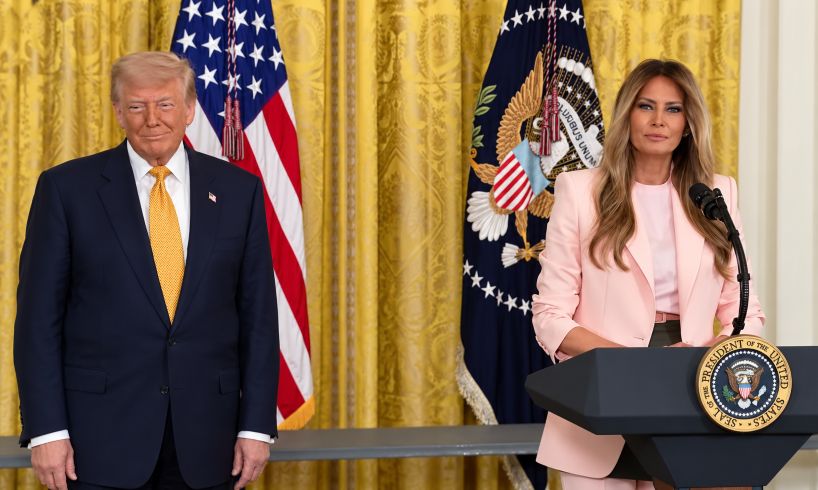
At a July campaign event at General Motors’ proving grounds in Milford, Trump brought Rogers on stage and called him “one of the best candidates we have anywhere.” He also described Rogers as “smart,” “tough,” and “fair,” showing early on that the White House sees Michigan as a top chance for Republicans to win a Senate seat.
Rogers replied by promising to work with Trump on manufacturing, factories, national security, and Republican voting laws. This event helped Rogers start bringing Republican voters together while Stevens and El-Sayed were still spending millions fighting each other.
This difference is important. Rogers had no real competition in the Republican primary, so he could save money and focus on the general election. El-Sayed now has to mend ties with Stevens’s supporters after a costly and bitter Democratic race that saw over $80 million spent.
Republicans now have the opponent they wanted. They can mobilize Trump voters, paint El-Sayed as the new face of the Democratic Party, and nationalize the race around his progressive agenda.
Haley Stevens Offered Democrats a Safer Swing-State Profile
Stevens based her campaign on the idea that she gave Democrats the safest and most traditional path to winning in November.
She represented suburban Detroit in Congress, helped with the Obama administration’s auto rescue, and won several elections in tough districts. Her campaign focused on manufacturing, unions, and her ability to connect with suburban voters who often decide close races in Michigan.
Jessica Taylor from the Cook Political Report said the primary was a choice between a “very clear centrist lane” and a “progressive outsider.” Stevens was the centrist and argued she was the best person to keep Rogers from winning over moderate and independent voters.
A late poll from the Glengariff Group seemed to back up her claim. It showed Stevens and Rogers nearly tied, with Stevens at 45.5% and Rogers at 44.7%. In another matchup, Rogers led El-Sayed 49% to 38.7%. Stevens pointed to these numbers to warn that Republicans thought El-Sayed would be easier to beat.
“Abdul is running for celebrity. Republicans are propping up his campaign,” Stevens said during the final Democratic debate. She pointed to a private campaign call in which Rogers said Republicans would be in “good shape” if El-Sayed became the nominee.
No single poll can say for sure which candidate would do better in November. Some polls showed El-Sayed close to Rogers, and the latest RealClearPolitics average had Rogers ahead by just 0.3 points. Still, Stevens gave Republicans fewer chances to make the race about issues like socialism, immigration, and the Democratic left.
Republicans Will Try to Make El-Sayed the Face of the Democratic Left
El-Sayed does not call himself a socialist. Instead, he describes himself as an economic populist who fights against corporate power, high healthcare costs, and political corruption.
Still, his policies are much more progressive than Stevens’. He supports Medicare for All, wants to abolish Immigration and Customs Enforcement, calls for ending unconditional military aid to Israel, and refuses corporate political donations. He also has backing from Sen. Bernie Sanders and Rep. Alexandria Ocasio-Cortez.
Republicans plan to use these positions to say El-Sayed stands for the national Democratic Party, not just Michigan voters. GOP ads will likely link him to democratic socialists, progressive lawmakers, and other left-wing candidates across the country.
The National Republican Senatorial Committee showed this strategy before the primary, calling El-Sayed the “most radical Democrat Senate nominee of the cycle.” The same memo also said he had “a credible path to victory,” warning party donors not to take him lightly.
Sen. John Barrasso, the second-ranking Senate Republican, was more direct about the matchup, saying an El-Sayed nomination would “make it even better for us there.”
Republicans want to shift the focus from Rogers’s record or Trump’s presidency to El-Sayed’s views. Rather than letting the midterm be just about which party runs Washington, the GOP will try to give undecided voters a clear choice between a Trump-aligned Republican government and a strong progressive alternative.
Michigan Could Decide Control of the U.S. Senate
Republicans now have a 53-47 majority in the Senate. This means Democrats need to gain four seats while also holding onto every seat they already have. Michigan, where Peters is retiring, is one of their key races to defend.
If Democrats lose Michigan, they would have to win another Republican seat, possibly in a tougher state. If Republicans win Michigan, they could afford to lose in places like Maine, North Carolina, Iowa, or Ohio and still keep their majority.
Axios summarized the stakes bluntly before the primary: “If Democrats lose Michigan on Nov. 3, they almost certainly aren’t winning the Senate.”
This is why national Democratic leaders supported Stevens and why Trump is personally backing Rogers. Michigan is not just another close race. It could be the seat that keeps Trump’s second-term plans safe from a Democratic Senate majority.
If Rogers wins, it would give Republicans more options. Instead of just defending their own vulnerable seats, they could make Democrats spend a lot to protect a seat they have held since 1979.
Would an El-Sayed Victory in November Signal a Democratic Wave?
Republicans will probably say that El-Sayed can only win if the national mood turns strongly against Trump and the GOP.
There is some truth to that. El-Sayed needs to keep traditional Democratic voters and get strong turnout from young people, progressives, Arab Americans, and people in Michigan’s biggest cities. He also has to avoid losing too many moderates in Oakland, Macomb, and suburban Wayne counties.
If El-Sayed beats Rogers by a wide margin, it would likely show that Democratic excitement has spread beyond just liberal areas and turned into a bigger anti-Republican movement. This could put GOP candidates at risk in other Senate races too.
El-Sayed has publicly disagreed with calling Michigan a purple state. In his election-night speech, he said voters care more about things like rent, groceries, and medical bills than about where they fall on the political spectrum.
“We are not a purple state,” El-Sayed declared. “We are a state in need of a movement to take our politics back.”
But saying a Democratic wave is absolutely needed goes too far. Michigan is still very divided, Rogers lost statewide just two years ago, and most polls see the race as a toss-up. El-Sayed could win a close race with strong campaigning, good turnout, and a focus on economic issues, even if Democrats do not win everywhere else.
Republicans Still Cannot Take El-Sayed Lightly
El-Sayed’s performance in the primary also shows why Republicans should not assume his nomination means an easy win for them.
He overcame tens of millions in outside spending, beat a candidate backed by almost every major Michigan Democrat, and built a volunteer team that can compete across the state. His campaign says its populist message can win back young, working-class, Arab American, and Muslim voters who have become less dependable for Democrats.
El-Sayed has already tried to make the general election about corporate influence. In his election-night speech, he called Rogers “a corporate sellout” and promised to bring Democrats together after the tough primary.
Rogers has his own weaknesses. He has been in national politics for decades, barely lost his last Senate race, and now has to defend his record in Congress and his close ties to Trump. If the national mood shifts against the president’s party during the midterms, it could make things harder for Republicans.
The safest takeaway is not that El-Sayed cannot win. It is that his nomination gives Republicans a clearer ideological contrast and possibly a better matchup than if Stevens had won.
The Michigan Primary Gives Trump an Opening, Not a Guarantee
For Trump, the political advantage is obvious. His chosen Senate candidate did not have a tough primary and now faces a Democrat that Republicans have been getting ready to paint as outside Michigan’s political mainstream.
If Stevens had won, Rogers would have had to focus on issues like manufacturing, experience, and suburban voters. With El-Sayed as the nominee, Republicans can make the race about national issues like Medicare for All, immigration, Israel, progressive activism, and the direction of the Democratic Party.
This makes Michigan a better chance for Republicans to pick up a seat and helps the GOP protect its Senate majority.
But this does not guarantee a Republican win. El-Sayed has already shown he can survive tough opposition, raise money from grassroots supporters, and reach voters who feel overlooked by traditional politicians. Michigan is still one of the most closely divided states in the country.
So, the primary has set up the race that Trump and Republicans seem to want, but Rogers will still have to win a contest that independent analysts say is too close to call.