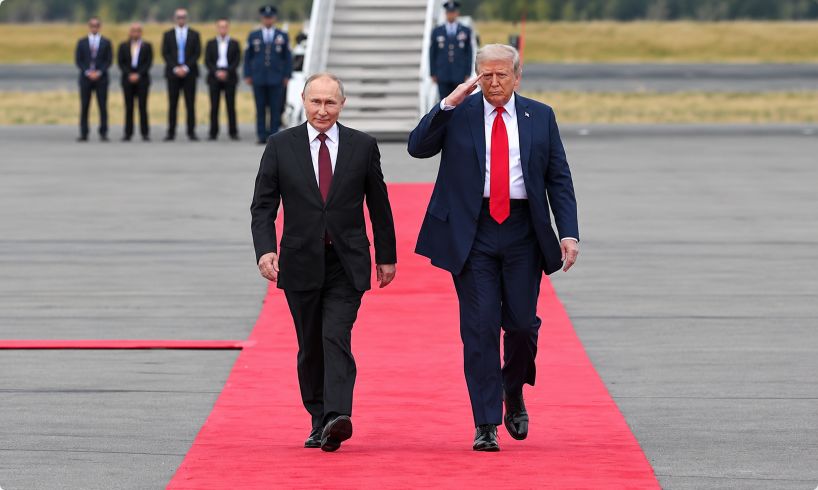
President Donald Trump is already looking beyond the end of Russia’s war against Ukraine, and his latest remarks have raised fresh questions about what he hopes the relationship between Washington and Moscow will look like once the fighting stops. While Ukraine is still struggling to defend its territory and secure meaningful guarantees against another Russian invasion, Trump has been talking about something that could reshape the relationship between the United States and both countries: doing business with Ukraine and Russia after the war.
Looking ahead to the end of the war, Trump said he could see the United States building business relationships with both Ukraine and Russia. “I think that after this war ends, we’ll do business with Ukraine and with Russia, I would think,” he said, making clear that he sees the possibility of renewed trade with Moscow as part of the postwar picture, alongside continued economic ties with Kyiv.
The comment was striking not because it was a detailed agreement with Russian President Vladimir Putin, but because it showed how quickly Trump wants to move from a devastating war to the possibility of renewed economic cooperation. For Kyiv, however, the question is what such a future would mean for Ukraine’s security, its reconstruction and the pressure Russia would face for launching the invasion in the first place.
Trump Sees Business Opportunities on Both Sides
Trump’s remarks reflect his preference for using economic relationships as part of his foreign policy. Rather than treating the end of the war as the conclusion of a long period of confrontation with Moscow, he appears to see it as an opportunity to reopen commercial channels with both countries.
For Ukraine, closer economic ties with the United States could help support reconstruction after years of destruction, particularly in areas such as energy, infrastructure and industry. American investment could also play an important role in helping the country rebuild its economy and strengthen its position in the years ahead.
But the prospect of renewed business with Russia raises a different set of questions. Moscow’s invasion has left Ukrainian cities damaged, communities displaced and critical infrastructure repeatedly targeted. Any return to normal commercial relations would therefore have to be considered alongside the question of accountability and the measures needed to prevent another attack.
Trump did not explain what kind of business arrangements he had in mind, which industries might be involved or whether any economic cooperation with Russia would depend on specific conditions being met. His comments were an expression of his postwar vision, not an announcement of a completed agreement.
His Tariff Threats Have Already Raised Questions
The president’s comments also followed his suggestion that Washington could use steep tariffs to pressure both countries into ending the conflict. At a rally in Florida on October 23, Trump spoke about imposing tariffs of up to 200 percent if the fighting continued, arguing that he had previously used similar threats to help bring other conflicts to an end.
However, he also acknowledged that such a measure might have little effect in this case because the United States does not conduct enough direct trade with either country for the tariffs to exert the kind of pressure he was describing.
That admission highlighted a weakness in Trump’s approach. Tariffs can be a useful way to put pressure on another country, but they only work when there is enough trade between the two sides for the threat to carry real weight. In this case, Trump acknowledged that the United States does relatively little direct business with Russia and Ukraine, raising questions about how much influence such a threat would actually have.
Zelenskyy Wants Washington to Use Its Leverage on Moscow
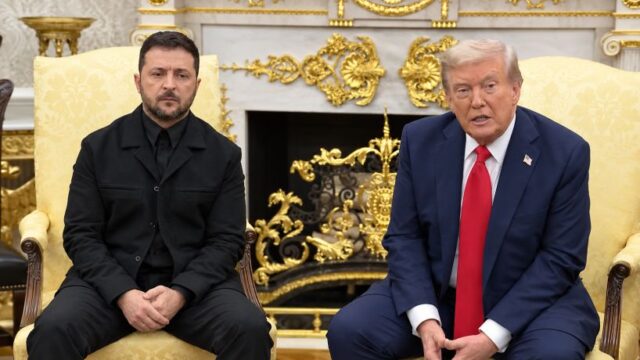
Trump’s vision of future business also comes at a time when Ukrainian President Volodymyr Zelenskyy has been urging Washington to take a tougher approach toward Moscow. Zelenskyy has argued that the United States has the authority to impose additional sanctions and use existing economic measures to increase pressure on Putin.
Zelenskyy has also urged Trump to make greater use of the economic pressure available to him, arguing that Washington has more tools to push Moscow toward serious negotiations. He pointed to sanctions already approved by Congress and suggested that the president could put them into action rather than leave them on hold. As Zelenskyy put it, “Sanctions are sitting on his desk.”
The difference between the two approaches is becoming increasingly important. Zelenskyy wants Russia to face sufficient pressure to make a serious settlement possible, while Trump is already discussing the commercial opportunities that could follow an end to the fighting.
The Biggest Question Is What Comes After the Fighting
Trump’s comments do not establish that a postwar business agreement with Putin is in place, nor do they explain what conditions Russia would have to meet before economic relations could return to normal. Those questions remain unresolved, particularly while Ukraine and Russia continue to disagree over territory, security arrangements and the terms of any lasting settlement.
With US-mediated negotiations expected to resume in Abu Dhabi on November 10 and 11, discussions are also expected to address Ukraine’s postwar security, de-escalation and humanitarian issues. Kyiv continues to insist that any agreement must include credible guarantees against another Russian attack, while Moscow has its own demands concerning Ukraine’s future military and security arrangements.
For Trump, the prospect of doing business with both countries may be part of his wider vision for what comes after the war. But for Ukraine, peace cannot be measured simply by the return of trade or the reopening of commercial opportunities. The country will also need assurances that the end of the fighting does not give Russia the chance to rebuild its strength and launch another invasion.
That is the difficult question behind Trump’s latest remarks: if Washington is already looking toward business with Moscow, what guarantees will ensure that Ukraine’s security comes before the promise of renewed economic ties?
Comments (0)