Nearly 30 years after Princess Diana’s death stunned the world, her younger brother is preparing to tell her story in a way he never has before.
Charles Spencer, the 9th Earl Spencer, will publish “Swan Song: Diana, My Sister” on September 22, offering what publisher Penguin Random House describes as the first extended account of Diana’s life told from her brother’s perspective.
For Spencer, however, the book seems to be about much more than revisiting royal history. It is an attempt to reclaim his sister’s story.
As another major anniversary of Diana’s death approaches, Spencer says the steady stream of requests for interviews has forced him to face something that has apparently bothered him for years: versions of Diana’s life that he believes have slowly fixed into accepted history despite being wrong.
Spencer said his goal is to “tell the truth about Diana from her brother’s perspective.”
It is a striking declaration about one of the most examined women of the modern era—and one that immediately raises the stakes surrounding the book.
Charles Spencer Says It Is Time to Challenge the ‘Untruths’
Princess Diana has been the subject of countless biographies, documentaries, television dramas, newspaper investigations and royal memoirs since her death in Paris on August 31, 1997.
Yet Spencer believes something important has been lost amid nearly three decades of interpretation.
Announcing the book, he explained that the approaching 30th anniversary of Diana’s death had again brought requests for him to speak publicly about his sister.
Instead of continuing to respond piecemeal, Spencer decided to put his own memories on the record.
He said he had grown uncomfortable reading accounts by others, some of which he believes contain “untruths that have become accepted over time.”
That sentence may become the most important part of the entire announcement. Spencer is not presenting “Swan Song” simply as another affectionate family memoir. He is positioning himself as someone attempting to correct what he considers a distorted historical record.
And few people can claim his vantage point.
Before Diana became the Princess of Wales, before the royal wedding, before the photographers and global celebrity, she was simply his older sister.
Before Princess Diana, There Was Simply ‘Duch’
The publisher’s description delivers a portrait that begins long before Buckingham Palace entered Diana’s life.
Diana and Charles were the youngest Spencer children and grew up particularly close. According to the book description, the siblings privately called one another “Duch” and “Carlos.”
They spent their childhood together on the family estate and endured a turbulent upbringing that included their parents’ painful divorce and difficult experiences at boarding school.
The book portrays the two siblings as close confidantes who experienced those upheavals together.
That viewpoint could distinguish “Swan Song” from many previous accounts of Diana.
The public largely encountered her after she became Lady Diana Spencer, then watched her transformation into one of the most photographed women alive.
Charles Spencer knew the person who existed before any of that. He knew the sister rather than the symbol. And it is that private Diana—the woman behind the mythology—that he says he wants a new generation to understand.
https://www.youtube.com/watch?v=l8UviJ9tULs&pp=ygUXd2lsbGlhbSBhbmQgaGFycnkgZGlhbmE%3D
Everything Changed When Diana Married Prince Charles
The trajectory of Diana’s life changed dramatically when she married then-Prince Charles in 1981. At 20 years old, she became the Princess of Wales and was propelled almost overnight from relatively obscure aristocrat to international celebrity.
The marriage produced Prince William in 1982 and Prince Harry in 1984. But the fairy-tale image presented to the world eventually disintegrated.
Diana and Charles separated in 1992 and divorced in 1996, one year before her death.
The official description of Spencer’s book makes clear that he intends to follow Diana through this transformation: her royal marriage, her position as a mother, her humanitarian work and the collapse of her relationship with the man who is now King Charles III.
That makes “Swan Song” potentially significant not simply as a family remembrance but as another major contribution to the historical record surrounding one of the monarchy’s most turbulent periods.
What remains unknown is precisely which accepted narratives Spencer intends to challenge. The publisher has not revealed the book’s major revelations. That mystery may only intensify interest.
Publisher Promises Revelations That Will Draw Attention
Penguin Random House is not hiding its expectations. Scott Moyers, president and publisher of Penguin Press, said the book contains revelations that will attract wide notice while describing Spencer’s account as unusually intimate and candid.
In Britain, publisher Daniel Bunyard similarly said the book contains revelations expected to generate considerable attention.
Those comments will inevitably fuel speculation about what Spencer intends to reveal. Diana’s marriage. Her relationship with the royal institution. Her battles with the press. Her final months. And perhaps most emotionally, the days surrounding her death.
The book’s official description says Spencer will recount not only his life with Diana but also the tragic week of her death.
For anyone who remembers the extraordinary public reaction of 1997, that is expected to be one of the book’s most closely watched sections.
A Speech the Royal Family Could Never Forget
There is another reason Charles Spencer’s voice carries unusual weight whenever Diana is discussed. On September 6, 1997, he stood inside Westminster Abbey at his sister’s funeral and delivered a eulogy heard around the world.
It was not purely a tribute. It became one of the defining moments of the entire Diana saga.
Spencer talked passionately about his sister’s humanity, her vulnerability and the unrelenting media attention that followed her.
He also promised that Diana’s “blood family” would help protect William and Harry as they grew up.
The speech was widely interpreted as containing pointed criticism of both the press and the world surrounding the monarchy.
Nearly three decades later, Spencer explicitly connects Swan Song to that moment. He says his purpose now resembles his purpose then: to speak for Diana and present the woman he knew rather than allow other people to describe her.
That gives the book an emotional continuity few other Diana projects possess. The brother who stood ahead of the world days after her death is returning to the same argument almost 30 years later.
Only this time, he has hundreds of pages instead of several minutes.
William and Harry Remain Central to Diana’s Legacy
Any serious review of Princess Diana inevitably leads back to her sons. Prince William was 15 when his mother died. Prince Harry was 12.
The image of the two boys walking behind Diana’s coffin alongside their father, grandfather and uncle remains one of the most haunting photographs in modern royal history.
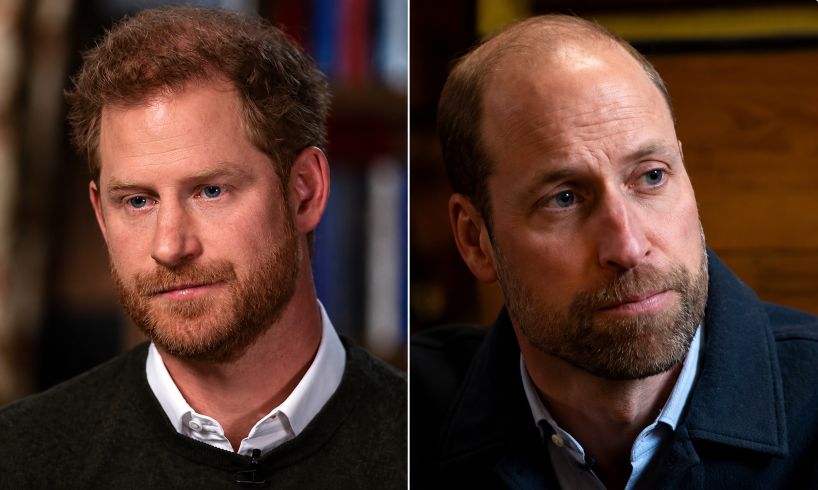
Today, William and Harry are grown men whose lives have taken dramatically different paths. William is Prince of Wales and first in line to the throne.
Harry left his role as a working royal and built a separate life with Meghan Markle. Their complicated relationship has generated years of headlines.
Charles Spencer’s new book should not automatically be interpreted as commentary on their present differences; nothing announced by the publisher proves that.
But the contrast is impossible to ignore when considering Diana’s legacy. She was fiercely devoted to both sons, and Spencer himself publicly promised at her funeral that her family would play a role in helping them develop according to their own talents and wishes.
Almost three decades later, the lives of William and Harry remain two of the most consequential pieces of the story Diana left behind.
Diana Still Commands the World’s Attention
Perhaps the most remarkable thing about Swan Song is that a book about Diana can still generate this level of interest nearly 30 years after her death.
She died at only 36. Yet the fascination surrounding her has crossed generations. People who watched her wedding remember her in one way.
Those who followed the collapse of her marriage remember another. Younger audiences have encountered Diana through documentaries, streaming productions, social media clips and dramatizations of royal history.
Spencer appears acutely aware of that divide. He has said he hopes the book will appeal not only to people who remember his sister but also to younger readers who never experienced Diana’s extraordinary cultural presence while she was alive.
His ambition is clear: he wants them to understand who she actually was. Not simply the princess. Not simply the tragic figure frozen forever in photographs.
But the complicated woman he remembers as loving, charismatic, dynamic and sometimes filled with insecurity.
Charles Spencer Gets the Last Word—For Now
“Swan Song: Diana, My Sister” will be released September 22 in the United States and Britain, with publication planned around the world and translations into 12 languages.
The timing puts the book less than a year before August 31, 2027, which will mark three decades since Diana’s death.
And that anniversary will almost certainly bring another enormous wave of documentaries, retrospectives, interviews and arguments about what Diana represented.
Charles Spencer has decided he does not want other people to have the field to themselves. For nearly three decades, the world has discussed his sister.
Now Diana’s brother wants to put his version on the record. And by promising to challenge the “untruths” that have accumulated around one of the world’s most famous women, Spencer may have ensured that Swan Song will become far more than another royal biography.
It could reopen one of the most emotionally charged chapters in modern royal history.
Comments (0)