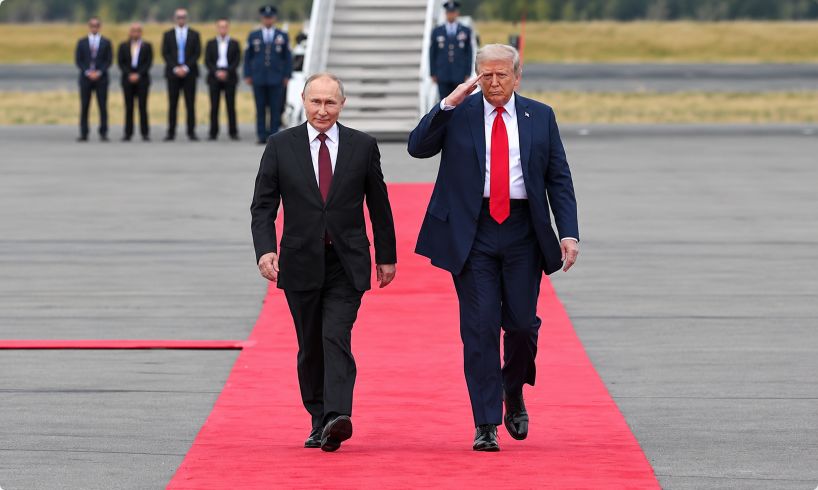
Vladimir Putin may be looking far beyond Ukraine when it comes to negotiating with Donald Trump, and a reported Russian proposal could have consequences for the entire European security system. Rather than simply seeking an end to the war, Moscow is reportedly pushing for a return to the kind of Cold War-era arrangement that divided Europe into competing spheres of influence, with Russia demanding a much smaller NATO presence on the continent.
The proposal, reported by The Moscow Times and attributed to information from The New York Times, raises a difficult question for Washington: is Putin trying to use negotiations over Ukraine to secure something much bigger for Russia?
Putin Wants NATO to Step Back
According to the report, Russian representatives raised the idea of returning to a Cold War-style relationship with the United States during discussions in Abu Dhabi, before similar ideas were reportedly discussed during Putin’s meeting with Trump’s special envoys in Moscow.
The proposed arrangement would divide Europe into spheres of influence and potentially place a revived version of the Warsaw Pact under Moscow’s control. That would represent a dramatic change in the way European security has been organized since the end of the Cold War, when former Soviet-controlled countries began moving toward closer ties with the West and several eventually joined NATO.
One of Moscow’s most significant demands concerns the alliance’s military presence. Russia reportedly wants NATO to return to its 1997 boundaries, which would mean withdrawing military infrastructure from 16 of the alliance’s 32 member countries.
Those demands would affect countries that were once part of the Warsaw Pact, many of which joined NATO after the collapse of the Soviet Union. For these nations, membership in the alliance has been central to their security arrangements, particularly given their history of living under Moscow’s influence.
The proposal also reportedly seeks to limit NATO activity in Central Asia and the South Caucasus, extending Moscow’s demands well beyond the battlefield in Ukraine.
Ukraine Is Only Part of the Bigger Picture
The Russian proposal is also tied to the Kremlin’s conditions for ending the war. Moscow reportedly wants Ukraine to formally abandon its ambition to join NATO, transfer the entire Donbas region to Russia, and reduce its military capabilities.
That would leave Kyiv facing demands not only over territory but also over its ability to defend itself and choose its own future security partnerships.
The wider European implications are difficult to ignore. If NATO were pressured into withdrawing infrastructure from 16 member countries, the consequences would reach far beyond Ukraine, potentially changing the security calculations of governments across the continent.
The report also says Moscow has made separate demands affecting other European countries, with concerns extending from Finland to Moldova. Ukrainian President Volodymyr Zelenskyy has previously warned that Putin wants to redraw Europe’s borders, identifying Finland and Sweden as potential targets of Moscow’s ambitions.
How Far Will Trump Go?
The reported discussions also raise questions about what Trump’s administration makes of the Russian proposal. According to The Moscow Times, US envoys Steve Witkoff and Jared Kushner pushed back during the discussions, arguing that the world had changed considerably, particularly over the past five years.
That response suggests Washington was not simply accepting Moscow’s vision, although the full details of the conversations and the US position remain unclear.
There is also a striking contradiction in Putin’s public comments. The Russian president has previously said he does not want a new Cold War, insisting that nobody wants to return to that kind of confrontation. Yet the proposal described in the report appears to draw heavily on the very system of competing power blocs that defined that era.
For European governments, the issue is not simply whether a new agreement could bring an end to the fighting in Ukraine. It is whether a settlement negotiated between Washington and Moscow could reshape the continent’s security arrangements without the countries most directly affected having a meaningful say.
Putin may be seeking an agreement that reaches well beyond the war, but any attempt to redraw Europe’s security map would face a much bigger challenge than securing Trump’s approval. The countries whose security would be affected have their own governments, alliances, and decisions to make.
Comments (0)