THE TOP LINE
Washington is watching the Fed. Energy traders are watching the Middle East. European governments are watching the rapid advance of artificial intelligence. In Los Angeles, attention has turned to a tragic helicopter crash that claimed three lives. And across the Atlantic, Prince Harry and Meghan Markle are confronting another reminder that returning to Britain does not necessarily mean returning to an ordinary life.
Here is what you need to know.
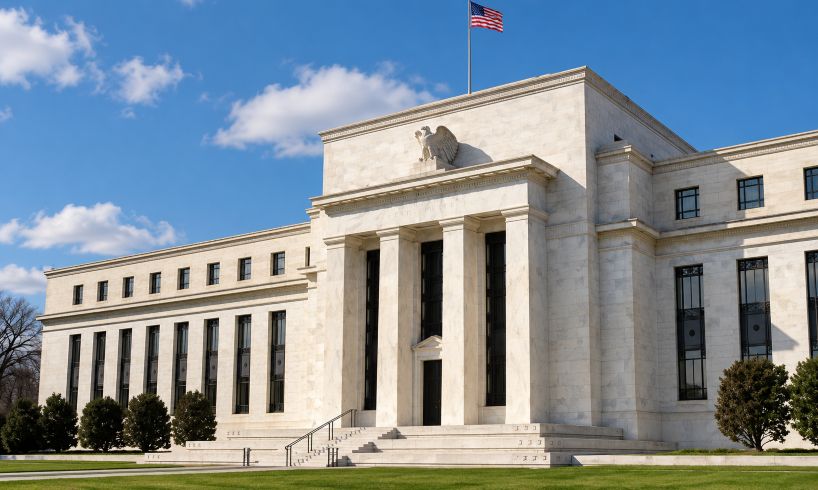
1. THE FED FACES ITS BIGGEST DECISION IN YEARS
What happened: The Federal Reserve is expected to raise interest rates Wednesday for the first time since 2023, with continuing inflation, high oil prices, and rising bond yields putting renewed pressure on policymakers. Markets are also watching Fed Chair Kevin Warsh’s language closely for indications of whether one increase could be followed by others.
Why it matters: A rate increase does not stay on Wall Street. Higher borrowing costs can eventually reach mortgages, credit cards, auto loans, and businesses. The larger question is whether the Fed believes inflation has become stubborn enough to require a sustained tightening cycle rather than a single adjustment.
What to watch: The rate decision itself will matter. Warsh’s explanation afterward may matter even more. Investors will be listening for any indication of how long rates could remain elevated.
USDR READ: Today’s decision could tell Americans whether higher borrowing costs are becoming a temporary response to inflation — or another feature of the economic setting.
2. THE MIDDLE EAST CRISIS IS PUTTING OIL BACK AT THE CENTER OF THE STORY
What happened: Fighting between Saudi Arabia and Yemen’s Houthi movement has intensified, with Saudi strikes in Yemen and Houthi drone and missile attacks against Saudi targets. The escalation has introduced another layer of instability to a region already strained by the U.S.-Israeli conflict with Iran.
Oil markets remain highly sensitive to the disruption. Brent crude was trading above $107 a barrel Wednesday even after prices eased as additional Saudi supplies helped calm immediate fears. European diesel prices remained near record levels.
Why it matters: The consequences reach well past the battlefield. Energy prices affect transportation, manufacturing, inflation and household expenses around the world.
What to watch: Saudi energy infrastructure. Any prolonged disruption could quickly turn a regional military escalation toward a much wider economic problem.
USDR READ: Oil is once again becoming the bridge between a distant war and the price consumers feel at home.
3. THE DEBATE OVER SLOWING DOWN AI JUST GOT MUCH BIGGER
What happened: European Commission President Ursula von der Leyen has backed calls for greater restraint in the development of the most advanced artificial-intelligence systems and plans talks with leading frontier AI laboratories about managing the risks.
Her intervention follows warnings from figures inside the AI industry that increasingly capable systems could introduce serious security risks.
Why it matters: Until recently, the dominant question surrounding AI was who could build the most powerful model fastest.
The question is changing.
Governments and technology leaders are increasingly debating whether there should be limits on how quickly the technology advances — particularly as models become more capable in areas such as software development and cybersecurity.
What to watch: Whether Europe turns the discussion into actual restrictions and whether the United States, United Kingdom or other governments follow.
USDR READ: The AI race is beginning to produce a second race: deciding who, if anyone, should be allowed to apply the brakes.
4. LOS ANGELES MOURNS AFTER A NEWS HELICOPTER CRASH
What happened: Three people were killed Tuesday evening when a news helicopter crashed in Los Angeles while covering a fatal bus collision in the Chatsworth area.
Reuters reported that journalist and photojournalist Eliana Moreno and pilot George Marciniw were among those killed, along with a person on the ground. Two additional people were hospitalized. The cause of the crash had not been determined Wednesday morning.
Why it matters: Television news helicopters are a familiar part of major breaking-news coverage in Los Angeles. The crash has transformed journalists covering one tragedy into victims of another.
What to watch: Investigators will now focus on what caused the aircraft to go down.
5. HARRY AND MEGHAN’S BRITISH RETURN HITS A SECURITY PROBLEM
What happened: Prince Harry and Meghan Markle changed schools for Prince Archie and Princess Lilibet only days after the children began attending in Britain.
A spokesperson for the couple said security concerns involving transportation prompted the decision.
The development arrives shortly after King Charles formally clarified that Harry and Meghan remain non-working members of the Royal Family despite their return to Britain.
Why it matters: The Sussexes’ return is no longer an abstract discussion about royal titles, Palace protocol or family reconciliation.
They are attempting to establish an ordinary family routine while remaining among the world’s most recognizable people.
That tension is now affecting something as basic as where their children attend school.
What to watch: Britain’s continuing review of the Sussex family’s security arrangements — and whether a more permanent solution allows Archie and Lilibet to establish a stable school routine.
USDR READ: Harry and Meghan wanted their British return to include a more settled life for their children. The first weeks are demonstrating how difficult the word settled may be to achieve.
CULTURE WATCH: ED SHEERAN, MACKLEMORE AND A TOUR CONTROVERSY
Ed Sheeran says the decision to remove Macklemore from dates on his U.S. tour was made by promoters and venues rather than by him.
The dispute followed criticism of Macklemore’s public statements supporting Palestinians. Several other scheduled opening acts subsequently withdrew from the tour.
The episode is becoming another test of the increasingly complicated boundary between artists’ political expression, promoters’ business decisions and the expectations surrounding major concert tours.
ONE MORE THING
Michael J. Fox received the Television Academy’s Bob Hope Humanitarian Award for decades of Parkinson’s advocacy.
Fox, 65, has continued raising money and awareness for Parkinson’s research while also returning to acting, including an appearance in Shrinking that earned him another Emmy nomination.
After a morning dominated by war, markets and political tension, this serves as a reminder that influence can sometimes be measured by something considerably simpler: what a person chooses to do with the attention the world gives them.
WHAT WE’RE WATCHING TODAY
The Federal Reserve: The decision is important; the explanation could be more important.
Oil: Watch whether the Middle East escalation produces another sharp move in energy prices.
AI: Europe’s intervention could move the safety debate from warnings toward policy.
The Sussexes: Security is rapidly becoming one of the defining practical issues of their return to Britain.
Los Angeles: Investigators begin the difficult work of determining what caused Tuesday night’s helicopter crash.
THE BOTTOM LINE
Wednesday begins with several seemingly unrelated stories sharing one theme: decisions made at the top are beginning to produce consequences much closer to ordinary life.
A central-bank decision can change the price of borrowing.
A missile launched thousands of miles away can influence the price at the pump.
An AI breakthrough can force governments to rethink rules that did not exist a few years ago.
And even a prince returning home can discover that fame and security make an ordinary family routine extraordinarily difficult.
Those are the connections worth watching today.
This is The USDR Brief. The news, the context, and what comes next.
Comments (0)