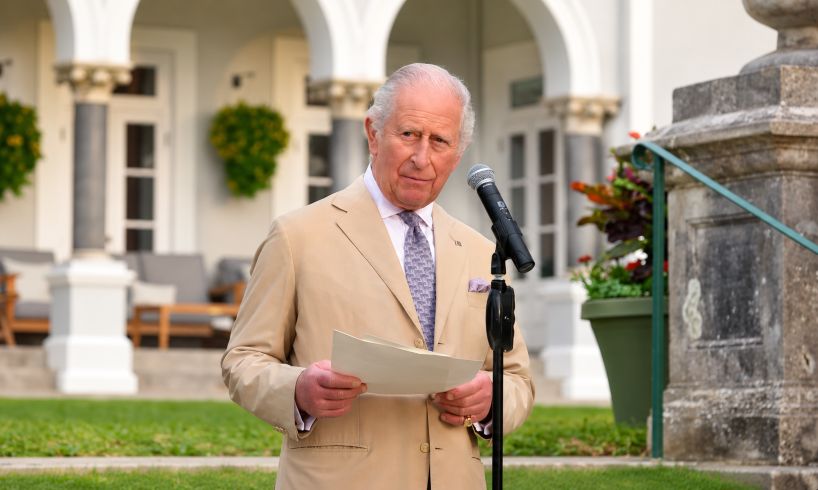
King Charles III has already sent the message that Prince Harry and Meghan Markle may not have wanted to hear, but according to a provocative new argument from royal commentator Richard Eden, the letter could end up looking like only the beginning of a much bigger confrontation over what exactly the Duke and Duchess of Sussex should still be allowed to call themselves.
The King’s letter, issued earlier this month after Harry and Meghan returned to Britain, made one thing unmistakably clear: they remain non-working royals and their position is “akin to private citizens with commercial and charitable interests,” while their HRH styles remain in abeyance and are not used. Reuters reported that the purpose was to remove doubt about their status, while the couple were reportedly surprised by how quickly the contents reached the public.
But now comes the darker question: what happens if that is not enough? Eden argues that Charles should look to other European monarchies and consider going further by removing Harry and Meghan’s remaining titles, a move he acknowledges would almost certainly upset his younger son but which he presents as a possible way of drawing a much sharper line between the working monarchy and the Sussexes.
The argument is particularly striking because Harry and Meghan have not actually lost the titles Duke and Duchess of Sussex. Despite the fact that they have stepped down from their official royal duties, the couple and their children continue to hold their princely titles under the current arrangements.
The King has already demonstrated that the Palace is prepared to formally clarify the Sussexes’ position, but removing a title is an entirely different level of confrontation, and the constitutional mechanics are not nearly as simple as announcing that a royal title has been taken away.
The House of Commons Library explains that the monarch can remove certain royal styles and titles, including the Prince or Princess title and the HRH style, under the royal prerogative, although such action would likely require ministerial advice. Peerages are different. The House of Commons Library says that an Act of Parliament is required to remove a peerage once it has been conferred.
That means the Sussex question could potentially move from a family dispute into something far more public. And that is where the story becomes genuinely uncomfortable for Harry and Meghan.
The precedent Eden points toward is Denmark, where Queen Margrethe II decided in 2022 that four of her grandchildren, the children of her younger son Prince Joachim, would lose their prince and princess titles while retaining their places in the line of succession. Margrethe acknowledged the decision had caused hurt but described it as “necessary future-proofing of the monarchy.”
Harry’s situation, however, is not identical. Prince Joachim’s children were removed from their titles as part of a broader restructuring of the Danish royal family, whereas Harry is the King’s son and remains fifth in the line of succession, while Meghan is his wife and Archie and Lilibet remain Prince and Princess under the existing arrangements.
That is precisely why any attempt to go further could become so politically, legally and emotionally complicated.
Charles has already drawn the boundary: Harry and Meghan are private individuals rather than working members of the Royal Family. The next question is whether anyone around the institution believes that boundary needs to become even harder.
And if the Palace ever decided that it did, the consequences would be enormous.
Harry would almost certainly view such a move as another dramatic rupture between himself and his father, while the Sussexes could suddenly find themselves fighting over titles in a way that would place their relationship with the monarchy back at the center of British public life.
There is also a strange irony here. Harry and Meghan returned to Britain with the possibility of rebuilding some connection to the country, while the King’s letter effectively established the terms under which that return would happen. The Sussexes could live in Britain, educate their children there and carry out private charitable and commercial work, but there would be no return to the old working-royal arrangement.
Now, according to Eden’s argument, the conversation has moved from “What are Harry and Meghan?” to “What should Harry and Meghan still be called?”
That is a much darker question. Because once the debate moves beyond HRH and into the actual titles themselves, the Sussex story stops being merely about a father setting boundaries with his son and starts raising questions about royal prerogative, Parliament, precedent and the future shape of the monarchy.
Charles has sent his letter. But if the people around the institution who favor a harder line get their way, the next chapter could be considerably more serious than a letter.
It could be about titles, identity, constitutional authority and whether the Sussexes’ remaining royal status can survive indefinitely after they chose to build a life outside the working monarchy.
And that would be a very different battle from the one Harry and Meghan have been fighting so far.

Comments (0)