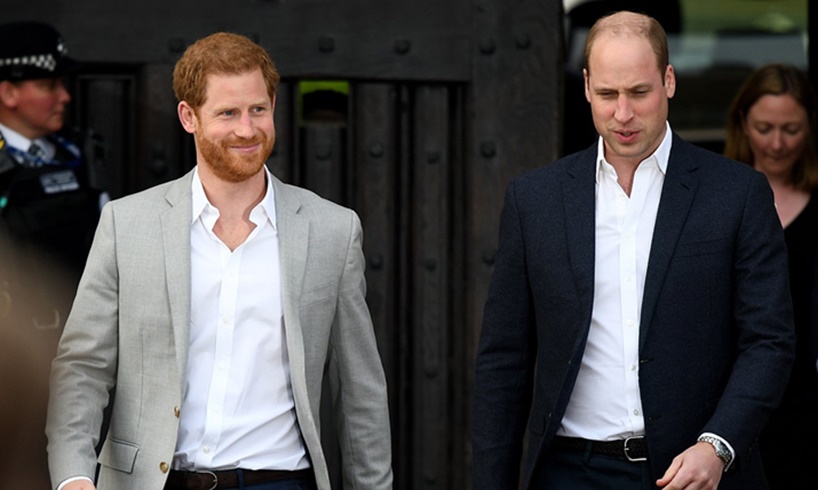
When Prince William eventually becomes King, he will inherit a monarchy that will demand his attention on matters far bigger than his relationship with his younger brother, which is precisely why the latest discussion surrounding Prince Harry’s titles raises a question that may be much more important than whether Harry can technically keep calling himself a prince: would a new King William really want to begin his reign by turning Harry’s titles into a constitutional, parliamentary and public-relations battle?
Because removing a royal title is not necessarily as simple as a King waking up one morning and deciding that his brother’s name should disappear from the history books.
The legal position is complicated. According to the House of Commons Library, the monarch can remove styles such as “Prince” and “Princess” and titles such as “Prince” under the royal prerogative, while the removal of a peerage is different and requires an Act of Parliament. Harry’s Duke of Sussex title is a peerage, meaning that taking that title away would involve Parliament rather than simply a private decision inside Buckingham Palace.
And that is where the whole thing could become a nightmare. Some royal watchers imagine William beginning his reign with the enormous constitutional machinery of government being pulled into a dispute over his brother, with ministers, MPs, peers, lawyers, constitutional experts and the Palace suddenly forced to spend months explaining exactly why Harry’s title should be removed, what legal mechanism should be used and what precedent such an extraordinary decision would create.
That is not simply a family argument anymore. It is government business and a Parliament. This is about headlines and a massive headache.
It is hours of television coverage, endless commentary and another chapter in the seemingly never-ending Harry and William saga.
And perhaps most importantly for William, it would mean that the beginning of his reign could become associated with and ONLY Harry all over again. That is the irony.
For years, the Royal Family has tried to move forward, concentrate on the future and give the working monarchy a purpose beyond the Sussex drama, while Harry and Meghan MArkle have remained one of the most persistent sources of royal headlines. A future King William could therefore face a very awkward calculation: does he really want to spend precious political and institutional capital reopening that entire argument?
There is already a modern precedent showing just how complicated title disputes can become. In 2025, King Charles initiated the formal process that resulted in Andrew Mountbatten Windsor losing the style and title of Prince and Royal Highness, while his Duke of York title was removed from the Roll of the Peerage. The House of Commons Library noted that the processes for different titles are not identical, and that peerages themselves occupy a separate legal category.
Harry, however, is not Andrew. Whatever anyone thinks about Harry, he remains the King’s son, fifth in the line of succession and the brother of the future King, while his position as Duke of Sussex is legally tied to a peerage. Turning that into a formal campaign to strip him of the title would inevitably invite questions about motive, precedent and proportionality.
And William would have to live with the consequences. Every parliamentary debate would bring Harry’s name back into the headlines. Every ministerial comment would generate another round of coverage. Every Palace statement would invite another response from Sussex representatives. The very act of trying to put the Harry problem to bed could keep Harry at the center of the royal conversation for years.
For a King trying to establish his own identity, that could be an extraordinary price to pay.
William will eventually have a country to lead symbolically, a monarchy to modernize, international relationships to maintain, charities and causes to support, major national moments to navigate, and an entire generation of the royal family to prepare for the future.
Does he really want one of the defining stories of his early reign to be a legal battle over what his brother is allowed to be called?
That is the question hiding underneath the title controversy. Because perhaps the most damaging outcome for William would not necessarily be Harry keeping a title.
Perhaps it would be allowing Harry to become the central character in the opening chapter of his reign.
William cannot control everything Harry says or does, and he certainly cannot control how newspapers, commentators or the public discuss the Sussexes, but he can choose where the institution puts its time, attention and energy.
And there is a powerful argument for a future King to ask whether a battle is worth fighting simply because it can be fought.
The monarchy has already demonstrated that different royal titles can be altered or removed through different legal mechanisms, while Parliament remains central when an actual peerage is at stake.
So the real Harry title bombshell may not be whether William can do it. It may be whether he would ever want to.
Because a new King inherits enough problems without deliberately creating another one, and if William’s ambition is to build a reign defined by his own priorities, the last thing he may need is to spend his opening years fighting a constitutional war over Harry’s name.
Harry could remain his brother, controversial, and outside the working monarchy.
And William could still decide that the most powerful response is not to spend his reign trying to erase his brother, but to simply get on with the job of being King.
Because sometimes the biggest risk is not losing a battle. It is winning one that nobody needed to fight in the first place.

Comments (0)