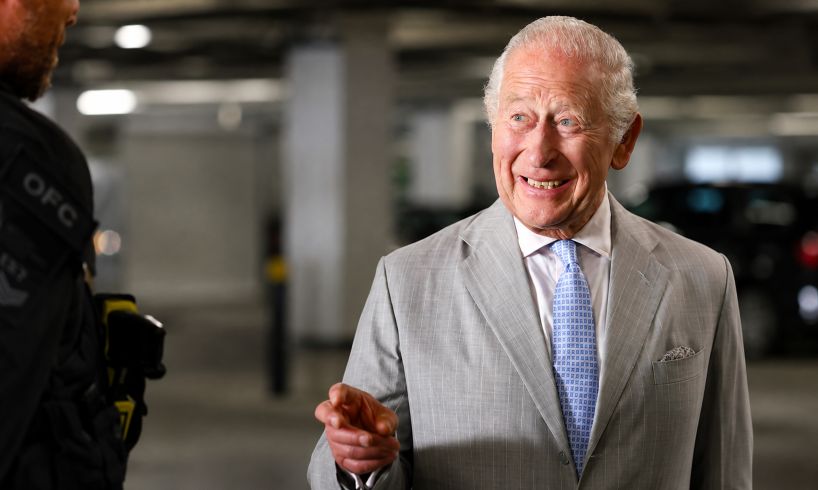
King Charles III may have quietly won the battle with Earl Spencer without having to fight the entire war. What began as a potentially devastating book launch built around explosive revelations about Princess Diana, the late royal’s marriage to Charles and the painful aftermath of her death has suddenly become a very different story, with Buckingham Palace directly challenging one of the memoir’s most damaging claims, Spencer being forced to admit a separate factual error and copies of the book appearing in British shops at roughly half its recommended price.
That is a remarkable turn for Swan Song: Diana, My Sister, because Spencer’s book arrived with the kind of revelations guaranteed to put the King under enormous pressure, including his claim that the then-Prince Charles told him, “We’ll forget her soon enough,” after Diana’s death, a statement that, if accepted as an accurate recollection, could have created another painful chapter in the already complicated history between Charles, Diana and the royal family.
But instead of allowing that allegation to stand uncontested, Buckingham Palace responded with an unusually forceful statement, saying that Charles was “mindful that the pain of fraternal grief can cloud reason, affect judgment and colour memory in ways others do not recognise,” effectively putting the reliability of Spencer’s recollection at the heart of the dispute.
And then came the problem Spencer probably did not want.
Piers Morgan challenged another claim in the book, arguing that Spencer had wrongly connected him to the publication of intrusive photographs of Diana, because the photographs in question appeared in the Sunday Mirror in 1993, while Morgan did not become editor of the Daily Mirror until 1995; Spencer subsequently apologized, stating that his assumption had been incorrect and emphasizing that “accuracy is important” to him.
That apology does not automatically invalidate the rest of the memoir, and it would be inaccurate to suggest that one acknowledged mistake proves every other recollection is wrong, but it changes the conversation in a very important way because Charles no longer has to personally rebut every single allegation coming from Spencer.
The book itself is now facing questions about credibility from outside the Palace. And that may be exactly what Charles needed.
According to Radar via Yahoo, a source claimed there is now a feeling within royal circles that the Palace does not need to become trapped in a prolonged public battle with Spencer because “events surrounding the book are now speaking for themselves,” while another source suggested that Charles and William feel the argument has effectively been won without them having to say very much.
Then came the image that makes the entire situation even more striking.
The book, which carries a recommended price of around $37 in the United States equivalent, was reportedly being offered for approximately $19 at Waterstones in Britain. Another retailer was also offering a 50 percent introductory discount. The Associated Press likewise reported that the £28 hardback was being sold at half price in some London shops and that early sales were not brisk.
For a book promoted around revelations about one of the most famous women in modern history, that is an awkward development.
Charles did not need to launch a counter-book. He did not need to spend weeks attacking his former brother-in-law. He did not need to answer every passage.
Instead, the Palace issued one carefully worded rebuttal, Charles and William continued with their public schedules, Spencer faced an entirely separate challenge over an admitted factual mistake, and suddenly the conversation surrounding Swan Song was no longer simply, “What does this book reveal about King Charles?”
It became, “How much of this should readers believe?” That is a completely different battlefield, and it is one where the King may have gained ground simply by refusing to turn the controversy into an even larger royal spectacle.
The most damaging thing for Spencer may therefore not be the Palace attacking his book, but the fact that the book has begun generating questions about itself.
And that is why Charles may feel he has won this particular battle. The King did not have to silence Earl Spencer.
He may only have needed to let the claims, the rebuttal, the apology and the headlines collide with one another until the story stopped being solely about Charles and Diana and started becoming a story about the credibility of the book itself.
For a monarch who has spent decades living under the shadow of Diana’s story, that may be a far more powerful outcome than another royal shouting match.
Charles did not need the last word. He may have won by making sure Spencer’s book no longer had the only word.

Comments (0)