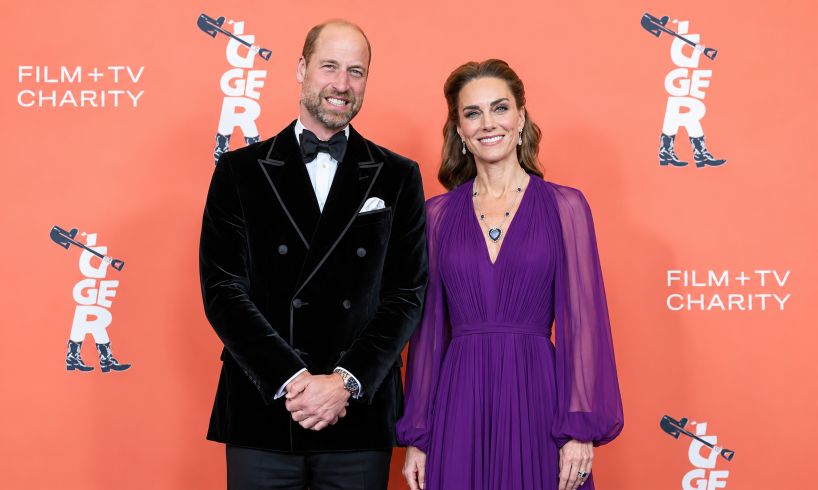
Kate Middleton has delivered a heartfelt message about the importance of getting children outdoors and reconnecting with nature. But while her latest royal initiative has been praised by supporters who believe she is championing something increasingly valuable in a world dominated by screens, her words have also sparked a very different reaction from parents who say that spending time in the countryside is not always as simple as the Princess of Wales might imagine.
In a series of new countryside photographs released to accompany the announcement, Kate appeared relaxed in a wax jacket and patterned jumper as she introduced a project exploring how nature can support the social and emotional development of babies and young children, explaining why she believes the subject deserves greater attention at a time when technology increasingly shapes everyday family life.
“Nature is such an extraordinary environment for us all and, in this tech-driven, digital age, spending quality time outdoors has never been more important,” Kate said in a video message filmed in Cornwall.
Her message was not simply an invitation for parents to take their children for more walks, however, because the initiative will examine how nature-rich environments can help nurture children’s emotional wellbeing, curiosity, creativity and ability to build relationships, with the ultimate aim of making those benefits more accessible to families across the UK.
“My hope is that through this practical, nature-based research, we can build supportive environments that help make nature more accessible, benefiting babies, young children and their families across the UK,” she explained.
And that final point is particularly important, because Kate’s stated ambition is not merely to tell parents to spend more time outside, but to explore how more children can gain access to environments that support their development.
Kate’s Message Wins Praise — But Not Everyone Is Convinced
For supporters, the Princess of Wales is highlighting an issue that deserves attention, particularly as childhood becomes increasingly shaped by digital entertainment and parents struggle to balance screen time with outdoor play, social interaction and other experiences that help children develop.
Research commissioned by Kate’s Royal Foundation Centre for Early Childhood found that 84 per cent of surveyed parents agreed that spending time in nature benefits their children’s wellbeing and development, yet only 33 percent said their children spent time in nature every day. The findings also suggested that many parents would welcome more opportunities for outdoor experiences through childcare and education.
But the reaction was not universally enthusiastic by the viral video, with some critics arguing that the conversation risks overlooking the financial pressures, working hours and practical limitations that determine what everyday family life looks like.
One commenter challenged the message by asking: “Well, I think when you have family and you have bills today, tell me where you have the time to take your kids out to the park or in nature.”
The criticism continued with the argument that some parents are concentrating on more immediate necessities, including putting food on the table and keeping a roof over their children’s heads, paying bills, rather than finding the time and money for additional outings.
Another commenter questioned whether the message sufficiently recognised the different environments in which children grow up, asking, “Yes because everyone a lot free time on their hands and has access to green open spaces don’t they.”
The complaint reflects a practical concern: not every family lives near woodland or open countryside, or has a large park, and access to safe outdoor spaces can vary considerably depending on where people live ,what resources they have , and how much time they can devote to such activities.
One critic put it even more directly: “Dear Kate What about the children who live in cities they don’t have access to fields, your heart is in the right place but you are not being very practical.”
The Bigger Question Behind the Backlash
The criticism does not necessarily mean that these parents disagree with Kate about the benefits of nature; rather, it highlights the difference between recognising what children need and ensuring that families have the time, money and access to provide it.
A free walk around a nearby park may be straightforward for one family, while another may face long working hours, limited transport, unsafe streets or a lack of suitable green spaces close to home.
That is precisely why Kate’s stated intention to explore ways of making nature more accessible could prove more consequential than the original message itself.
If the initiative helps childcare providers, schools and local communities create more opportunities for outdoor learning and play, it could address some of the barriers critics have raised, rather than leaving individual parents to figure everything out alone.
Ultimately, Kate’s message has opened up a conversation that extends beyond royal photographs and a carefully delivered statement.
The Princess of Wales is right to draw attention to children’s development, while the parents questioning her message are raising an equally important issue: advice about family life must take account of the circumstances in which families actually live.
The real test will be whether this initiative helps bring nature closer to the children who need those opportunities most — including those whose families cannot simply escape to the countryside whenever they wish.
Comments (0)