For a project that was repeatedly framed as a major creative reinvention, Meghan Markle’s Netflix series appears to have ended not with a bang, but with a shrug. According to critics, the show’s conclusion raises a more uncomfortable question: was it ever truly successful — or even meaningfully renewed — at all?
Netflix Moves On as Meghan Markle’s Show Quietly Disappears
Some media watchers argue that the show’s narrative became more important than the show itself. Markle has said she walked away because the production schedule became too demanding, but critics see it differently. In their view, the real issue was that viewers never fully tuned in. After a brief spike in curiosity, attention quickly dropped off, and the series struggled to keep viewers engaged past its initial rollout.
From Cultural Obsession to Public Fatigue
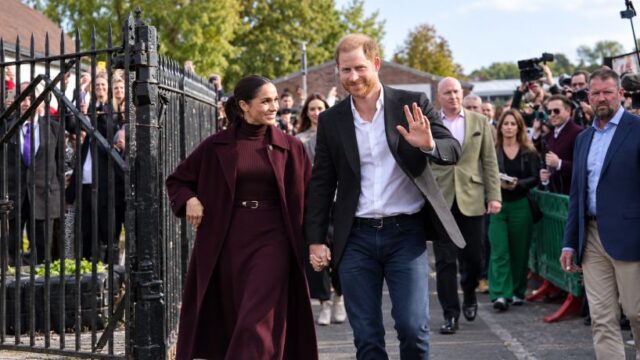
Markle’s rise — and reversal — played out at remarkable speed. When Meghan Markle married Prince Harry in 2018, many saw her as a sign that the Royal Family was entering a new era — one that felt more current and more accessible.
However, that early optimism did not last. Critics say it began to fade as her public complaints grew more frequent. Allegations of systemic racism within the monarchy, repeated public disputes with senior royals — including Queen Elizabeth II near the end of her reign — and moments many viewers interpreted as open mockery of royal customs all contributed to a sharp shift in tone. For a time, backlash became a form of spectacle. Eventually, though, even the controversy lost its pull.
Now, however, the sentiment appears to have shifted again — not to anger, but to indifference.
“The outrage cycle is over,” one commentator noted. “People don’t love her, they don’t hate her—they just don’t care anymore.”
Questions Around the “Second Season”
The most pointed criticism centers on the show’s alleged second season. While it was publicly presented as a renewal, insiders claim no new production ever took place. Instead, the series was reportedly filmed in a single continuous block, then divided and released in two parts to simulate a multi-season run.
No director returned. No production crew reassembled. No additional filming occurred. The location — often described as Markle’s home — was allegedly a staged setting used only once.
Yet immediately after the final episode of the first batch aired, Markle announced a renewal. Critics argue this was a strategic move designed to sustain the appearance of momentum rather than reflect actual success.
Netflix Numbers Tell a Different Story
Viewership data reportedly placed the later episodes near the bottom of Netflix’s internal rankings. If accurate, that performance would explain why a “third” season never materialized — and why the platform has since gone quiet about the project altogether.
“The illusion of success has always been part of the brand,” one media analyst observed. “But eventually, the numbers catch up.”
A Brand at a Crossroads
The show’s quiet ending points to a deeper issue for Markle and to some extent, her husband, Prince Harry. Time and again, her media efforts spark conversation without building lasting audiences. In an industry now driven almost entirely by hard numbers, celebrity alone no longer guarantees success.
What lingers is not just that the series did not work — it is that it barely registered.
The sharpest criticism may not be that the show stumbled, but that it left little impression at all.
In an era of endless content, the most damaging outcome is not backlash. It is being ignored.