In October 2006, Barack Obama was a first-term Democratic senator insisting he had no plans to run for president. Four months later, he announced his candidacy. Two years later, he moved into the White House.
Twenty years later, another young Democratic senator is attracting comparisons to Obama, and the resemblance has become harder to overlook following Tuesday’s midterm elections.
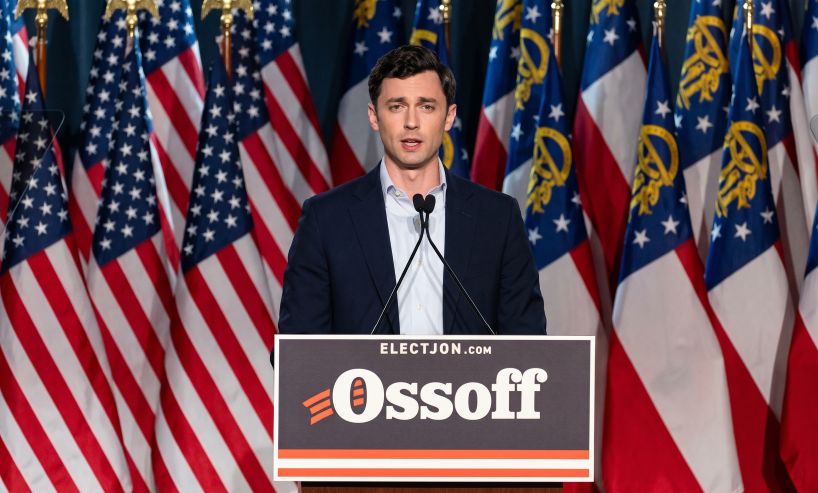
Jon Ossoff, the 39-year-old senator from Georgia, defeated Republican Mike Collins on November 3, securing a second term in a state Donald Trump won in 2024.
It was a significant individual triumph during a broader Democratic resurgence that returned both chambers of Congress to the party.
Ossoff has repeatedly denied any interest in running for president in 2028. He has even promised to complete his new six-year Senate term.
But the election has changed the circumstances surrounding those declarations.
Ossoff now possesses something that every aspiring presidential candidate would want on a political résumé: a fresh statewide victory in a major presidential battleground.
And his triumph comes at a moment when Democrats are searching for a new generation of national leaders.
The Obama Comparison Is No Longer Just About Speaking Style
For months, Ossoff’s speeches attacking Trump and his administration have circulated widely on social media.
His measured delivery, thoughtfully constructed arguments and increasingly combative political messaging have drawn comparisons to the man who transformed the Democratic Party’s presidential politics in 2008.
The similarities go beyond public speaking. Like Obama before his presidential breakthrough, Ossoff is a relatively young Democratic senator whose national profile has grown amid broad dissatisfaction with a Republican administration.
Obama emerged during the final years of George W. Bush’s presidency, when the Iraq War and concerns about the country’s direction were weighing heavily on Republicans.
Ossoff’s national visibility has expanded against the backdrop of Trump’s second term, amid voter frustration over affordability, foreign policy and the administration’s conduct.
Both men also attracted presidential speculation before publicly embracing any such ambition.
In January 2006, Obama said he intended to serve his full six-year Senate term. By October, he was acknowledging that he might reconsider a presidential campaign.
Ossoff has taken an even firmer public position.
During his October 13 debate with Collins, the Georgia Democrat said he had no intention of seeking the presidency and pledged to serve his entire Senate term.
His comments were emphatic, not the usual political invitation to keep asking.
Nevertheless, Obama’s experience demonstrates that declarations made years before a presidential election are not always the final word.
That does not establish that Ossoff has a secret presidential plan. Reporting before the midterms indicated he was not undertaking the organizational preparations normally associated with an imminent White House campaign.
But it does make the historical comparison more intriguing.
Twenty years ago, a Democratic senator’s political career path changed dramatically between the 2006 midterms and the 2008 presidential election.
Whether Ossoff experiences anything comparable remains an open question.
Georgia Gives Ossoff Something National Recognition Cannot Buy
There is another reason the 2026 results matter. Georgia is not a reliably Democratic state.
Trump carried it in 2024, reversing Joe Biden’s narrow 2020 victory. Republicans have also maintained considerable strength in statewide elections.
To secure reelection there, Ossoff needed a coalition extending beyond the Democratic Party’s most dependable supporters.
His campaign emphasized criticism of Trump’s administration, but it also featured his work delivering federal investment and assistance to Georgia communities.
The victory does not prove he could assemble the same coalition nationally.
Midterm electorates differ from presidential electorates, and Collins entered the race with his own political vulnerabilities. Republican critics also argued that Ossoff’s positions placed him too far to the left of Georgia voters.
Still, the result shows the senator can compete successfully in politically divided territory.
That distinguishes his electoral record from simple national celebrity.
The Democratic presidential field includes governors, senators, former administration officials and nationally recognized progressive leaders.
Ossoff’s Georgia victory gives him a different credential: he has just persuaded voters in a Trump-won state to send him back to Washington.
Whether that accomplishment would translate into presidential-primary support is another matter.
But it offers a starting point for a national political argument grounded in an actual election result.
Keisha Lance Bottoms’ Victory Changes Another Calculation
Ossoff was not the only Democrat celebrating in Georgia on Tuesday.
Former Atlanta Mayor Keisha Lance Bottoms defeated Republican Rick Jackson to become Georgia’s next governor, ending nearly three decades of Republican control of the office.
Her victory also made history: Bottoms became the first Black woman elected governor in the United States. The result carries a less obvious implication for Ossoff’s political future.
Under Georgia law, the governor may temporarily appoint a replacement when a U.S. Senate seat becomes vacant, pending the required special-election process.
That means if Ossoff were eventually elected president and vacated his Senate seat, Bottoms would have the authority to appoint an interim replacement, assuming she remained governor.
Under a Republican governor, the other party would have made that appointment. Bottoms’ victory therefore changes one element of the political calculation surrounding a hypothetical Ossoff presidential campaign.
It does not guarantee that Democrats would retain the seat permanently, because voters would subsequently choose a replacement.
Nor would Ossoff need to resign from the Senate merely to pursue the presidency.
But the governorship result removes a complication that could have mattered considerably if he ultimately reached the White House.
For Democrats thinking about the composition of a future Senate, that is not an insignificant development.
The Democratic Primary May Be the Bigger Obstacle
Before Ossoff could contemplate a general-election matchup against a Republican nominee, he would have to manage a Democratic Party with competing visions of its future.
The party’s potential 2028 presidential field includes California Governor Gavin Newsom, Pennsylvania Governor Josh Shapiro, former Vice President Kamala Harris, former Transportation Secretary Pete Buttigieg and other prominent national figures.
Some represent established governing experience. Others stress generational change, economic populism, or a more confrontational approach to Republican politics.
Ossoff’s political identity doesn’t fit neatly into any one faction.
His Senate record includes constituent services, investigations and legislative work alongside sharp criticism of Trump. His public messaging has attracted progressive attention, but he has not established himself as the party’s left-wing standard-bearer.
That distinction could become important in a competitive nomination contest.
Obama’s breakthrough in 2008 did not come simply because his speeches were popular. He built a national organization, raised considerable sums, won the Iowa caucuses and demonstrated that he could defeat Hillary Clinton in actual primary contests.
Ossoff has shown formidable fundraising capacity and built a successful statewide campaign organization.
A presidential race would still require proving that those strengths could operate across dozens of states against nationally established Democratic rivals.
And unlike Obama in early 2007, he has not announced that he intends to undertake that challenge.
An Ossoff Ticket Would Raise Questions About the Party’s Future
If Ossoff eventually became the Democratic presidential nominee, choosing a running mate would bring in another set of political considerations.
A partnership with Shapiro would combine two politicians with recent statewide victories in Georgia and Pennsylvania, states that have played important roles in presidential elections.
But Shapiro has his own potential presidential ambitions, and victories in separate statewide contests do not guarantee that two candidates would carry those states together.
A partnership with Representative Alexandria Ocasio-Cortez would offer a different ideological arrangement.
AOC has a national progressive following and substantial fundraising reach. Coupling her with Ossoff would bring together two politicians associated with different approaches to Democratic politics.
It could also expose disagreements pertaining to economic policy, foreign affairs, and the party’s direction.
No indication suggests either hypothetical ticket is under discussion. AOC has her own political choices to make, including whether to seek higher office independently.
And a presidential nominee’s running mate is not simply a symbol of party unity. The choice must also withstand scrutiny over governing qualifications, policy compatibility and the ability to work together in office.
For now, these possibilities illustrate the unanswered questions that any Ossoff presidential campaign would encounter.
The Lesson of 2008 Is About More Than Obama
The most interesting historical comparison may ultimately be the political environment rather than the candidates themselves.
Democrats delivered George W. Bush’s Republicans a major congressional defeat in 2006.
Two years later, amid the financial crisis and discontent with the administration, Obama decisively defeated John McCain.
The 2006 results did not make Obama’s victory inevitable. Nor did they determine who would emerge from the Democratic primaries.
But they helped establish the political environment in which a new generation of Democratic leadership could emerge.
The 2026 midterms have produced a further significant Republican setback.
Whether that becomes the starting point of a lasting political realignment will depend on events over the next two years, including the economy, international developments, and how Democrats govern their new congressional majorities.
It will also depend on the candidates themselves. Ossoff’s Georgia victory has made him part of the national conversation, but his success in one state does not mean he will win a presidential nomination or a general election.
Obama, after all, had to transform excitement regarding his potential into an actual political organization capable of winning votes.
That remains an entirely separate test.
The Question Ossoff Can No Longer Easily Escape
For the moment, Ossoff has every reason to celebrate his reelection and focus on another six years representing Georgia.
He made a clear promise to voters, and no public confirmation suggests he intends to break it.
But political circumstances can change quickly. In October, Ossoff was an incumbent senator fighting to protect a Democratic seat in a Republican-leaning state.
By November 4, he was a newly reelected senator whose victory had become part of a much larger Democratic triumph.
His party had also won the Georgia governorship, changing the political circumstances surrounding any future Senate vacancy.
National attention had begun shifting from whether he could win another term to what he might do with his growing political prominence.
That does not make him the next Barack Obama. It does not even mean he will run for president.
But twenty years after another Democratic senator insisted he intended to remain in the Senate, Ossoff has emerged from a major midterm election facing a familiar question.
Is Georgia simply the place where Jon Ossoff built a successful Senate career—or could it become the launching point for something much bigger?
The answer may depend less on what he said before November 3 than on what he decides to do afterward.
Comments (0)