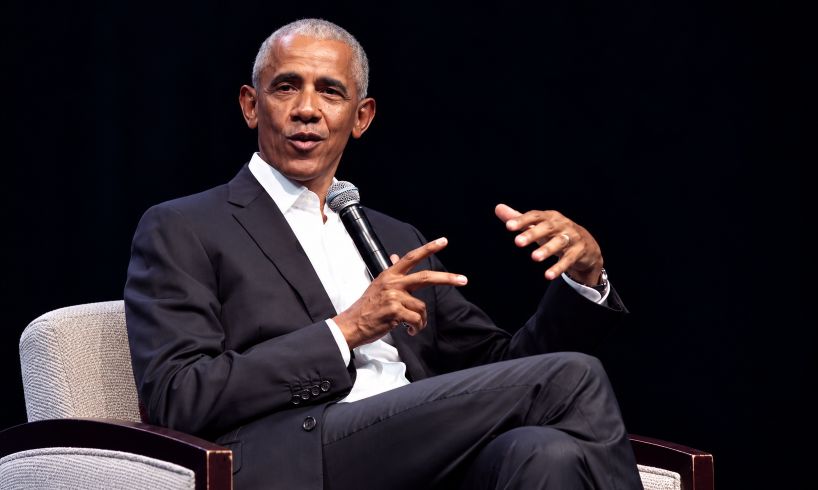
Donald Trump is already facing a difficult political environment heading into the midterm elections, with his approval numbers sitting below 40 percent in several recent national polls, voters expressing growing concern about the economy and cost of living, and the political consequences of the administration’s handling of foreign policy adding another layer of pressure. Now, just as Trump and Republicans are preparing for the November elections, Barack Obama is stepping back into the political fight.
And that makes this a much more interesting story than another former president appearing at another Democratic fundraiser. Because Obama is not just any Democrat.
He is one of the most recognizable figures in modern Democratic politics — and he is also the man whose presidency Trump spent years attacking, reversing and using as a political foil.
Trump Already Has Plenty on His Plate
The political environment is hardly quiet for Trump.
The Marquette Law School national poll conducted in September found that 37 percent of adults approved of the way Trump was handling his job as president, while 63 percent disapproved. The same survey found particularly low approval for Trump’s handling of the economy, inflation and cost of living, with approval at 28 percent for the economy and 19 percent for inflation and the cost of living.
Another September national poll from NPR/PBS News/Marist found Trump’s approval among registered voters at 39 percent, with 59 percent disapproving, while the Conference Board reported that consumer confidence had fallen sharply in September amid concerns about inflation, wages and the cost of everyday life.
That does not automatically tell anyone what will happen in November, but it does explain why the political atmosphere around the White House has become increasingly focused on whether Trump’s standing could affect Republican candidates down the ballot.
And then comes Obama.
Trump’s Old Nemesis Is Stepping Back In
The Daily Beast reported that Obama will headline a Democratic Senatorial Campaign Committee fundraiser in the Washington, D.C., area on October 7, marking his first appearance at a DSCC fundraiser during this midterm cycle.
Obama is also scheduled to participate in a conversation with Delaware Sen. Lisa Blunt Rochester about the importance of flipping the Senate and the stakes of the election.
The timing is what makes it so striking.
Obama is returning to the political stage less than a month before the November 3 election, at precisely the moment when Democrats are trying to turn dissatisfaction with the political environment into enthusiasm and turnout.
And this is where the story stops being simply about Trump versus Obama. It becomes a question about Obama’s remaining political power.
Can Obama Still Move the Needle?
Obama remains unusually popular within his own party.
According to the NBC News poll cited by The Daily Beast, 43 percent of registered voters said they would be more likely to support a candidate endorsed by Obama, including 77 percent of Democrats.
That is significant because political influence after leaving the White House is not automatic.
A former president can become a ceremonial figure, someone who gives speeches, raises money and appears occasionally at major events without having much effect on the political conversation.
Obama has not entirely followed that path.
He has continued appearing at fundraisers, endorsing candidates and participating in Democratic campaigns, although he has also explained that he does not want to spend every day responding to Trump because doing so could reduce him from a political leader to a political commentator.
That makes this October appearance particularly revealing. Obama is not jumping into every fight. He is choosing this one.
The Bigger Question Is What His Presence Does
The Democratic Party clearly sees value in bringing Obama back into the spotlight, particularly at a time when voters are paying more attention to the midterms and Democrats are trying to make the election about issues including the economy and the direction of the country.
But Obama’s involvement does not guarantee that voters will follow his lead. That is the part worth watching.
Can the former president still energize Democratic voters who grew up politically during his presidency? Can his endorsement help candidates who are struggling to break through? Can his appearance generate money, attention and enthusiasm at a moment when campaigns are fighting for every advantage?
Those questions cannot be answered simply by looking at one fundraiser. But Obama’s return does make one thing clear.
Trump’s political world is no longer dealing only with today’s critics and today’s opponents.
One of the most recognizable Democratic figures of the previous generation is stepping back onto the field.
And perhaps the most intriguing question of all is not whether Barack Obama can defeat Donald Trump politically, because no single appearance can establish that.
It is whether, after years away from the White House, Barack Obama still has enough political gravity to make Washington pay attention when he decides to speak.
Comments (0)