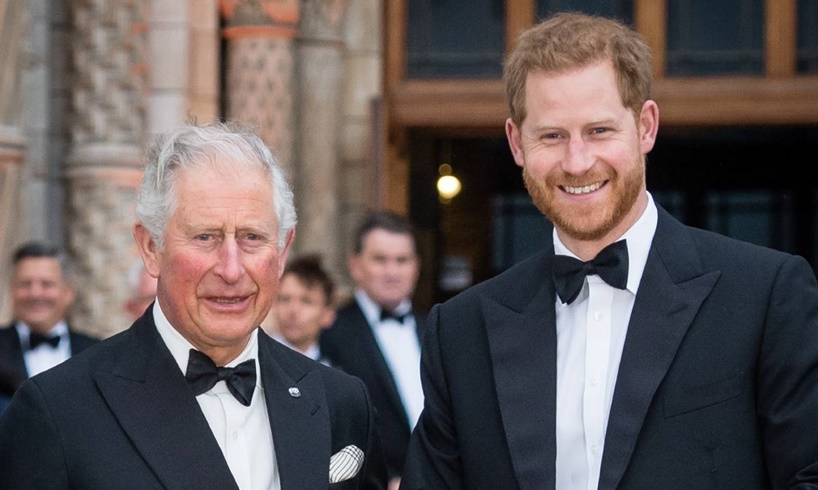
How do you solve a problem like Prince Harry and Meghan Markle? It is a question that, according to one provocative royal commentary, may be becoming increasingly difficult for King Charles to ignore, particularly as the Duke and Duchess of Sussex continue to attract attention with appearances that place them firmly back in the public eye without restoring them to their former positions within the Royal Family.
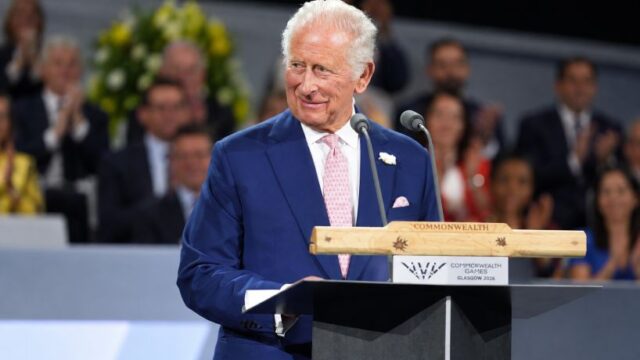
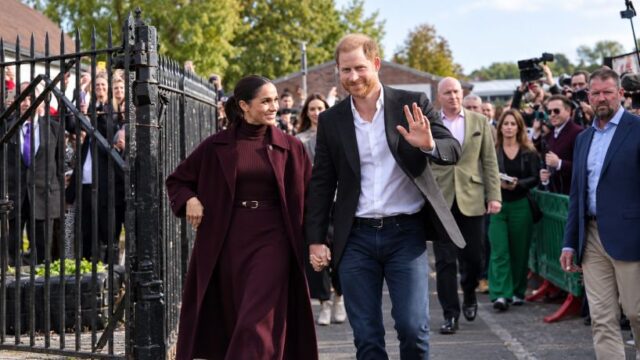
After weeks of speculation about their return to Britain, Prince Harry and Meghan Markle finally stepped out together in Nottingham for what has been described as their first official non-official appearance as a couple. Their visit drew crowds, cameras and considerable media attention, while King Charles and Queen Camilla were carrying out engagements in Cardiff, attending the ceremonial opening of the new term of the Welsh Parliament and meeting community groups.
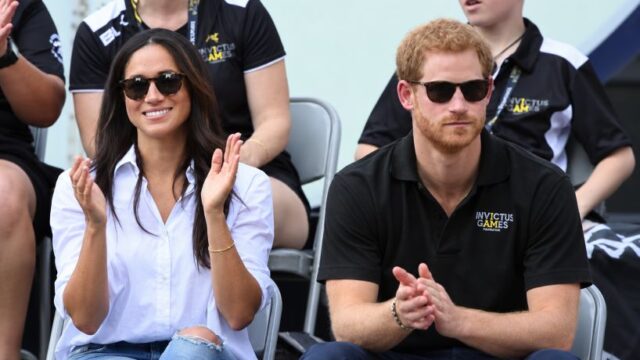
While King Charles and Queen Camilla carried on with their official royal duties, Prince Harry and Meghan Markle appeared to be carving out a public role of their own, one that keeps them connected to royal life without requiring them to follow all its rules.
For critics of the couple, that raises an uncomfortable question for the monarchy. If Prince Harry and Meghan Markle can continue to command attention as Duke and Duchess of Sussex while remaining outside the working Royal Family, what is to stop them from becoming a rival attraction to the institution they left behind?
A Royal Return That Raises More Questions Than Answers
According to the Daily Mail’s Sarah Vine, Meghan’s appearance in Nottingham attracted attention for both her interaction with the crowd and her carefully assembled outfit. Meghan Markle paired a $35 Marks & Spencer belt with $875 stilettos, a $465 cashmere sweater and a $2,000 coat, mixing affordable high-street fashion with luxury designer pieces, creating a look that combined accessible high-street fashion with luxury designer pieces.
She accepted flowers, hugged members of the public and posed for photographs, while Prince Harry watched nearby. The visit offered the couple an opportunity to connect directly with the public, and the attention surrounding it demonstrated how quickly a Sussex appearance can become a major media story.
Yet Vine’s commentary took a more skeptical view of the spectacle. The author questioned whether the couple’s approach allows them to benefit from the appeal of royal status without accepting the responsibilities traditionally attached to it. That is an interpretation rather than an established fact about their intentions, but it lies at the heart of the debate over what their continued use of royal titles means for the monarchy.
King Charles, Queen Camilla carried out their official duties in Cardiff, Prince Harry and Meghan Markle were attracting attention of their own, sparking fresh headlines and renewed debate. The King and Queen were busy opening the Welsh Parliament and meeting local groups. But the Sussexes’ appearance quickly became a separate talking point. Harry and his spouse attracted international media and drew attention away from the royal engagements taking place in Wales.
For a monarchy that depends on continuity, service and public recognition, the competition for headlines can become more than a question of fashion or celebrity. It raises the issue of how the Royal Family maintains a clear distinction between those who represent the Crown in an official capacity and those who no longer undertake working royal duties.
The “Pseudo-Royal” Problem Facing King Charles
Vine’s central argument is that Prince Harry and Meghan Markle have found a way to remain closely associated with the monarchy while pursuing an independent public life. It describes them as “pseudo-royals,” suggesting that their continued titles and public profile, whether the King wants it or not, will allow them to occupy a space between royal insiders and private citizens.
That distinction has long been a source of tension. The Sussexes stepped back from their roles as working royals in 2020, but they have retained their Duke and Duchess of Sussex titles. Their public appearances, commercial projects and charitable activities therefore continue to be viewed through the lens of their royal connections, even when they are not carrying out official duties on behalf of the King.
Vine’s criticism comes down to one uncomfortable question: Harry and Meghan can still draw attention by using their royal identities, while the working royals are expected to uphold the rules and traditions of the monarchy. Supporters of the Sussexes, however, may see their independent approach as an attempt to build a different life on their own terms rather than a deliberate effort to compete with the Royal Family.
That leaves King Charles in a difficult position. How does the Palace maintain a clear distinction between working royals and those who have stepped away without turning every appearance by Harry and Meghan into another royal controversy?
There is no simple answer, especially because the couple have committed no offense merely by appearing in public or using titles they legally retain. Any change to their status would involve complex personal, constitutional and public-relations considerations, not simply a decision about who receives the most attention on a particular day.
Could Restoring Their Royal Status Be the Only Solution?
The most provocative suggestion from the writer and reporter is that the Sussexes may ultimately have to be brought back into the royal fold. It argues that restoring their former status and the privileges associated with working royal life could, paradoxically, be a way to reduce the tension created by their position outside the institution.
The proposal is deliberately startling. It imagines a return to the trappings of royal life, from official privileges and accommodation to a more prominent place within the monarchy, as a way of bringing Prince Harry and Meghan Markle back under the institution’s umbrella.
But such a move would raise serious questions of its own. The couple stepped away from working royal duties by choice, and reinstating them would require clarity about what responsibilities they would undertake, how they would be funded and what boundaries would apply to their public and commercial activities. Restoring titles or status would not automatically resolve the disagreements that led to their departure, nor would it guarantee that the relationship between the Sussexes and the wider family would improve.
The commentary invokes Princess Diana as a historical comparison, arguing that she could be more difficult for the Royal Family to manage once she was outside the institution than when she remained within it. That is an interpretation of a complicated period in royal history, rather than proof that the same solution would work for her younger son.
Still, the comparison highlights the dilemma at the center of the complex debate: when a member of the Royal Family retains enormous public interest but no longer occupies an official role, the Palace has limited control over the story that follows.
Difficile est mutare — The Difficulty of Changing Course
The Latin phrase difficile est mutare means “it is difficult to change.” It captures the predicament facing the monarchy as it tries to manage a relationship that has become deeply strained while preserving its own traditions and public standing.
King Charles has to balance his duties as monarch with his responsibilities as a father, while Prince William must also think about the future of the monarchy and the role he will one day inherit. Any decision involving Prince Harry and Meghan Markle is bound to attract attention, not just because of the family tensions involved, but because it raises bigger questions about the direction the Royal Family is heading.
For now, there is no indication that the King is preparing to restore the Sussexes to working royal status, and the argument that doing so would be the “only way to neutralize them” remains a commentator’s provocative proposal rather than a confirmed Palace plan. But who knows, the Palace and Harry pieces are always moving.
Yet the question keeps coming up whenever Prince Harry and Meghan Markle make headlines through their royal connections while the senior royals are busy carrying out their official duties. Can the monarchy keep a clear line between royal life and celebrity, or will those two worlds continue to overlap?
The answer may depend less on who wins the headlines on any given day and more on whether the Royal Family can establish a workable long-term understanding of what Prince Harry and Meghan Markle’s place in the royal story should be. Until that question is settled, the Sussexes’ return to Britain will continue to invite speculation, and King Charles will remain under pressure to find a solution that protects both his family relationships and the institution he leads.
Comments (0)