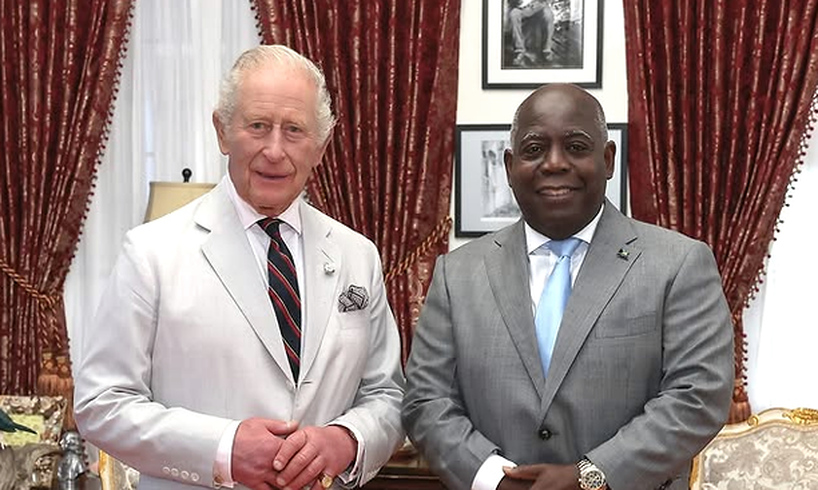
King Charles III is facing one of the most politically sensitive tests of his reign as his Caribbean tour becomes the backdrop for renewed demands that Britain formally apologize for its historical involvement in slavery and confront calls for reparations.
King Charles and Queen Camilla arrived in the Caribbean on October 27, beginning a tour that included stops in the Bahamas and Guyana. They were also expected in Antigua and Barbuda for a major gathering of Commonwealth leaders.
What might otherwise have been presented primarily as a diplomatic celebration has instead become a confrontation with unsettled questions about Britain’s colonial past.
Caribbean leaders and campaigners are arguing that expressions of sorrow are no longer sufficient.
They want meaningful acknowledgment, concrete discussions and an official response to demands for reparatory justice.
For Charles, the controversy presents a difficult balancing act between his constitutional responsibilities, his personal interest in dealing with historical injustice and the British government’s longstanding opposition to financial reparations.
King Charles Speaks About Britain’s Past, but the Debate Is Not Over
Charles did not avoid the painful legacy of British colonialism in his speech in the Bahamas. He also spoke warmly about the achievements and resilience of Caribbean people. However, recognizing the past is only part of the conversation, particularly for those seeking a formal apology and reparations.
The remarks followed earlier expressions of personal sorrow about slavery, including statements he made during a Commonwealth meeting in 2022.
But campaigners have drawn a distinction between expressing sorrow and issuing a formal apology.
For Caribbean leaders, the difference matters. Acknowledging the suffering caused by slavery is one thing. Offering an official apology is another, especially when the conversation turns to reparations and what Britain might be expected to do next.
Reuters reported Friday that Buckingham Palace had indicated Charles would not apologize on behalf of Britain.
The British government has also repeatedly rejected financial reparations for its role in the transatlantic slave trade.
Those positions leave the monarch facing pressure from leaders seeking stronger acknowledgment while operating within the limits of the British constitutional system.
Why Caribbean Leaders Are Increasing the Pressure
The Caribbean Community, known as CARICOM, has made reparatory justice a major regional priority.
The organization has called for discussions about the historical consequences of slavery, covering economic inequality and the lasting effects of imperial exploitation.
Its representatives are expected to raise the subject during the Commonwealth Heads of Government Meeting beginning November 1 in Antigua and Barbuda.
The Commonwealth includes 56 member countries, many with historical connections to the former British Empire.
The gathering therefore provides an international forum where the monarchy’s symbolic role intersects with debates about colonial history.
Caribbean campaigners argue that the wealth generated through slavery and plantation economies contributed to Britain’s economic development while leaving profound social and financial damage across the region.
They claim that acknowledging those consequences should involve more than commemorative speeches.
Opponents of financial reparations raise questions about responsibility throughout generations, how compensation would be calculated, and which institutions or governments should participate.
Those are complex issues, but their complexity has not diminished the demands for serious negotiations.
Charles Cannot Simply Speak for the Government
One important complication is the monarch’s constitutional position.
Although Charles serves as Britain’s head of state, elected officials make decisions on government policy and public spending.
A royal apology on behalf of the country could therefore create political questions extending beyond the palace.
That helps explain why the king’s language has remained carefully calibrated.
He can acknowledge suffering, recognize historical injustice and encourage dialogue without independently committing the British government to financial measures.
But that approach may disappoint those who believe the monarchy has a particular responsibility because of its historical connections to imperial expansion.
The controversy is therefore both personal and institutional.
It concerns what Charles believes, what he can constitutionally say and what the British state is prepared to do.
A Monarchy Facing a Changing Commonwealth
The debate arrives during a wider review of the monarchy’s place in former British colonies.
Some Commonwealth countries continue to recognize Charles as head of state, while others have become republics or are debating their constitutional futures.
That changing relationship creates challenges for an institution built around stability and heritage.
Royal visits can strengthen personal relationships and diplomatic ties, but they can also draw attention to lingering historical disputes.
Charles has frequently emphasized environmental protection, interreligious dialogue and international cooperation.
His inclination to discuss difficult historical subjects could influence how future generations view the monarchy.
However, carefully chosen words may not satisfy leaders pursuing tangible commitments.
The king may leave the Caribbean having said many of the right things about Britain’s past. Whether those words will satisfy people who have spent years calling for an apology and reparations is another matter entirely.


Comments (0)