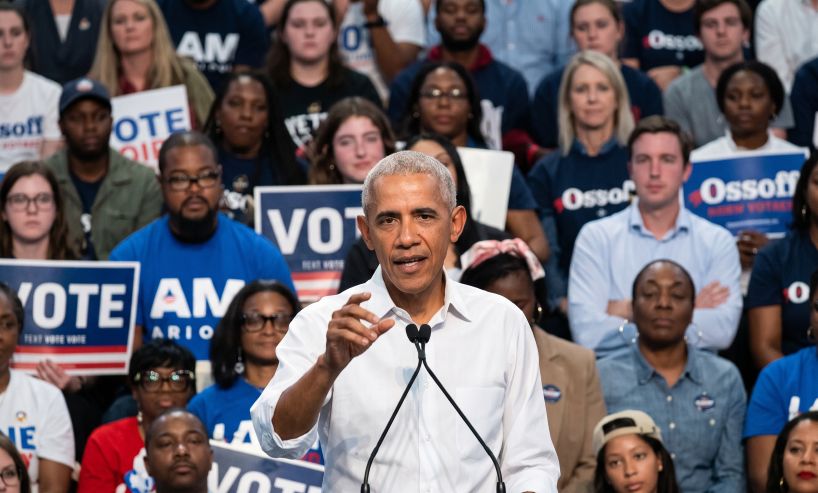
Barack Obama has been out of the White House for nearly a decade, but the Democratic Party has just been given a fresh reminder of how much political influence he still carries. As Democrats celebrate their sweeping gains in the midterms, there is a strong case that Obama deserves a share of the credit, even if the party’s success cannot be pinned on one man.
The former president did not build this new Democratic coalition on his own, and he was not responsible for every campaign that helped deliver the result. Yet his decision to step back onto the campaign trail at a crucial moment gave candidates something that is difficult to manufacture: the backing of a political figure who can still command attention, draw crowds and connect with voters who might otherwise feel little connection to the party’s current leadership.
In its examination of Obama’s role in the Democratic victory, The Guardian points to the complicated relationship between the former president and a new generation of politicians. Some have criticized his record, questioned his centrist approach and argued that his presidency did not deliver the changes they wanted. Yet when those same candidates needed support, Obama’s presence proved valuable.
Obama opened a door that Democrats are still walking through
One of the clearest examples is Abdul El-Sayed, the Michigan politician who has become the country’s first Muslim senator. El-Sayed has not hidden his disagreements with Obama, having previously criticized his presidency over issues including foreign policy, drone strikes and immigration. Nevertheless, he has also acknowledged the significance of Obama’s historic election, particularly for Americans from backgrounds that had rarely seen themselves represented at the highest level of government.
The Guardian describes Obama’s legacy as extending beyond his policies, arguing that his election helped change what many Americans believed was possible. That is an important distinction. A new generation of candidates may want to take the party in a different direction, but they are entering a political landscape that was altered by the barrier Obama broke when he became the first Black president.
El-Sayed himself has drawn a comparison between his relationship with Obama and that of a son who appreciates what his father has done while still believing he could have made different choices. It is an unusually revealing way of describing the relationship between the Democratic establishment and the politicians now challenging parts of it.
Obama also lent his support to El-Sayed in the closing days of the campaign, appearing with him at a rally and putting the Michigan race in the national spotlight. Their political differences have not disappeared, but El-Sayed was willing to accept Obama’s backing, and the former president was willing to give it. That alone says something about the value Democrats still place on having Obama in their corner.
Democrats needed the man who could still bring people together
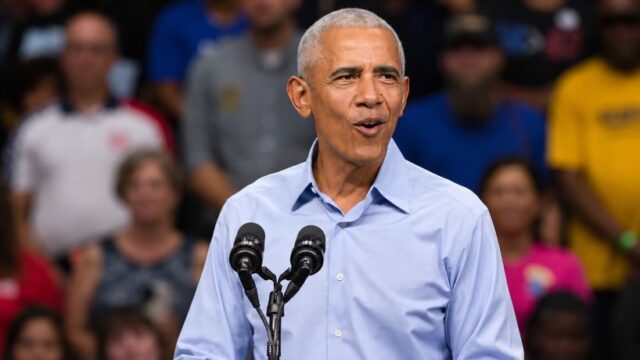
Obama’s return to the campaign trail was not limited to Michigan. He also appeared with other Democratic candidates, using his speeches to criticize Donald Trump and encourage voters to take part in the midterms. His ability to attract attention was one reason party strategists wanted him involved, particularly when the campaigns were entering their final stretch.
A former Obama speechwriter, David Litt, told The Guardian that the former president still has the credibility and ability to drive turnout that candidates in close races can benefit from, especially among young and Black voters. That kind of influence is not something every former president retains, and it helps explain why Democrats turned to him when the stakes were high.
There is also a political irony in Obama’s involvement. Some of the candidates he supported have been critical of the very establishment he represents, while others belong to a more progressive wing of the party. Yet he was prepared to stand beside them and lend his reputation to their campaigns.
That does not mean Obama suddenly agrees with every part of their agenda. It does, however, show that he was willing to put his influence behind candidates whose politics do not always match his own.
Bernie Sanders deserves recognition too
The Guardian makes another important point: Obama was not the only political figure whose legacy helped shape the Democratic gains. Bernie Sanders and the progressive movement he helped build also played a significant part in creating the environment in which a new generation of candidates could make their case.
Sanders spent years challenging the influence of wealthy donors and corporations, calling for changes to healthcare, taxation and government spending. His presidential campaigns helped bring those arguments into the center of Democratic debate, even when the party’s leadership was reluctant to embrace them.
The result is a Democratic coalition with several different strands. Obama represents a form of political reach and recognition that remains difficult to replace, while Sanders helped give many younger activists and candidates a language for demanding more far-reaching change.
Obama and Sanders have both helped shape the Democratic Party, although they have taken different paths and often disagreed on what the party should stand for. Obama’s involvement in the midterms showed that he is still willing to put his name and influence behind candidates, even as a younger generation pushes for changes he may not always support.
Democrats got a clear reminder during these midterms that Obama still has something the party cannot easily replace. He can put candidates in front of national audiences, bring people out to rallies and reach voters who may not feel much connection to the party’s current leadership. He may have left the White House years ago, but his role in this campaign showed that Democrats still have plenty of reason to turn to him when they need his help.
Democrats now have a great deal to consider after their victories, including how they intend to use their new influence and what direction the party will take next. But one thing is difficult to overlook: when they needed a familiar voice with the ability to bring attention to their campaigns, they called on Barack Obama.
The party may be moving into a new political era, but it is doing so with help from a president whose influence has outlasted his time in office. Democrats do not owe him the entire victory, but they have good reason to acknowledge the debt.

Comments (0)