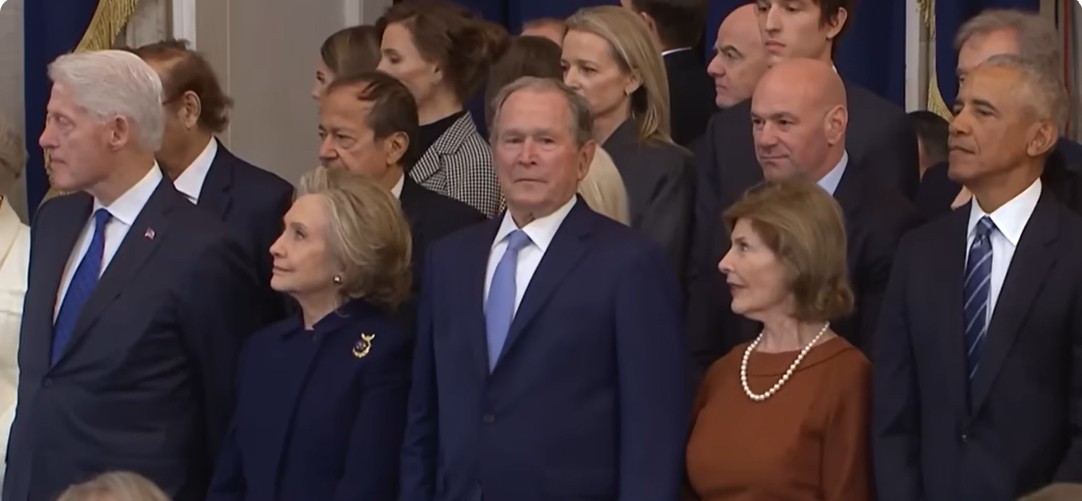
George W. Bush may have left the White House nearly two decades ago, but his family has found itself back in the middle of a Republican political storm, and the results of the latest midterm elections have made that involvement particularly uncomfortable for Donald Trump and his party.
Before voters headed to the polls, members of the Bush family made an unusual political statement by backing Democrat James Talarico in his battle against Trump’s preferred candidate, Republican Ken Paxton, in Texas. Now that Talarico has won the Senate race, ending the Republicans’ decades-long hold on the seat, that decision has taken on a much greater significance.
The BBC reported before the election that Neil Bush, George W. Bush’s younger brother, had publicly declared his support for Talarico. George W. Bush’s daughter, Barbara Bush, had also donated $2,500 to a political action committee supporting the Democratic candidate.
It was an extraordinary development for a family that has been one of the most recognizable Republican political dynasties in modern American history. The Bushes have deep roots in Texas politics, and their support for a Democrat running against a candidate backed by Trump offered a striking reminder that not everyone within the traditional Republican establishment has embraced the direction the party has taken.
There is, however, an important distinction: George W. Bush himself did not publicly endorse Talarico. It was his brother and daughter who made their support known, but their decisions inevitably brought the former president and his family’s complicated relationship with Trump back into the political conversation.
The Bush Family Sends Trump an Uncomfortable Message
Neil Bush was particularly direct about why he supported Talarico, making clear that his decision was not simply about choosing one candidate over another.
In a Facebook post, he wrote: “My vote was motivated by two things: deep concern about Ken Paxton’s record and genuine admiration for the character and principles I see in James Talarico.”
He also pointed to Paxton’s efforts to help Trump challenge the outcome of the 2020 presidential election as one of the reasons he could not support the Republican candidate.
That is significant because Paxton was not just another Republican running for office. Trump had backed him in the Texas Senate contest, despite concerns from other Republicans about the attorney general’s political baggage and whether he could win a general election.
The Bush family’s backing of his Democratic opponent also brought an old Republican divide into view. Some traditional Republicans have never been comfortable with Trump’s style of politics, while others have thrown their support behind him and the movement he has built.
The family has had a difficult relationship with Trump dating back to the 2016 presidential campaign, when he defeated Jeb Bush in the Republican primary. George H.W. Bush later confirmed that he had voted for Hillary Clinton, while George W. Bush has made indirect criticisms of Trump over the years.
The latest Texas contest brought those old tensions back into focus.
Trump’s Preferred Candidate Suffers a Major Defeat
The outcome could hardly have been worse for Trump. Despite his endorsement and an enormous financial effort by Republican allies to keep the seat in GOP hands, Talarico defeated Paxton on November 3.
The victory was historic. Democrats had not won a Texas Senate seat since 1988, and Talarico’s win ended a Republican hold that had lasted for nearly four decades. It also formed part of a much broader Democratic breakthrough in Texas, where Republicans suffered major losses across the ballot.
Trump had put his support firmly behind Paxton, so the loss is likely to raise questions about why he chose to back him in the first place, particularly given the controversies that had followed the Texas Republican for years.
Paxton had already faced an impeachment trial and repeated legal and ethics questions. Democrats used that record to make the case that his candidacy reflected problems within the Republican Party itself.
Talarico, meanwhile, built his campaign around the cost of living, political corruption and a message that appealed to voters beyond the traditional Democratic base.
The result demonstrated that even a heavily Republican state could become vulnerable when voters were unhappy with the candidates and the direction of the party.
George W. Bush’s Political Legacy Returns to the Conversation
For George W. Bush, the election presents an interesting moment because the political party he once led is now facing a very different identity under Trump.
His brother and daughter were willing to cross party lines to support a Democrat, while Trump was backing a Republican candidate who ultimately failed to hold one of the most important Senate seats in the country.
The Bush family’s support was not enough on its own to decide the race, and there is no indication that George W. Bush personally organized an effort to defeat Paxton. Still, their involvement showed that some Republicans remain unhappy with the direction the party has taken under Trump and are willing to support candidates outside their own party.
And now that the election is over, the question facing Republicans is whether they are prepared to acknowledge those divisions or continue down the same political path.
Trump’s defeat in Texas is more than a setback for one candidate. It has exposed the risks of putting personal loyalty and political endorsements ahead of a candidate’s ability to appeal to voters.
For the Bush family, the result also brings an uncomfortable contrast into focus. The Republican Party that once produced two presidents from the same family has changed dramatically, and its latest election defeat has revived questions about what happened to the party they helped build.

Comments (0)