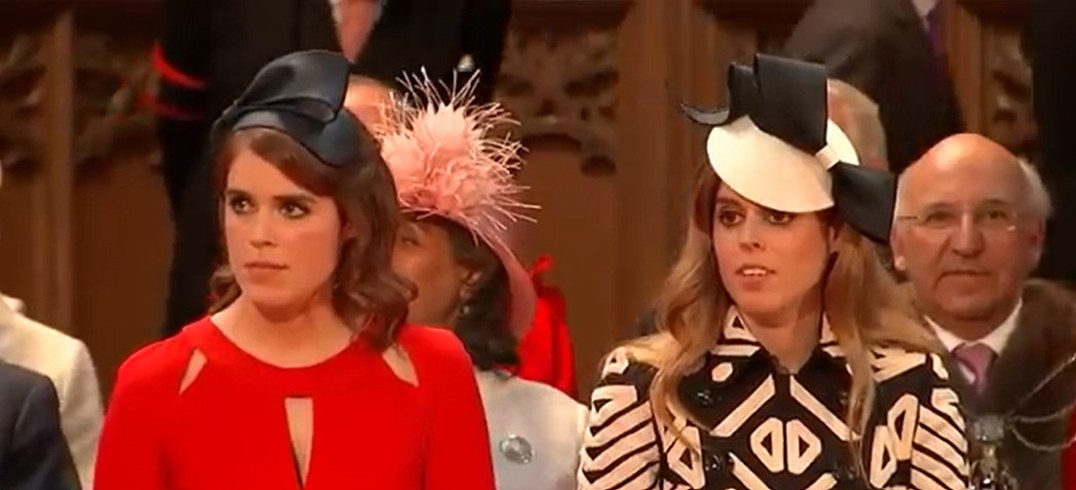
Princess Beatrice and Princess Eugenie are facing renewed scrutiny as King Charles prepares for the royal family’s traditional Christmas gathering at Sandringham.
The sisters, who have increasingly maintained a low public profile amid the controversies surrounding their father, Andrew Mountbatten-Windsor, may find this year’s celebrations particularly complicated.
Royal commentator Richard Fitzwilliams has suggested that Charles could privately welcome his nieces while limiting their participation in the highly photographed Christmas Day walk to church.
The suggestion follows a difficult year for the extended royal family, including Andrew’s February arrest on suspicion of misconduct in public office. Andrew has denied wrongdoing.
Although Beatrice and Eugenie have not been accused of involvement in the alleged misconduct under investigation, their father’s damaged public standing continues to generate questions about their own future appearances.
For Charles, the problem is not simply whether his nieces attend Christmas. It is how the monarchy can maintain family relationships without allowing Andrew’s controversy to dominate another major royal occasion.
A difficult decision for the York sisters
Beatrice and Eugenie joined the royal family at Sandringham for Christmas in 2025, appearing alongside other relatives during the traditional walk to St. Mary Magdalene Church.
The event is among the monarchy’s most recognizable annual public appearances.
Thousands of photographs are taken as the royal family greets well-wishers outside the church.
But the situation surrounding Andrew has changed substantially since last Christmas.
His arrest and the continuing investigation have brought fresh attention to his former official responsibilities and his relationships with important figures.
The controversy has reinforced questions about the monarchy’s approach to accountability and the privileges historically associated with royal status.
For Beatrice and Eugenie, that means even a relatively ordinary family appearance can become a major news story.
A royal expert predicts a private invitation
Speaking to the Daily Express, Fitzwilliams suggested the sisters might receive invitations to Sandringham on the understanding that their attendance would remain private.
He also said he would be surprised if they chose to participate under those circumstances.
His comments reflect an interpretation of how the Palace might manage the situation.
They do not confirm an ultimatum from Charles.
Buckingham Palace has not publicly announced that Beatrice and Eugenie have been banned from the Christmas walk or ordered to remain out of sight.
That distinction matters because speculation about private royal decisions can easily become presented as established fact.
What is clear is that the sisters face an unusually delicate public environment.
Andrew’s problems go beyond his former duties
Andrew’s removal from official royal life has fundamentally changed his public position.
He no longer represents the monarchy in an official capacity, and his controversies have become a major issue for the institution.
The allegations and investigations surrounding him must be considered separately from the lives of his adult daughters.
Beatrice and Eugenie have their own families, careers and charitable interests.
Their royal titles do not make them responsible for their father’s actions.
Yet public scrutiny does not always respect those distinctions.
Their appearances can attract questions about whether the monarchy is keeping connections with Andrew’s household too visible.
Conversely, excluding them from family events could invite criticism that they are being penalized for matters in which they have not been implicated.
This is the dilemma Charles has to navigate.
William’s future monarchy adds another dimension
The King has pursued a smaller working royal structure, and Prince William is expected to continue shaping that approach when he eventually becomes monarch.
The sisters are not full-time working royals.
They therefore occupy a position somewhere between private family life and public royal identity.
That arrangement was already complicated before Andrew’s latest legal difficulties.
Now, any decision involving their visibility may be interpreted as evidence of the institution’s long-term approach to the York family.
William will eventually inherit responsibility for deciding which members of the extended family participate in public royal activities.
But there is no verified evidence that he has demanded Beatrice and Eugenie’s exclusion from Christmas celebrations.
The distinction Charles cannot ignore
The strongest argument for sustaining family contact is that private relationships should not automatically be determined by public controversy.
The strongest argument for limiting official appearances is that the monarchy must manage the public implications of every event carrying its institutional authority.
Those objectives are not necessarily incompatible.
Charles could maintain warm personal relationships with his nieces while continuing to distance the monarchy from Andrew’s former official role.
Whether that balance will be reflected in the Christmas arrangements is still uncertain.
For Beatrice and Eugenie, the coming weeks may bring another indication that membership in the royal family can mean living with the consequences of decisions made by other people.
And for Charles, Christmas offers an unusually visible test of how he intends to separate family loyalty from institutional responsibility.
Comments (0)