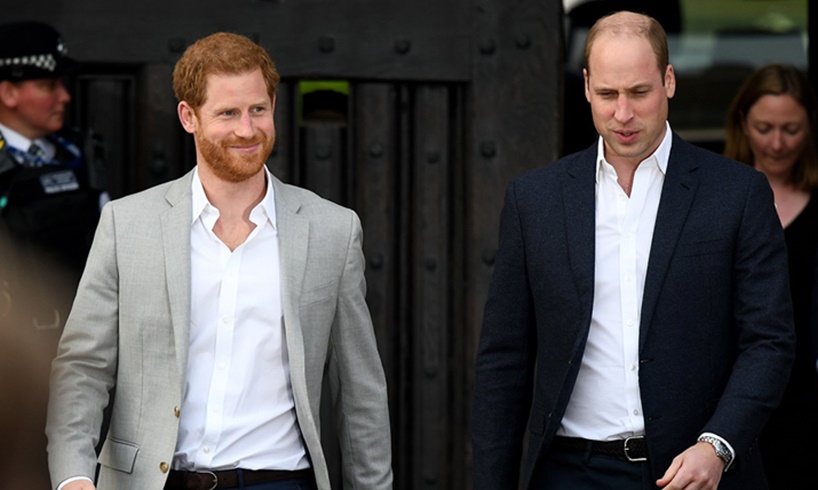
Prince Harry had a very busy week. After his interview with The Telegraph in Ukraine (where he spoke about the war, his military background, and the prospect of returning to the Army if asked), he appeared on ITV’s This Morning for a lighthearted chat with Alison Hammond and Dermot O’Leary. He touched a variety of topics, from Archie and Lilibet to life in the UK, and he even had a go at a whisky during the Christmas cake segment.
For a few days, Harry dominated the headlines. Then came William’s moment in India and all of a sudden the royal conversation was in a very different place.
It took William just 45 minutes to remind everyone (including presumably his father, King Charles III) that the Monarchy has a future King who knows precisely what he is doing. One appearance with PM Modi and the success of the Waleses’ overseas tour were all it took to shift the focus back onto the King.
And there was something rather satisfying about the way William did it. No dramatic interview, no personal revelations, no television jokes or attempts to grab the headlines. He turned up, represented Britain and got on with the job.
William Shows Charles His Heir Is Ready
For King Charles, this visit should be very reassuring. He has spent so many years doing the diplomatic work of the Crown, building relationships with world leaders and using that platform to put Britain on the map. William is clearly in no doubt as to the responsibility that comes with the role.
The Prince and Princess of Wales have just completed their first joint overseas tour in four years, and the visit has been widely regarded as a success.
There were some particularly striking moments, including Catherine comforting a grieving mother at a hospital bedside and William meeting Modi. The photograph of the three men, with the future King standing between the Indian Prime Minister and the British delegation, quickly became one of the visit’s defining images.
It was not just another royal photo op. The point of the visit was to cement the UK’s relationship with India, and William was allowed to do precisely what a future sovereign is expected to do: build personal relationships with key world leaders and represent the country on the world stage.
That kind of achievement cannot be achieved with a silly TV interview, however entertaining that might be. And perhaps the most important point of all was not actually for the public at all. It was a reminder to Charles that his heir is gaining the experience, confidence, and international profile you need for the job ahead. William is not yet King, but he is being prepared for it.
Harry Can Make Headlines, But William Has a Different Job
There is a fascinating contrast there. Harry’s recent appearances have shown that he still has the capacity to generate massive interest, particularly when he talks about his military career, his relationship with Britain, and his family.
His This Morning appearance was relaxed and entertaining, and he had another opportunity to discuss subjects that clearly still matter to him in his conversation with The Telegraph.
But William’s visit to India was about so much more than just generating headlines. He was there as the Prince of Wales, a role that will only become more significant as he moves toward the responsibilities of the Crown.
One could argue that this is precisely where the difference between the two estranged brothers becomes most obvious. Harry can still command the cameras, but William is building the relationships and experience that will shape his future reign.
And perhaps that is why the India photos were so potent. The Prince did not need to make a big statement or give a controversial interview. All he needed to do was turn up and do the job.
The Waleses Are Already Planning What Comes Next
There is also the suggestion that this will be a one-off. William clearly wants shorter overseas trips focused on the impact he and Catherine can make, rather than the long-haul royal tours of yesteryear.
He is due to respond to Foreign Office requests to go out on government business, and the diary for next year is already being put together.
Australia has also come up as a potential venue for the next Earthshot Prize in the autumn. William mentioned Australia backstage at the recent awards, so that is certainly a possibility of another big international appearance.
Catherine’s future travel plans are still somewhat in the fog, though she does hope to do a bit more of the shorter visits in the course of her work in the early years.
That is a very important point. The Princess has been through a lot, and there is no justification for her to return to that exhausting overseas schedule to meet public expectations. This week’s visit has demonstrated what she can do when she is ready to be involved.
Harry’s Headlines Are Not the Same as William’s Influence
There is no need to pretend Harry’s recent media appearances did not attract attention. They certainly did, and the Duke is still a public figure, whether the Palace wants him to be or not.
But the Royal Family has completely different priorities when it comes to the future. William has to be the face of Britain, build relationships with world leaders, and give the monarchy a clear sense of direction.
And after four years without a joint overseas tour, India was a very useful reminder of what he and Catherine can do together.
Harry may have had his moment in the papers, but William’s appearance with Modi really put the future of the monarchy back in the headlines. In 45 minutes, the Prince of Wales delivered a statement which was probably more important than any interview he could have given. The heir is ready to come forward, and Dad can be reassured that the next generation is in a position to do the job.
Perhaps that is the real lesson for the Palace. Harry can still get people to watch, but William has to show them what comes next.
Comments