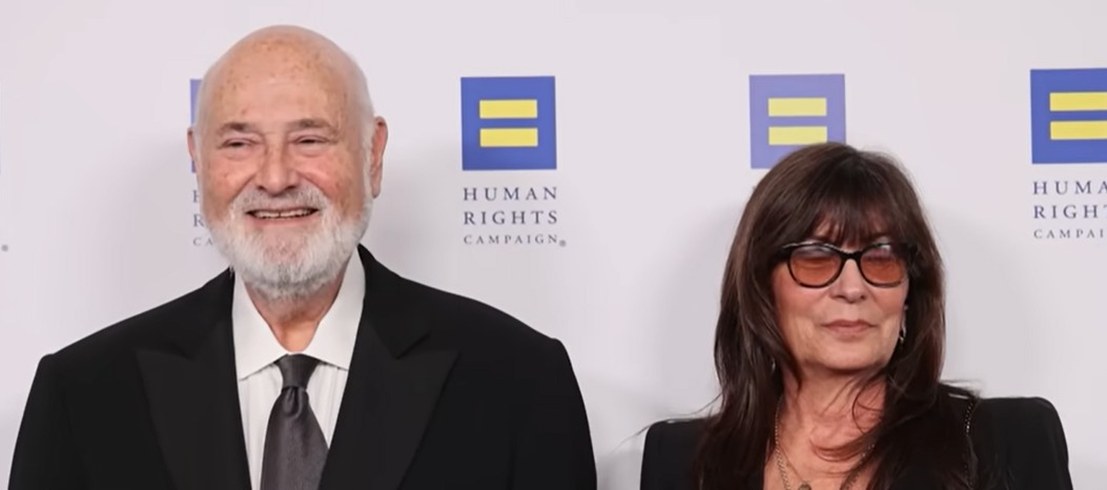
In the wake of the shocking deaths of Rob and Michele Reiner, Hollywood is struggling to process not just the brutality of what occurred inside the couple’s Brentwood mansion, but the haunting way their own words — spoken years earlier — now echo with devastating clarity.
Rob Reiner, the acclaimed director behind When Harry Met Sally, Stand By Me, and The Princess Bride, spent much of his later life confronting a deeply personal crisis: his son Nick’s long battle with addiction, homelessness, and volatile mental health. Rather than hide from it, Reiner did something rare in Hollywood — he turned that pain into art.
Now, following the arrest of Nick Reiner in connection with the deaths of his parents — a case that remains under investigation — one line from Being Charlie, the semi-autobiographical film Rob made with his son, has taken on a painful and almost unbearable resonance: “I’d rather have you alive and hating me than dead on the streets.”
It was the line Rob Reiner fought to keep.
A Family on the Brink
Friends say Rob and Michele were deeply worried in the days and weeks before their deaths. At a Christmas party hosted by Conan O’Brien — an intimate, familiar gathering among longtime friends — Nick Reiner reportedly appeared erratic and agitated, alarming those in attendance. Witnesses described him “running around,” asking people if they were famous, and getting into a loud argument with his parents over rehab.
It was not an isolated incident. The Reiners had lived for years on the edge of uncertainty, cycling through hope and heartbreak as Nick struggled with substance abuse and mental illness. By his own account, Nick had entered rehab repeatedly by his early twenties and spent long periods homeless when he refused the conditions set by his family.
Rob and Michele later admitted, publicly and painfully, that in their desperation they often deferred to medical professionals over their son’s own pleas.
“When Nick would tell us it wasn’t working for him, we wouldn’t listen,” Rob said in a Los Angeles Times interview years earlier. “We were desperate — and because people had diplomas on their wall, we listened to them when we should have been listening to our son.”
Michele echoed that regret, saying they were told Nick was manipulating them — and they believed it.
Those admissions were not made after tragedy struck. They were made years earlier, as part of an unusually honest reckoning.
Turning Trauma Into Truth
Being Charlie was never designed as a redemption fantasy. Co-written by Nick Reiner while in recovery and directed by his father, the film deliberately avoided tidy conclusions or inspirational platitudes. It depicted addiction as exhausting, repetitive, and corrosive—not just for the person using, but for everyone who loves them.
Cary Elwes’s character — the stand-in for Rob — is often harsh, controlling, and emotionally blunt. Elwes later said Reiner repeatedly pushed him to be tougher, not kinder.
“There were times I wanted to tone it down,” Elwes recalled. “Rob would say, ‘No—turn it up. I didn’t handle it well. We have to show that.’”
At the emotional core of the film is a climactic confrontation between father and son, lifted almost verbatim from real life. The father acknowledges that forcing rehab, issuing ultimatums, and choosing survival over comfort may have made him cruel — but insists he would make the same choice again. “I’d rather have you alive and hating me than dead on the streets.”
Reiner insisted the line remain, even when others questioned its severity. For him, it was not just dialogue — it was the clearest articulation of the impossible moral calculus parents of addicted children are forced to make.
A Line That Lands Differently Now
In the film, the line is meant to be redemptive. In reality, it now reads as something else entirely: a stark reminder that love, vigilance, honesty, and sacrifice are not always enough.
Rob Reiner never gave up on his son. He housed him, cut him off, welcomed him back, fought with him, listened too late, listened again, and ultimately stood beside him to tell their story to the world. Friends say that even shortly before their deaths, Rob and Michele were still trying — still frightened, still hopeful, still engaged.
They did not retreat into denial. They did not pretend things were fine. They chose involvement over silence.
That is what makes the tragedy so destabilizing. The story was not supposed to end this way.
An Unintended Epitaph
“I’d rather you hate me and you be alive” was never a threat or an attempt to dominate. It was the language of a parent who understood that love sometimes means being misunderstood — choosing survival even when it risks breaking what remains of a relationship.
And, tragically, even that was not enough.
Still, the line captures something essential about Rob Reiner — not only as a filmmaker, but as a father. He was unwilling to look away, unwilling to soften the truth for comfort’s sake, and unwilling to stop fighting for his son, even when fear sat at the center of every decision.
In the shadow of an unspeakable loss, those words now carry a different weight. They read less like dialogue and more like a quiet memorial– for Rob and Michele Reiner, and for every family caught between love and chaos, hope and terror, with no clear way through.