For a long time, autism was presented to the public in a very narrow way. Popular culture leaned heavily on the Rain Man stereotype — a young boy, socially cut off, and defined almost entirely by his differences.
That picture is now breaking apart. Away from movie screens and headlines, something quieter has been unfolding in ordinary homes and exam rooms across the country. Increasingly, autism is being recognized in women in their thirties — many of them mothers, juggling daily life while just beginning to understand themselves.
Adult diagnoses have surged at a remarkable pace. One recent analysis found that diagnoses among millennials have climbed by more than 450 percent in just ten years. That change has also reshaped how autism is understood.
Rather than something to be “fixed” early in life, it is increasingly seen as a lifelong way of interpreting the world — one that many people lived with for years without a name. This cultural pivot is being fueled by a generation of mothers who are finding their own identities reflected back at them, sometimes through their children’s clinical evaluations and, most recently, through the toys their children play with.
The Mirror Effect: Parenting as a Diagnostic Tool
For many women, the road to self-discovery is accidental. It usually starts with a small concern — a delayed milestone, an unusual habit — something that prompts a referral to a specialist. As the evaluation unfolds and traits are quietly noted — sensitivity to noise, exhaustion after social interaction, an intense attachment to structure — the mother recognizes something uncomfortably familiar in the list.
That sense of recognition is not accidental. It reflects decades of clinical blind spots, particularly when it comes to how autism shows up in girls. Because women are often socialized to “mask” — the exhausting process of mimicking neurotypical social cues to fit in — their symptoms frequently go undetected until the mounting pressures of adulthood, such as the sensory and organizational chaos of parenting, cause the facade to crack.
Receiving a diagnosis later in life can stir up complicated emotions. Many adults feel a quiet ache for the child they once were — the one described as “too much,” “odd,” or hard to manage — even as the diagnosis brings an undeniable sense of relief. Years of uncertainty begin to fall into place, and behaviors once blamed on personal failure are finally understood as neurological differences rather than flaws of character.
From Clinical Labels to Cultural Icons
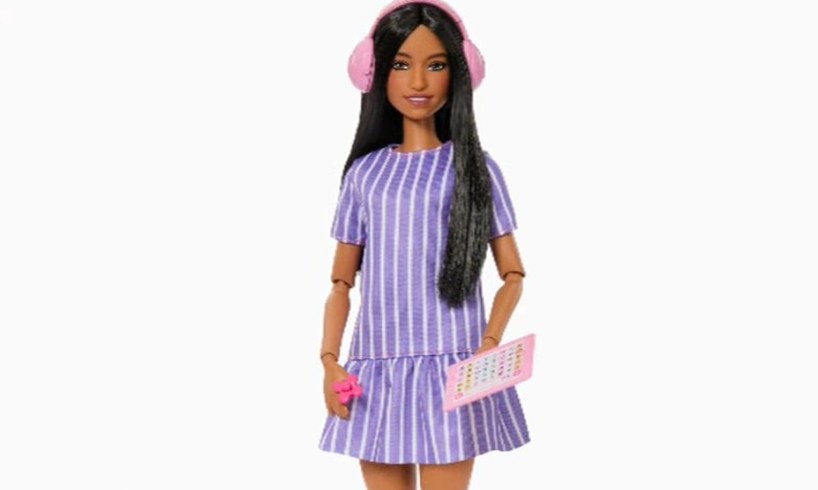
That change is perhaps most obvious outside the clinic, in places like toy stores and playrooms, where this new understanding is beginning to show up in tangible ways. Mattel’s recent release of the first-ever autistic Barbie — complete with noise-canceling headphones, a tactile fidget spinner, and a communication device — signals that neurodivergence is moving out of the “clinical and heavy” space and into the mainstream.
This is not just about play; it is about validation. When a child who uses an augmentative and alternative communication (AAC) device sees a global icon like Barbie doing the same, the “invisible disability” becomes visible. For the autistic mothers of these children, the doll serves as a bridge. It allows them to explain their own needs — like why Mom might need to wear headphones when the house gets too loud — in a way that feels joyful rather than restrictive.
The High Cost of Knowing Yourself
Despite the cultural wins, the path to a formal adult diagnosis remains a gauntlet of systemic barriers. While the American Academy of Pediatrics suggests screening children as early as 18 months, the infrastructure for adults is skeletal at best.
A diagnosis is not just a label; it is an expensive key. With a shortage of specialists trained in adult neurobiology, many are forced to pay thousands of dollars out-of-pocket and wait years for an appointment. This creates a “diagnosis gap,” where self-knowledge becomes a luxury item accessible only to those with the time and capital to hunt down an expert.
The Routine as an Existential Anchor
Beyond the toys and the clinical checkboxes lies the daily reality of the autistic experience: the routine. For some, these habits are a sanctuary — buying the same brand of cereal or wearing the same loose-fitting fabrics to avoid sensory “noise.” For others, the routine is a double-edged sword.
There is an “existential burden” to functioning when your brain demands a specific sequence of events just to feel safe. When a routine is disrupted, it is not just an inconvenience; it can feel like a total system failure. The modern newsroom and workplace are rarely built for this level of rigidity, which is why the rising tide of adult diagnoses is beginning to force a conversation about how Americans structure their lives and expectations.
The New Insight: Neuro-Inheritance and the Future of Family
What remains largely unexamined — by clinicians and by the companies that shape children’s worlds — is what this wave of shared diagnoses will mean over time. Families are beginning to form around a common neurological experience, with parents and children interpreting sound, stress, and routine through strikingly similar lenses.
The result is a household that operates by its own rules. Instead of defaulting to outside expectations, families begin to build routines around what actually feels manageable. When both parent and child know that eye contact is not mandatory and that shared obsessions can be a real point of connection, the old assumption — a “normal” parent correcting a “broken” child — quietly falls apart. Instead, they become co-navigators of a world that was not built for them — fidget spinners in hand, finally feeling seen.