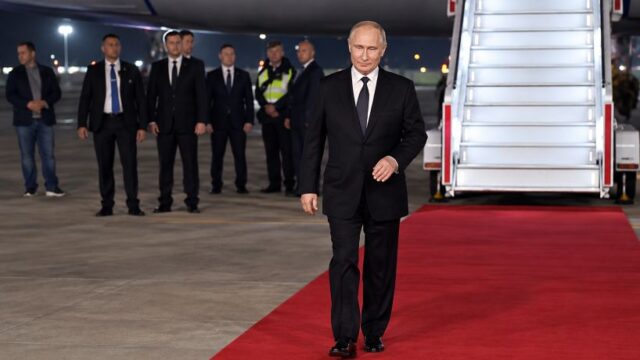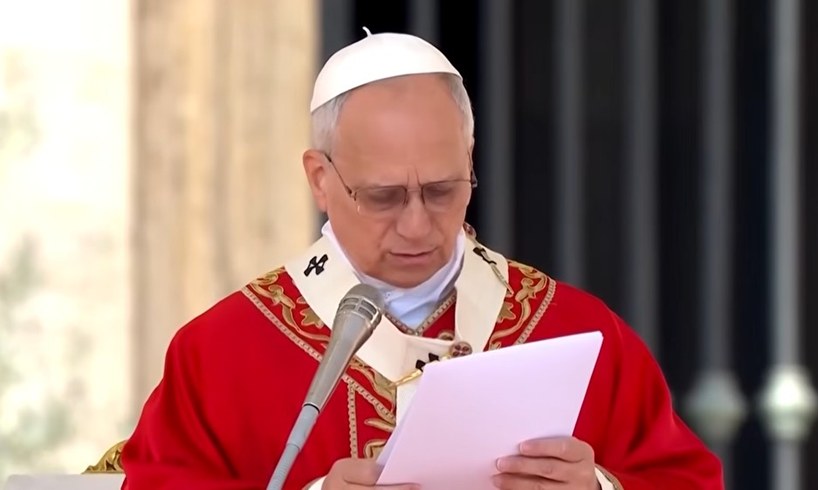
No more turning of the other cheek, no more diplomatic pretense; it is now a battle of wills and words between the Vatican and the Oval Office that is sprinkled with mockery and delusions. For his first Easter, Pope Leo XIV has closed the chapter of “quiet prayer” and is now using his American boldness and ruthlessness as weapons.
This week, the pope has, like no other leader, directly challenged and put a humiliating spotlight on President Donald Trump in a series of stunning statements.
The pope has slammed the president’s handling of the conflict in the Middle East and publicly rebuked the administration’s latest maneuvers at the Supreme Court.
Donald Trump seems to have answered by letting the pope know that he is above him and that he does not answer to a higher power. Tilting towards blasphemy, Trump indicated that he is a high power by comparing himself to Jesus.
During a recent address, he leaned into the martyr narrative, suggesting his personal and political “persecution” mirrors the Passion of Christ.
Hands Full of Blood
Pope Leo proves that a religious leader can multitask; he can feed the souls of the believers while landing a punch against the enemy. During his Palm Sunday homily at St. Peter’s Square, the pope delivered a spiritual message that left no room for interpretation.
He touched on the ongoing war in Iran and gave a direct and clear command to the world’s leaders, saying with fiery passion: “Christ, King of Peace, cries out again from his cross: God is love! Have mercy! Lay down your weapons! Remember that you are brothers and sisters!”
This was indeed the leader of the Catholic Church making a case about not turning the other cheek in the wake of Donald Trump’s speech about a vow to hit Iran “extremely hard,” and sending the country back into the Stone Age where it belongs.
White House Press Secretary Karoline Leavitt rushed to defend her boss by claiming that the war was a “noble” action and rooted in “Judeo-Christian values.”
The pope declined that well-published theory, hitting back with: “I address to the parties involved a heartfelt appeal to assume the moral responsibility of halting the spiral of violence before it becomes an irreparable abyss.”
The Birthright Battle
The frustration did not stop at foreign policy. As Donald Trump made the unprecedented move to attend oral arguments at the Supreme Court with his lawyer regarding his executive order to end birthright citizenship, Catholic leadership was right there on the front lines, making their voices heard and their anger felt.
The pope’s stance is clear: human dignity is not an item to be “regulated” into non-existence. He backed the U.S. bishops who called the order “immoral,” saying: “If people are in the United States illegally, there are ways to treat that… but when people are living good lives, and many of them for 10, 15, 20 years, to treat them in a way that is extremely disrespectful to say the least—I think that the bishops have been very clear.”
The “Board of Peace” Rejection
In a move of pure self-preservation for the Church’s moral authority, the pope has officially declined to join Trump’s “Board of Peace” for Gaza. Cardinal Parolin, the Vatican’s Secretary of State, refused to play a part in the peace charade, citing “critical points” that left the Holy See “somewhat perplexed.”
Parolin made it clear to the president that the Vatican would not be a rubber stamp for the administration’s peace initiatives: “There are points that leave us somewhat perplexed about the board… for us, there are certain critical issues that should be resolved. One concern is that at the international level it should above all be the U.N. that manages these crisis situations.”
With Easter dinner approaching, the pope has ensured that Donald Trump receives a spiritual judgment, but is it all in vain? Trump has shifted the rhetoric policy to mockery with a splash of blasphemy. Mr. Trump has increasingly leaned into a martyr-like persona, often comparing his self-made injuries to the persecution of Jesus Christ.
The President has compared his journey to that of the Savior.
The “Suffering King” Comparison or The Height of Blasphemy
At a White House luncheon on April 1st, he notably remarked on the crowds that greeted him: “They call me king now. Do you believe it? No kings. I’m such a king, I can’t get a ballroom approved. It’s pretty amazing, right? I’m a king,” he said, shifting focus from the religious event to his own experience and recent No Kings protests. If I were a king, we’d be doing a lot more.”
The president went on to share: “Yet he had not come to take a throne, but to carry a cross, not only to reign but to save.”
The “Price Paid”
At the same White House Easter event, Trump’s spiritual advisor, Paula White-Cain, delivered a speech with the President standing directly behind her, explicitly framing his political career as a resurrection: “Mr. President, no one has paid the price like you have paid the price… You were betrayed, arrested, and falsely accused. It’s a familiar pattern that our Lord and Savior showed us. But it didn’t end there for him, and it didn’t end there for you.”
It is clear, the pope sees things differently.