Didier Deschamps did not want to leave France remembered only as the manager who valued safety above style.
For his last World Cup, he handed the keys of the attack to Kylian Mbappé, Ousmane Dembélé, and Michael Olise, allowing the trio to move freely and create problems without being confined to fixed positions.
It was a dramatic reinvention, but not a championship-winning one.
Deschamps did not leave with a second World Cup trophy. Instead, his 14-year run ended with two tough losses. France lost 2-0 to Spain in the semifinal, then fell 6-4 to England in the third-place match. The wild game in Miami was Deschamps’s 185th and last match as coach.
His new attacking style brought goals, records, and plenty of chaos. But it also showed France’s defensive problems, which kept them from giving their manager the ending he wanted.
Deschamps’s Tactical Revolution Produced Beauty and Disaster
Before the tournament, Dembélé explained that Deschamps had given France’s attacking stars permission to abandon fixed positions and constantly invade one another’s territory.
The winger told RMC Sport: “We try to communicate a lot, to change positions. Against Brazil and Colombia, we changed positions a lot with pretty much everyone and I think it worked well. It also creates a trace of chaos in opposing defenses. You have Mbappé one minute, two minutes later you have Olise.”
That chaos became the defining feature of Deschamps’s final World Cup.
At its best, France’s attack appeared almost impossible to control. Mbappé, Dembélé, Olise, and the emerging Désiré Doué could switch positions without warning, drag defenders out of shape, and create chances from virtually nothing.
Dembélé had revealed just how dramatically Deschamps had loosened the tactical restraints: “Whether it’s Michael or me, Didier Deschamps tells us a lot to change positions, not to stay confined to either the right or the center. And then I try to show my qualities, whether on the right wing, which I know well, or in the center as well. But yes, it’s especially during this last year that I’ve had much more freedom with the national team.”
But what made the system strong also turned into its biggest weakness.
France often confused other teams’ defenses, but sometimes ended up confusing themselves. Spain controlled the semifinal and stopped Deschamps from leaving on a high note. Four days later, England took advantage of France’s open spaces and led 4-0 at halftime.
France fought back in the second half, but the gap was too big. England held on and won the highest-scoring third-place match in World Cup history.
Kylian Mbappé Won the Personal Battle, France Lost
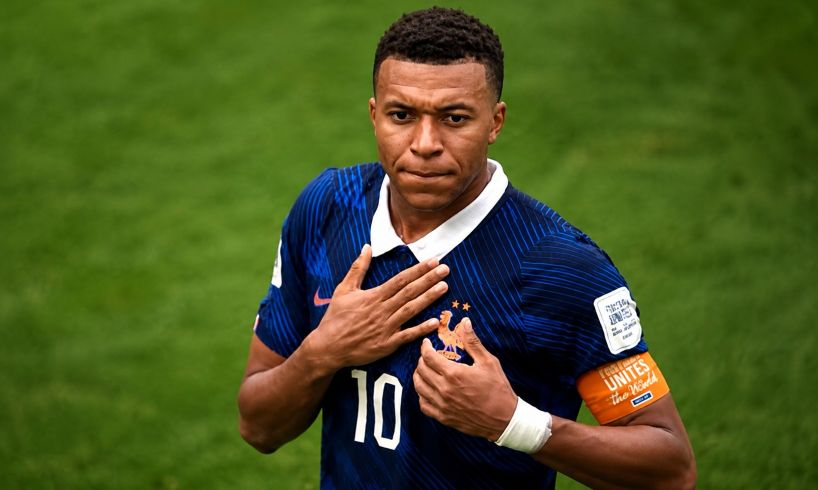
No player embodied the brilliance and frustration of France’s tournament more than Mbappé.
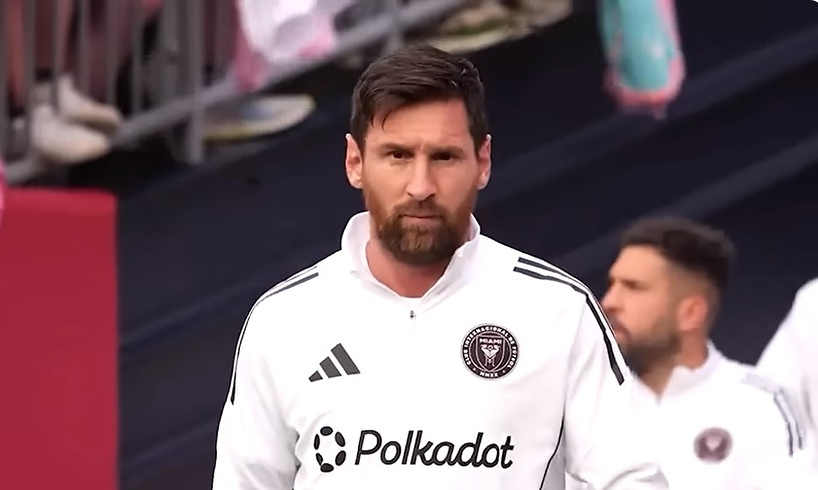
The captain scored twice against England and finished France’s campaign with 10 goals. He left the match with 22 career World Cup goals, moving ahead of Lionel Messi’s total of 21 after Argentina’s appearance in Sunday’s final against Spain.
Mbappé dragged France back into the bronze-medal match after the disastrous opening half, while Dembélé and Bradley Barcola also scored during the frantic comeback attempt.
But even great individual performances could not make up for the team’s overall failure.
France finished fourth, even though they had one of the strongest attacking squads. Mbappé won the Golden Boot, but the trophy Deschamps wanted stayed out of reach.
So, the tournament gave two very different outcomes.
Mbappé made his case as one of the best World Cup players ever. Deschamps showed he could take risks and play attacking football, but also learned why he had focused so much on defense in his career.
A Spectacular Farewell Replaced the Fairy-Tale Ending
Deschamps did not get the perfect send-off. There was no trophy, no confetti, and no final victory lap. His time as coach ended with England scoring six goals and France leaving without a medal.
But one tough afternoon cannot erase what Deschamps achieved.
The trophies tell only part of the story of Deschamps’s 14 years in charge. France became world champions in 2018, won the Nations League three years later, and also reached the finals of Euro 2016 and the 2022 World Cup. His 20 victories on football’s biggest stage remain a coaching record.
As a player, he captained France to victory at the 1998 World Cup and Euro 2000. As a manager, he transformed Les Bleus into the most consistently dangerous international team of his generation.
So, his farewell was bittersweet, not humiliating.
France reached another World Cup semifinal, Mbappé broke scoring records, and Deschamps showed he could still adapt after 14 years. But the last two matches also proved that too much freedom without enough control can lead to problems.
Zinedine Zidane Is No Longer Inheriting a Perfect Machine
Now, the expected arrival of Zinedine Zidane feels very different from what many imagined before the tournament.
Reports in France indicate that Zidane is expected to take control on September 1. However, the French Football Federation did not formally announce the appointment immediately after Deschamps’ final match.
Zidane will not be taking over a perfect team. He will inherit a talented but complicated team.
France possesses devastating attacking talent, a captain operating at a historic level, and several young players capable of dominating the next decade. They also leave the World Cup with serious questions regarding defense organization, midfield control, strategic discipline, and the emotional response to adversity.
This situation makes Zidane’s job more complicated and also more interesting.
Zidane has not coached a team since 2021. His three straight Champions League wins made him known as a top manager, but international football will give him less training time, high public expectations, and little room to experiment.
Previously, skeptics wondered whether France was committing an arrogant mistake by replacing a proven winner with a glamorous national icon.
Now, the main question is different. Can Zidane keep the attacking freedom Deschamps brought in, while also bringing back the defensive strength France lost in their last two World Cup games?
Deschamps Leaves Zidane a Gift and a Warning
Deschamps has refused to commit to retirement and remains open to coaching another club or national team. He previously explained: “My future after the World Cup would be to be a coach of another club or another national team? I do not know. I have the freedom; I have several options. I’m taking my time because in my mind, the only thing that matters is until this summer. And after we’ll see. I don’t forbid myself anything.”
His immediate priority is expected to be time away from the unrelenting pressures of international management, although another major coaching challenge remains possible.
For Zidane, Deschamps leaves both a great legacy and a clear warning. The legacy is a bold generation led by Mbappé, capable of scoring against any team and playing exciting football.
The warning comes from what happened against Spain and England. Talent by itself does not guarantee dominance. Freedom alone does not bring success. Even the best attacking team can fall apart without structure.
Deschamps’s last big change did not bring another title. The soccer legend leaves Zinedine Zidane plenty to work with, but also a problem he cannot afford to ignore.
France still have a fearless group of attackers built around Kylian Mbappé. On their best days, they can overwhelm almost any opponent and produce breathtaking football.
Deschamps’s last big change did not bring another title. Instead, it led to an exciting semifinal run, a record-breaking performance from Mbappé, a tough defensive finish, and a clear picture of the challenge Zidane will face.
The Deschamps era did not close with the trophy France wanted. It ended with 10 goals, a broken defense, and one last reminder that his team could create chaos anywhere, even within itself.