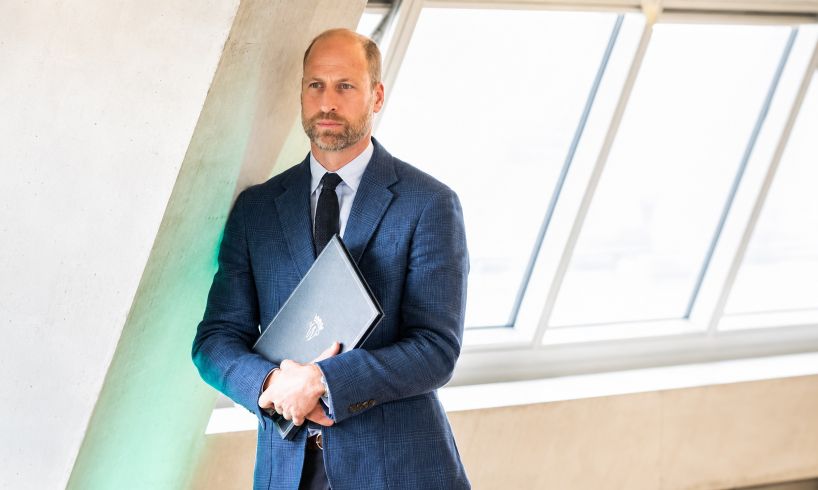
Prince William will travel to Norway this week for an assignment that carries considerably more significance than another appearance on the royal calendar.
The Prince of Wales will represent King Charles III at the funeral of Norway’s King Harald V at Oslo Cathedral on Wednesday, September 9, Buckingham Palace has announced. Princess Anne will also attend, although in a private capacity as godmother to Norway’s new monarch, King Haakon VIII.
Harald died August 28 at the age of 89 after a 35-year reign. His death triggered an immediate constitutional transition in Norway, with Haakon succeeding his father and formally pledging before parliament on September 1 to uphold the country’s constitution and laws. Standing alongside the new monarch during that transition was his 22-year-old daughter and heir, Crown Princess Ingrid Alexandra.
For William, the symbolism is difficult to overlook.
He will arrive in Norway as Britain’s heir to the throne to mourn one king, recognize another and witness a royal family moving through the same generational transition that eventually awaits the House of Windsor.
That would make the trip significant under almost any circumstances. Its timing, however, is particularly striking because Britain is once again consumed by a very different royal story: the return of Prince Harry, Meghan Markle and their children after six years primarily based in California.
Harry and Meghan’s presence has revived questions about reconciliation with Charles, their relationship with William and Catherine, and whether the Sussex family can establish a fresh existence in Britain without returning to official royal duties.
Yet while those questions lead headlines, William is preparing to perform one of the duties that increasingly defines his own future.
He is going abroad on behalf of the King.
William Will Represent the Crown, Not Simply His Father
Charles is not skipping Harald’s funeral because of the latest family turmoil. Under established precedent, the British sovereign does not ordinarily attend the funeral of another head of state, meaning another senior royal is sent to represent the monarch.
This time, that responsibility belongs to William. It is also not an isolated assignment.
William represented Charles at the funeral of Pope Francis at the Vatican in April 2025. His appearance in Oslo will provide another example of the Prince of Wales taking on the kind of international responsibility traditionally expected of an heir preparing for eventual kingship.
Such occasions are less glamorous than state banquets or major royal tours, but they are central to the diplomatic work of a constitutional monarchy. Senior royals maintain relationships with foreign heads of state, attend important international ceremonies and represent the sovereign at moments when continuity and personal relationships between royal houses carry particular significance.
That is especially true in Norway.
Charles described Harald following his death as his “dear cousin” and a “much-loved kinsman and friend,” praising his devotion to Norway and his sense of duty. The British and Norwegian royal families share longstanding family connections, while William himself already knows the generation that has just inherited the Norwegian Crown.
The result is an assignment that is simultaneously personal, dynastic and diplomatic.
Norway Offers William a Glimpse of His Own Future
Perhaps the most revealing part of William’s return to Norway is how dramatically the positions of the two royal families have changed since his previous official visit.
William and Catherine traveled to Norway in 2018, when they were still the Duke and Duchess of Cambridge. They dined with Harald and Queen Sonja at the Royal Palace and spent time with the then-Crown Prince Haakon and Crown Princess Mette-Marit. Harald described the British visitors warmly as “family.”
Eight years later, William is Prince of Wales and first in line to the British throne. Haakon is no longer crown prince; he is King Haakon VIII.
When William last visited, both men were heirs waiting behind their fathers. When William returns Wednesday, one of them will already have crossed the constitutional threshold that still lies ahead of the other.
Norway’s transition happened immediately after Harald’s death. Haakon automatically became king and subsequently appeared before parliament to take the oath required of the sovereign under Norway’s constitution. Crown Princess Ingrid Alexandra, now first in line to succeed him, attended the ceremony at his side.
William will therefore not simply be attending the funeral of a European monarch he knew. He will be watching one royal generation give way to another in real time.
For Britain’s future king, the parallel is unusually direct.
The Crown Does Not Follow the Headlines
That institutional story is unfolding while British royal coverage is being pulled in another direction.
Harry and Meghan have returned to Britain with Prince Archie and Princess Lilibet after six years primarily based in the United States. Reuters reported that the family intends to remain in Britain for an extended period, with the children beginning school there, although the Sussexes will not return to official royal duties or live in a royal residence.
Their arrival has understandably generated speculation about what happens next.
Harry’s relationship with his father has shown signs of improvement, while his estrangement from William remains unresolved. People reported this week that William and Catherine are resisting any immediate reaction to the Sussexes’ return and that there are currently no plans for a rapid reconciliation between the brothers.
That family story is significant, but it exists alongside another reality that can easily become obscured by the attention surrounding the Sussexes.
The monarchy continues operating regardless of which Windsor relationship is generating the largest number of headlines.
A king dies in Norway. A new monarch succeeds him. Britain’s sovereign sends his heir to represent the Crown at the funeral.
That process has nothing to do with whether Harry and William eventually repair their relationship, yet it says considerably more about the long-term direction of the monarchy.
Charles Can Rebuild a Family Relationship Without Rewriting the Monarchy
King Charles’ recent interactions with Harry also demonstrate why personal reconciliation and institutional restoration should not be treated as the same thing.
Charles met Harry, Meghan, Archie and Lilibet privately at Highgrove in July, an important development after years of distance between the King and his younger son’s family. Reporting surrounding the meeting suggested a genuine effort to rebuild family ties, particularly Charles’ relationship with his grandchildren.
That does not mean Harry and Meghan are being restored to their former positions.
Reuters reported following their return that the Duke and Duchess of Sussex remain non-working royals and are not resuming the official duties they relinquished in 2020.
The distinction is important because the King occupies two roles simultaneously. Charles is the sovereign responsible for protecting the institution, but he is also a father and grandfather with personal relationships that do not have to conform perfectly to the structure of the working monarchy.
He can seek a warmer relationship with Harry without making him a working royal again. He can spend time with Archie and Lilibet without altering the line of succession or changing William’s responsibilities.
Personal reconciliation, should it continue, does not amount to constitutional restoration.
William Faces a Different Calculation
William’s position is inherently different because his horizon goes beyond his father’s reign.
As Prince of Wales, he is increasingly being judged not purely as Charles’ son but as the person expected eventually to inherit the institution Charles currently leads. That places his diplomatic assignments, public priorities and approach to the monarchy under a different kind of scrutiny.
It would be speculative to claim that William’s continued distance from Harry is driven by constitutional strategy. The breakdown between the brothers is very personal, and William has not publicly offered a detailed explanation of his current thinking.
What can be observed is the contrast between their respective roles.
Harry has returned to Britain as a non-working member of the Royal Family attempting to establish a new relationship with the country and, potentially, with some members of his family.
William is being dispatched abroad as the King’s representative.
Those two realities are able to coexist without changing every royal engagement into a competition between the brothers.
They nevertheless illustrate how dramatically their courses have diverged since Harry and Meghan stepped back from royal duties in 2020.
Princess Anne Adds One More Layer to the Norway Story
Princess Anne’s presence in Oslo provides another indication of how deeply the relationships between European royal families extend across eras.
Anne is attending the funeral in a private and personal capacity because she is godmother to King Haakon VIII. William, by contrast, will be there officially representing Charles.
Together, their attendance captures two different aspects of monarchy.
Anne represents longstanding personal and family connections that cross national borders and survive individual reigns. William represents institutional continuity, carrying his father’s presence into an important international ceremony while preparing for a future in which those relationships will increasingly become his responsibility.
That continuity is one of the monarchy’s less dramatic functions, but also one of its most enduring.
Relationships between royal houses are often cultivated over decades rather than political terms. The people occupying the titles change, while the institutional connections continue.
Norway is demonstrating that process now.
Britain will eventually experience the same thing.
William Does Not Need to Declare Himself a Statesman
The Norway trip also provides a useful example of why William’s emerging international role does not require major declarations about his status.
The modern Prince of Wales does not formulate British foreign policy, negotiate treaties or exercise the political authority associated with elected leaders. The monarchy is constitutionally expected to remain politically neutral.
Royal diplomacy operates differently.
It is built around representation, continuity, relationships and symbolism. When William stands in Oslo Cathedral on behalf of his father, that is the function he will be performing.
The same was true when he represented Charles at Pope Francis’ funeral. As these assignments accumulate, they afford a clearer indication of the responsibilities moving toward William as his father grows older.
His statesmanlike image therefore depends less on speeches announcing his importance than on repeatedly being the person sent to represent the sovereign when the occasion demands it.
Norway becomes another entry in that record.
Harry’s Return Does Not Alter the Succession
The extraordinary attention surrounding the Sussexes can sometimes confuse another straightforward fact: their return to Britain does not change the constitutional structure of the Royal Family.
William remains first in line to the throne. His children — Prince George, Princess Charlotte and Prince Louis — follow him in succession before Harry.
Nor does the Sussexes’ physical proximity to Charles change their status as non-working royals.
That does not make Harry insignificant to his father or to the wider story of the Windsor family. A successful reconciliation between Charles and his younger son would be personally meaningful, particularly after years of public acrimony.
It simply belongs to a different category from the question of who will eventually carry the institution forward.
William’s Norway assignment offers a particularly clear demonstration of that distinction because it places him precisely where an heir is expected to be: representing the sovereign during a major international royal occasion.
The Future Is Already Visible in Norway
There is an almost unavoidable symmetry to William’s journey.
Norway has just experienced the moment Britain knows will eventually come. A long-serving monarch has died, his eldest son has inherited the throne, and a younger generation has moved forward in the line of succession.
Harald’s death made Haakon king in an instant. It also made Ingrid Alexandra the direct heir to her father.
When William enters Oslo Cathedral to pay his respects Wednesday, he will do so surrounded by the consequences of that transition. The man he once knew as Crown Prince Haakon will now be sitting there as Norway’s sovereign.
One day, William’s own title will change in the same fundamental way.
That reality gives the visit a significance that goes well beyond the latest Windsor dispute.
Harry and Meghan’s return will continue producing questions about family reconciliation, old grievances and what place they can establish for themselves in Britain. Charles may continue moving closer to his younger son and grandchildren, and nothing about William’s position prevents the King from doing so.
But the institutional future of the monarchy follows another path.
It is visible every time William is asked to stand in for his father, every time he represents Britain at an international ceremony and every time he builds relationships he may eventually have to maintain as sovereign.
In Norway, one crown has just passed from father to son. William will travel there representing his own father as Britain mourns Harald and recognizes Haakon.
For the Prince of Wales, the journey serves as both an act of royal diplomacy and an unusually vivid glimpse of the transition that one day awaits him at home.
Comments (0)