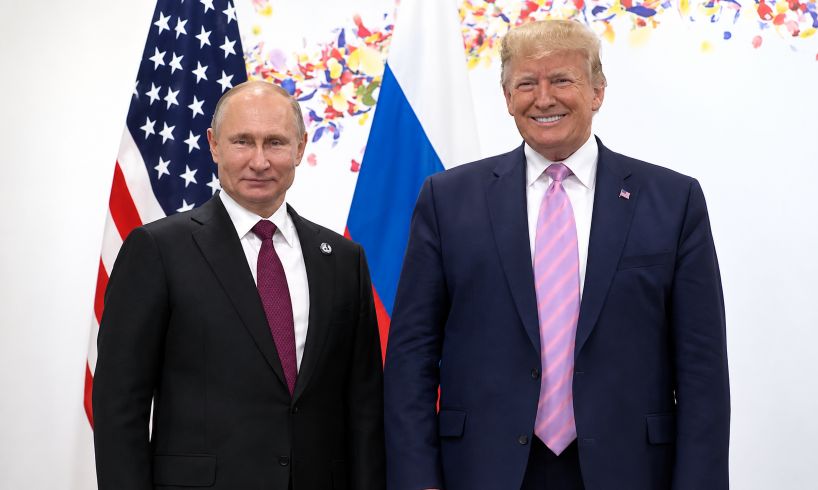
Donald Trump has been talking, negotiating and sending senior envoys across the region in an effort to push Russia and Ukraine toward an end to the war. But in Kyiv, bombings tell a very different story.
Less than 24 hours after Trump’s envoys Steve Witkoff and Jared Kushner met Ukrainian officials, Russia responded. Putin resumed its attacks on the Ukrainian capital. Explosions were heard in Kyiv in the early hours, with Ukrainian officials reporting damage to residential buildings and other sites.
The timing of Russia’s blatant defiance is impossible to ignore. Ending the war is a major Trump campaign promise. And it has become central to his diplomacy with Moscow. During a phone call with Vladimir Putin, Trump said he wanted a swift end to the conflict and a restoration of U.S.-Russia relations.
His administration shipped Witkoff, Kushner and their so-called great negotiating talents to Moscow and Kyiv. They met Putin in Moscow for over three hours before traveling to Kyiv, where they held talks with President Volodymyr Zelenskyy. Witkoff described the Kyiv discussions as “substantive, important, and we are very encouraged.”
For a brief moment, maybe it was an illusion, but there appeared to be some diplomatic movement. Then missiles and drones returned. Making the situation excruciating for Ukrainians and frustrating headlines for DC.
As the Trump administration tried to build a fantastical path toward negotiations, Moscow continued its military campaign. The Kremlin said Putin’s talks with the American envoys were useful and did not rule out restarting three-way negotiations, but no immediate breakthrough emerged.
Putin also spoke with Trump and, according to the Kremlin, insisted Russia had no aggressive plans toward Europe. But on the ground, the war continued.
Russian strikes on Kyiv killed civilians and damaged homes, schools, shops and other sites. Ukrainian Foreign Minister Andrii Sybiha accused Putin of undermining the diplomatic effort with the attacks.
His message was blunt. “His ballistic missiles speak louder than his words on diplomacy,” Sybiha said. He added that repeated strikes on residential buildings were “nothing but senseless terror.”
That is the central contradiction facing Trump’s peace push. The United States can send envoys and make promises and threats. The US president can speak with Putin for hours and shower him with praise.
Diplomats with carefully crafted bullet points can sit across the table and discuss possible agreements. But none of that automatically stops the missiles.
And Russia’s return to attacks immediately after the American diplomatic visit demonstrated just how difficult it may be to turn negotiations into an actual ceasefire. Reuters reported the strikes resumed after Witkoff and Kushner left Kyiv after meeting Zelenskyy.
The human cost was immediate.
Authorities reported explosions across Kyiv, fires and damage to numerous buildings. AP reported that more than 50 sites were damaged during the overnight assault, including residential buildings, dormitories, schools, shops, gas stations and a flour production plant. And there is Putin’s public position.
Moscow continues to say it is interested in negotiations while maintaining that Russia intends to achieve its military objectives.
Kremlin spokesman Dmitry Peskov said Moscow does not rule out resuming trilateral talks, calling attempts at diplomacy “a small step towards peace.” That may be diplomatically encouraging. But for people in Kyiv, another night of explosions makes the situation very different.
This is why Trump’s challenge is so difficult. Pressure, threats, diplomacy, and personal negotiations may all be part of the strategy.
Still, Putin has continued to demonstrate that Russia’s military campaign remains active while those diplomatic efforts are underway.
Trump is sticking to his narrative that he wants the war to end. Meanwhile, Putin responds by waging war.
And that leaves Washington facing a difficult reality: sending people to Moscow and Kyiv can open doors, but it does not mean the Kremlin is ready to walk through them. For now, the contrast is stark.
Trump is talking about peace. His envoys are talking to both sides. Putin is talking about negotiations — while Russian missiles and drones are still striking Ukraine.
And in Kyiv, the people under those missiles are left waiting to see whether all the diplomatic talk can finally produce something more than unrealistic hope of peace.

Comments (0)