
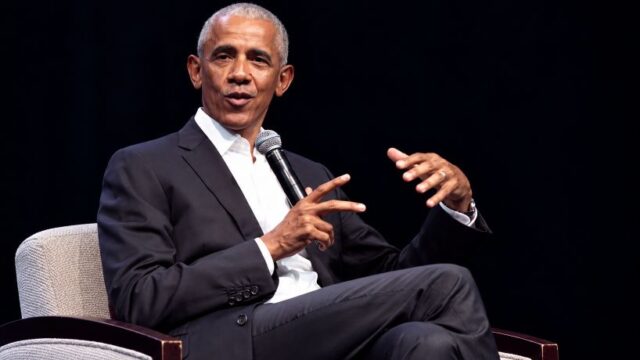
Barack Obama is reaching back to the message that helped carry him into the White House in 2008, hoping that a familiar word — hope — can once again inspire voters as Democrats prepare for a high-stakes battle for control of Congress. And this time, his renewed appeal comes as President Donald Trump faces mounting political pressure ahead of the November midterm elections.
In a video message released by the Democratic Party, the very popular former president made it clear that he believes Americans have a role to play in shaping the country’s direction. Obama urged them not to let frustration turn into resignation but to channel their concerns into political action. His choice of language was unmistakable, reviving the theme that became synonymous with his first presidential campaign while making a direct appeal to people who feel dissatisfied with the state of the nation.
“I am energized by the millions of Americans who are taking a stand and demanding change, even when it’s hard,” Obama said, before adding, “That’s what hope is all about.”
It was more than a nostalgic reminder of his 2008 campaign. With November 3 approaching, Obama was using the message to encourage voters to get involved in an election that could reshape the balance of power in Washington, while signaling that he intends to play an active role in helping Democrats compete across the country.
Obama Wants Voters to Turn Hope Into Action
Obama did not leave his message at the level of inspiration, making it clear that he wants supporters to translate their feelings into concrete political participation. He called on Americans to use the optimism associated with his political brand to make a difference at the ballot box, tying the familiar campaign theme directly to the fight for congressional control.
“I’m asking you today to use that hope to make a difference,” he said, urging voters to “help Democrats win one of the most consequential elections in our country’s history.”
He closed with a message that placed ordinary Americans, rather than politicians alone, at the center of the democratic process. “The most powerful office in this country has always been citizen,” Obama declared. “And right now, every one of us can help turn hope into action.”
The appeal carries an obvious political purpose, but it also reflects Obama’s effort to remind voters of the role they can play at a moment when both parties are preparing for a fiercely contested election. For Democrats, the former president remains a prominent voice who can attract attention, energize supporters, and lend his name to candidates hoping to strengthen their position in competitive races.
Trump’s Approval Rating Falls to 30 Percent as Midterms Approach
Obama’s energizing return to the campaign trail comes as Trump’s approval ratings hit a spectacular decline. A new Pew Research Center survey offers a stark snapshot of the president’s standing ahead of the midterms.
According to Pew’s survey of 5,062 U.S. adults conducted from September 28 through October 4, 30 percent of Americans approved of Trump’s job performance, while 68 percent disapproved. Pew reported that the approval figure was the lowest of his second term and had fallen four percentage points since July.
The poll also found that 63 percent of registered voters considered Trump a factor in their congressional vote. More voters described their choice as a vote against the president than a vote for him, with 44 percent saying they viewed it as a vote against Trump, compared with 19 percent who saw it as a vote for him.
Meanwhile, Pew found that registered voters favored Democratic candidates for the House by 44 percent to 36 percent, an eight-point advantage in that survey. The figures are a measure of national sentiment, not a prediction of the outcome in individual districts or Senate races, but they help explain why both parties are paying close attention to voter engagement as Election Day draws closer.
Obama also made a remark that appeared to contrast his earlier expectations for the country with the political climate today, without mentioning Trump by name.
“I never imagined some of the stuff that’s been going on in our country lately,” he said.
The comment added a pointed note to an otherwise forward-looking appeal, leaving viewers to draw their own conclusions about the circumstances he was describing.
Obama’s Fundraising and Endorsements Put Him Back in the Campaign Fight
Obama’s renewed message is accompanied by a substantial campaign effort. ABC News reported on October 9 that he had raised more than $13.6 million for Democratic Party committees during the current election cycle, including $3.6 million at a recent fundraiser in Virginia. His involvement extends beyond fundraising to endorsement videos, public appearances, and plans to campaign for candidates in competitive states.
His recent endorsements include Pennsylvania Governor Josh Shapiro, who is running for reelection, Maine Senate candidate Troy Jackson, Georgia Senator Jon Ossoff, Georgia gubernatorial candidate Keisha Lance Bottoms, and Wisconsin gubernatorial candidate David Crowley. Obama has also appeared in support of Texas candidates James Talarico and Gina Hinojosa, as well as Iowa Senate candidate Josh Turek, and was scheduled to campaign in Michigan for Senate candidate Abdul El-Sayed and gubernatorial candidate Jocelyn Benson.
The strategy, according to his team, focuses on places where Obama’s involvement could make a difference among Democratic supporters and persuadable voters, particularly in states with key races.
That gives his return to the campaign trail a practical dimension beyond the symbolism of reviving his best-known slogan. Obama is not simply asking voters to remember the promise of his first campaign; he is asking them to use that message in a very different political moment, with control of Congress at stake.
Whether his efforts will translate into victories remains to be seen. But as November 3 approaches, Obama is putting his name, fundraising reach, and familiar message back into the Democratic campaign, making clear that, in his view, hope matters most when people are prepared to act on it.
Comments (0)