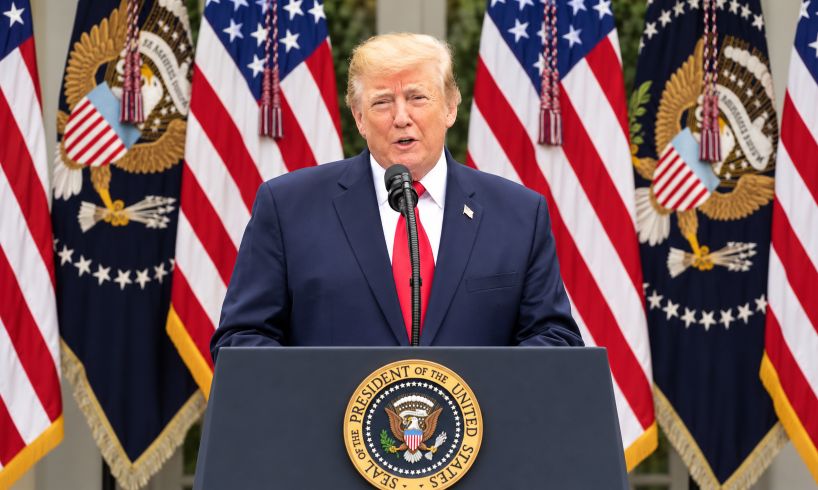
With the midterm elections now over, attention is turning to what the results could mean for Donald Trump’s remaining time in the White House, particularly if Republicans have lost control of Congress. A reported contingency plan suggests the president has no intention of allowing a Democratic majority to bring his agenda to a standstill.
According to a Reuters report published on November 1, senior administration officials have spent months examining how Trump could continue advancing key policies through executive authority, even if Democrats take control of the House or Senate. The preparations reportedly cover everything from immigration and tariffs to housing costs and federal spending, while White House lawyers are also considering how to defend controversial decisions if they end up in court.
The timing is striking. While the midterm campaign focused on keeping Republicans in control of Congress, some of Trump’s closest advisers were already preparing for the possibility that the political landscape could look very different in 2027. Rather than waiting for the results, the administration appears to have been quietly working out how Trump could continue pushing his agenda if Democrats gain control of Congress and become a much tougher obstacle to his plans.
Trump’s Team Has Been Preparing for a Democratic Congress Since April
The planning reportedly involves some of the most influential figures inside the administration, including Deputy Chief of Staff Stephen Miller and budget director Russell Vought, who have been working with the White House Counsel’s Office since April to identify actions Trump could take without new congressional approval.
White House counsel Will Scharf and his team are examining the limits of presidential authority, including what Trump can legally do independently, where his administration might test those boundaries and how it could defend its decisions against legal challenges.
The administration is also looking at new tariffs on imports of critical minerals and wind turbines, tighter visa rules for international students and temporary foreign workers, and possible measures to bring down housing and construction costs. Federal agencies have reportedly submitted their own proposals, along with legal assessments of which policies Trump could put in place without needing Congress to pass new legislation.
Vought is examining how the administration could use money already approved by Congress to advance its priorities. He is also reportedly considering changes to federal grant rules that would give political appointees greater influence over which government programs receive taxpayer funding.
The White House has not described these preparations as an effort to bypass the law. Instead, officials are looking at how much the president can do using his existing powers and how far the administration can go without needing Congress to approve new legislation.
Trump Is Reportedly Comfortable Governing Without Congress
Perhaps the most revealing detail in the Reuters report concerns Trump’s own attitude towards the strategy. The president has reportedly been briefed on the preparations and has participated in discussions about them.
When one person familiar with the plans was asked how comfortable Trump would be governing through executive authority under a Democratic-controlled Congress, the response was blunt: “very comfortable.”
That attitude is not entirely surprising. Since returning to office in January 2025, Trump has repeatedly relied on executive power to advance major parts of his agenda, including sweeping tariffs, tougher immigration enforcement and efforts to reduce the federal workforce.
Trump has also suggested that he would use his veto power if Democrats take control of Congress. Speaking to the New York Post’s Pod Force One podcast, he said: “I guess I’ll become Mr. Veto.” He added that after an initial period of confrontation, the two sides might eventually reach agreements.
The comment offers a glimpse of how Trump could handle a divided government: veto bills he disagrees with while continuing to push his own agenda wherever his presidential powers allow.
Democratic Investigations Could Be the Bigger Problem
There is, however, one challenge that executive orders cannot simply make disappear: congressional oversight.
If Democrats take control of the House, they could launch investigations, issue subpoenas, request documents and hold hearings examining the administration’s decisions. Senior Democrats have already discussed investigating whether Trump has used presidential power to benefit himself, his allies or donors.
White House lawyers are also reportedly preparing political appointees and agency officials for the prospect of congressional investigations. They have been given guidance on how to handle requests for documents and subpoenas, while administration lawyers are looking at whether executive privilege could shield some conversations with the president’s private advisers.
The administration’s reported preparations reveal a White House that was thinking well beyond Election Day. Trump may still have significant powers if Democrats take control of Congress, but he would also face new obstacles, legal challenges and a much more aggressive oversight environment.
The real question now is whether his post-midterm strategy will allow him to keep his agenda moving or turn the next two years into an extended battle with Congress, the courts and his political opponents. With voters having now had their say, the political consequences of the results will help determine just how difficult Trump’s final two years in office could become.

Comments (0)