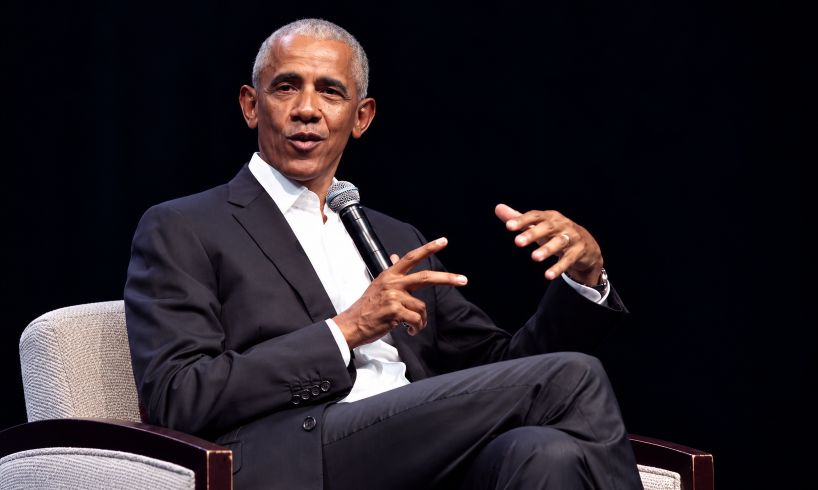
Former President Barack Obama returned to the campaign trail this year with a blistering assault on Donald Trump’s leadership, helping Democrats build momentum ahead of a historic midterm election that has dramatically reshaped Washington’s political scene.
Now, with Republicans stripped of their congressional majorities, the leader of the free world faces an uncomfortable political reality: two years of divided government, aggressive Democratic oversight and mounting questions about whether his administration can recover from a crushing electoral defeat.
The November 3 elections delivered Democrats control of both the House of Representatives and the Senate, including remarkable Senate victories in Republican strongholds such as Texas, Kansas, Iowa and South Carolina.
But the most revealing development may be what happened afterward.
Trump, who initially appeared willing to reconsider elements of his immigration crackdown, has alternated between conciliatory language and renewed defiance. Meanwhile, a major White House personnel shake-up and a high-profile diplomatic tour of Asia suggest an administration determined to regain control of the political narrative.
Obama Returns With a Warning — And Democrats Deliver a Stunning Victory
Obama’s late campaign intervention was anything but ceremonial.
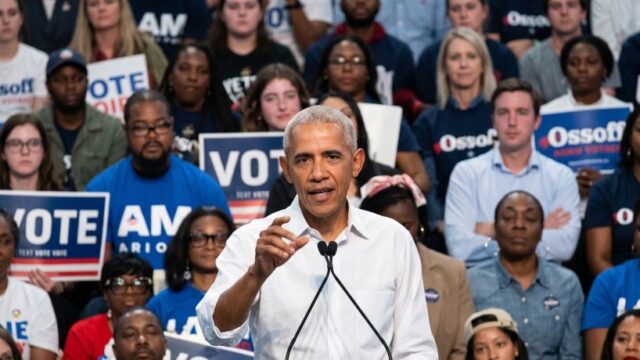
Speaking at rallies in Georgia, Michigan and Ohio, the former president attacked Trump’s governing style, questioned his administration’s priorities and urged Americans to use the ballot box to restrain presidential power.
“This election is our last, best chance of at least reining him in,” Obama declared during a Georgia appearance, according to The Guardian.
Obama also ridiculed Trump’s extravagant White House renovations, drawing a public response from the president and demonstrating that the rivalry between the two men remained politically potent.
Trump’s nemesis put his communication skills behind Democratic candidates while letting them run on their own identities and local concerns.
Election night delivered an extraordinary result.
Democrats captured both chambers of Congress, flipping seven Republican-held Senate seats, according to CBS News.
The 2026 midterm victories reflected dissatisfaction extending beyond Washington’s familiar partisan divisions. For some political observers, Trump’s alleged corruption, economic anxiety, immigration enforcement, increasing living expenses, and the ongoing war in Iran all contributed to the difficult political environment facing Republicans.
Obama welcomed the Democratic surge as evidence that Americans care more about daily realities than Washington infighting.
Pinpointing the exact impact of his campaign stops is tough, though Democrats plainly rode a wave of dissatisfaction with Trump—pulling in voters who otherwise would have stayed in the Republican column.
Trump Acknowledges a Mistake — Then Doubles Down
The president’s reaction to the Republican losses was more complicated.
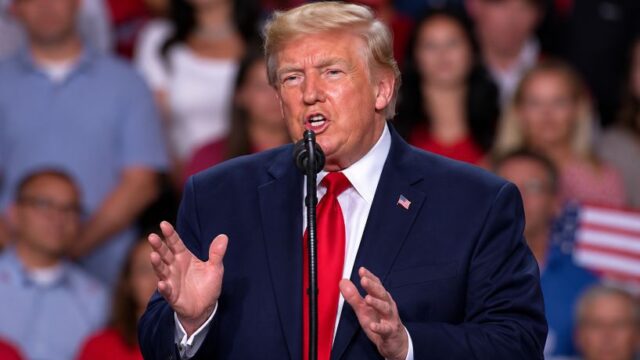
During an interview with CBS’s 60 Minutes that aired November 8, Trump conceded that his administration may have gone too far in its efforts to deport undocumented immigrants.
“I think it might be too tough, yeah,” Trump said, suggesting that immigration enforcement contributed to Republican losses.
He also expressed willingness to negotiate with Democrats over possible protections for certain undocumented immigrants who work and contribute to the economy.
The comments stood in contrast to the hard-line immigration stance Trump has maintained throughout much of his presidency.
But any suggestion that the administration was preparing to change course quickly faded.
Trump later made clear that his immigration policies remained intact and ruled out supporting an agreement that would grant amnesty to undocumented immigrants.
The contradiction became even more striking following his decision to replace White House chief of staff Susie Wiles with Stephen Miller, a principal architect of the administration’s hard-line immigration policies.
There was little evidence of a policy shift following the November 6 appointment. Trump appeared determined to continue pursuing his agenda despite the Republican election losses.
He showed little enthusiasm for the results, either. Calling the Democratic victories a “giant step back in History,” Trump blamed them for market turbulence and insisted that Republicans would make a comeback.
While the president appeared willing to recognize that some decisions had hurt his party politically, he stopped short of questioning the broader course of his administration.
A White House Pivot Toward Asia — And a Looming Congressional Showdown
On November 16, Trump departed Washington for a diplomatic tour involving meetings in the Philippines and China.
The trip includes regional summits and discussions with Chinese President Xi Jinping and Russian President Vladimir Putin on trade, international security, and ongoing conflicts.
Overseas, Trump can still set much of the agenda. At home, that freedom is about to shrink.
Democrats take the congressional reins in January, and they have plenty of questions for an administration accustomed to dealing with Republican majorities.
Expect immigration to feature prominently. Reuters reports that Democrats are preparing to investigate what happens inside federal detention facilities, how immigration officers conduct enforcement operations and whether the administration has followed proper procedures when deporting migrants.
Experts expect months of marathon hearings as congressional investigators put the administration under a microscope.
Even so, Democratic power only goes so far. Trump is not giving up his veto pen or his executive authority, forcing both sides to negotiate if they actually want to pass major legislation.
For Obama, the election amounts to a significant political victory for a party seeking to reestablish itself as a governing alternative.
For Trump, it represents a test of whether confrontation, compromise or international diplomacy can restore his political standing.
Democrats will soon have the congressional authority to examine Trump’s decisions and challenge his policies more directly. How the president handles that scrutiny could shape the remainder of his term.
Comments (0)