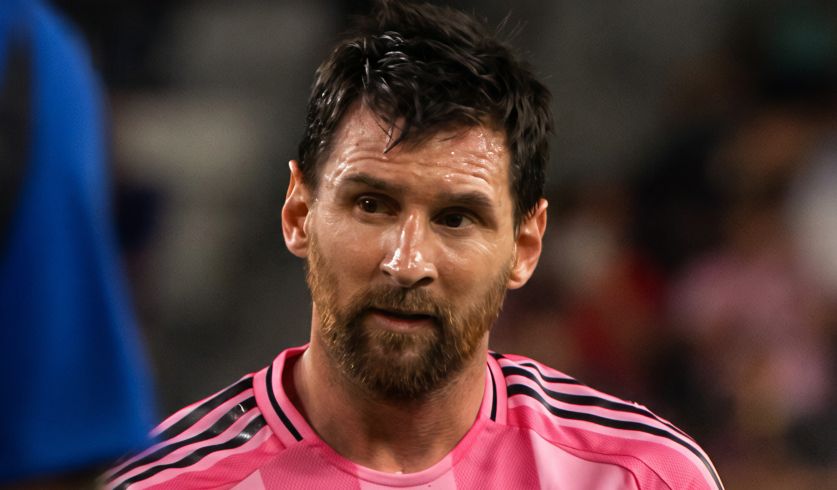
Lionel Messi’s hopes of winning another MLS Cup have ended dramatically after Columbus Crew scored a stoppage-time winner to eliminate defending champions Inter Miami from the playoffs.
The decisive moment arrived Friday, November 27, when Santiago Rodríguez struck in the 92nd minute to give Columbus a 1-0 victory.
The goal completed a two-game sweep of the best-of-three first-round series, ending Miami’s season much earlier than many supporters had anticipated.
For Messi, 39, the defeat was particularly frustrating because he entered the playoffs following another remarkable individual campaign.
The Argentine superstar scored 26 goals and recorded 17 assists during the regular season, earning his second consecutive MLS Golden Boot.
But the player who dominated the league’s scoring statistics could not find the net in either playoff match against Columbus.
Inter Miami’s individual brilliance was not enough to prevent a 2-0 series defeat.
A 92nd-minute strike ends Miami’s hopes.
The decisive match took place at ScottsMiracle-Gro Field in Columbus, Ohio. Miami needed a win to keep its championship defense alive after a 3-0 opening-game defeat.
The second encounter was considerably more competitive. Messi came close to scoring from a free kick during the first half, while several Miami attacks threatened to break the deadlock.
After halftime, midfielder Casemiro appeared to have put Miami ahead with a header following a cross from Messi.
But the goal was disallowed for offside. German Berterame later missed an excellent chance, heading over the crossbar from close range.
Those missed opportunities would become especially costly. With the match approaching the end of regulation time, Columbus launched another attack.
Anass Zaroury delivered the cross, and Rodríguez finished in the second minute of added time.
The goal sent the home supporters into celebration and ended Miami’s championship defense.
Messi’s extraordinary regular season becomes the cruel twist.
Messi’s individual numbers made Miami one of the most recognizable teams in MLS.
His 26 goals and 17 assists reflected his continued influence well beyond the age at which many elite players have retired.
He remained capable of scoring, creating chances, and deciding matches through moments of technical brilliance.
But the playoffs exposed the limitation of relying heavily on one superstar. Columbus managed to keep Messi from scoring across two consecutive games.
The first match produced a comprehensive 3-0 victory. The second ended with a decisive late goal.
Miami therefore failed to score in either game. That outcome was especially surprising given the club’s regular-season attacking strength.
Columbus deserves substantial credit.
The result should not be viewed exclusively as a Messi failure. Columbus entered the series with a clear competitive objective and executed its approach effectively.
Goalkeeper Patrick Schulte made important interventions, while the team’s defensive structure frustrated Miami’s attacks.
The Crew also demonstrated patience.
Rather than becoming increasingly reckless as the clock approached full time, Columbus remained capable of creating a decisive opportunity.
Rodríguez’s goal rewarded that persistence. For a club attempting to overcome the defending champions, eliminating Messi’s team represents a major achievement.
It also illustrates the unpredictability of playoff soccer.
Gonzalo Tapia catches the wrong end of Lionel Messi’s throw-in
(via @MLS) https://t.co/qj9Xpwo3xu
— FOX Soccer (@FOXSoccer) November 22, 2026
Messi’s career is entering a different phase.
Messi has already achieved extraordinary success in international and club football. He led Argentina to victory at the 2022 World Cup and has won numerous major club titles.
Following Argentina’s defeat in the 2026 World Cup final, he announced his retirement from international football.
That decision means his remaining playing career will focus principally on club competition. Messi remains under contract with Inter Miami through the 2028 MLS season.
That gives the club time to rebuild and attempt another championship run. But his age makes each remaining season particularly significant.
The question is not whether Messi has anything left to prove. His achievements are already firmly established.
Instead, the challenge is how Miami can build a team capable of turning his individual influence into playoff wins.
Miami faces a difficult offseason.
The defeat creates immediate questions about squad depth, tactical flexibility, and the club’s ability to manage high-pressure games.
Regular-season dominance does not necessarily translate into postseason success.
In knockout competition, missed chances and a single defensive lapse can change everything.
Miami experienced that reality in the harshest possible way. The club finished the year with an extraordinary individual performer but without another championship.
Columbus advances to the Eastern Conference semifinals. Messi and Miami must begin preparing for next season.
And the enduring image of their 2026 playoff campaign will not be another spectacular Messi goal.
It will be Santiago Rodríguez scoring in stoppage time to end the defending champions’ title hopes.



Comments