Before sunrise, federal agents showed up at a Columbia University apartment building and left with a graduating student in custody. By the end of the day, she was on her way home, not because of a court order, but after a conversation at the White House.
The quick turnaround sparked a political firestorm that reached from Morningside Heights to Washington.
ICE Raid at Columbia Sparks Outrage
Elaina Aghayeva, a Columbia senior from Azerbaijan, was detained early Thursday morning in her campus housing. Later, she posted on Instagram, “DHS illegally arrested me. Please help,” while people questioned how officers got into the building.
The Department of Homeland Security says Aghayeva was in the country unlawfully after her student visa was canceled years ago for not attending classes. Officials say agents identified themselves and were let in by the building manager and a roommate.
Columbia administrators, however, have a different account. Acting President Claire Shipman told the campus that agents misled people about why they were there, reportedly saying they were looking for a missing child. Local Democratic leaders quickly called the operation deceptive and invasive, saying it broke the trust expected in a university residence hall.
Within hours, the incident turned into a debate about immigration enforcement, campus independence, and civil liberties.
Then, the situation took an unexpected turn.
A White House Meeting Changes the Outcome
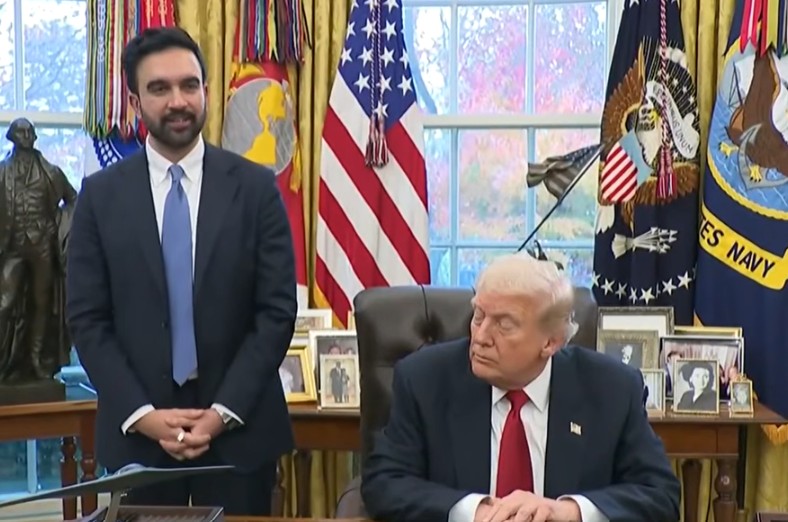
New York City Mayor Zohran Mamdani was in Washington for a meeting with Donald Trump that had not been made public. Mamdani says he brought up Aghayeva’s detention directly with the president.
Soon after, he announced that Trump had promised her release would happen “imminently.”
A few hours later, she was released.
https://www.youtube.com/watch?v=RRCYWUDzrxM&pp=ygUcRG9uYWxkIFRydW1wLCBab2hyYW4gTWFtZGFuaQ%3D%3D
To critics of the administration, the events felt abrupt: an arrest for immigration reasons was quickly reversed by a political phone call. Others saw it as a mayor using his connections to help someone from his city.
A bigger question is how Mamdani, a left-wing Democrat known for opposing Trump’s policies, managed to get cooperation from a president who rarely gives in to progressive demands.
The Unlikely Political Partnership
Mamdani and Trump have very different political views. Still, since Mamdani was elected, they have met twice in the Oval Office. Their private talks have focused less on culture wars and more on practical issues, especially housing.
New York City is dealing with a serious housing shortage. Mamdani has been actively seeking federal help for development projects, including new financing options and regulatory changes that need federal approval. According to people familiar with their latest meeting, the two discussed ways to increase the housing supply.
In short, even though the public sees conflict, the private line of communication is still open.
That ongoing communication may have kept Aghayeva from facing a long legal fight over her detention.
It also shows a practical approach: Mamdani seems willing to work with Trump if it means real benefits for New Yorkers. And Trump, even with his tough stance on immigration, has shown he will step in when it helps him politically.
The Appearance Debate
Not everyone believes the release was only about following procedure or politics.
Almost right away, some critics shared another theory: that Aghayeva’s looks influenced the president’s decision. Social media posts pointed to Trump’s well-known interest in appearances and his history of commenting on women’s attractiveness in public life.
Trump has often talked about people, especially women, in terms of their appearance. From owning beauty pageants to making comments about looks during campaigns, image has always mattered to him. Supporters say he just values presentation, while critics believe it shows something deeper.
There is no proof that appearance influenced the decision to release Aghayeva. Still, the rumors highlight how personal image and politics are closely linked in the Trump era. When results depend on access, people fill in the gaps with their own ideas.
Civil Liberties vs. Immigration Enforcement
The incident has restarted the debate about whether immigration authorities should act in places like schools and dorms. New York officials, including the governor and members of Congress, criticized the arrest and are working on proposals to limit federal enforcement near educational institutions.
DHS maintains it acted within its authority. But the situation stands out: a pre-dawn raid at an Ivy League dorm, followed by a same-day release after the president got involved.
This outcome leaves both sides with questions. Those who support strict immigration enforcement may wonder why the action was reversed so fast. Civil liberties advocates want to know how agents got into a student residence at all.
A New Precedent?
Looking past the politics, the case shows that having access to powerful people can directly affect immigration outcomes, at least in some situations.
For thousands of other undocumented people who do not have a mayor’s support or a meeting at the White House, the system works differently.
Aghayeva’s release might be celebrated at Columbia, but it also highlights how uneven immigration enforcement can be in America, where policy, personality, and power often mix in unexpected ways. In a single day, a Columbia senior went from detention to freedom. The reason was not a judge’s ruling or a change in statute. It was a conversation between two politicians who publicly spar but privately negotiate.
In Washington, sometimes the most important door is not the one ICE knocks on early in the morning. It is the one inside the Oval Office.