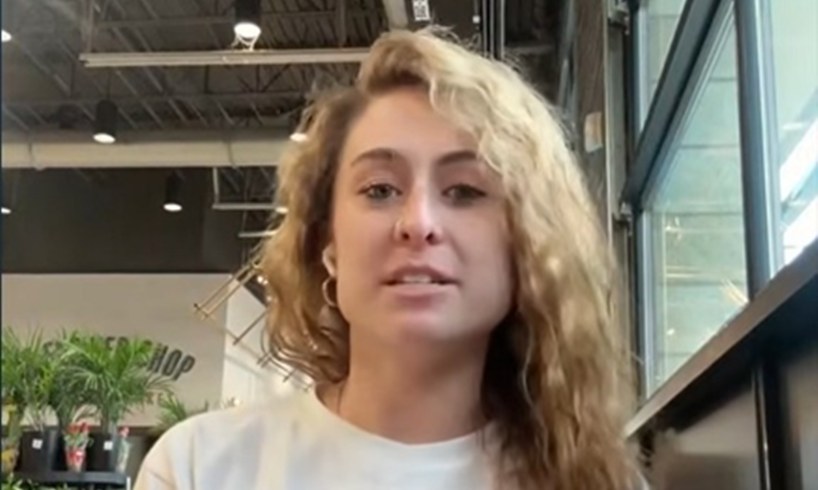
The race for Michigan’s 13th Congressional District has officially left the traditional debate stage and entered the wild west of TikTok.
Shelby Campbell, a 32-year-old law student, single mother, and former assembly line worker, is running a Democratic primary campaign that has sent shockwaves through the political establishment.
Her strategy? Leaning into viral social media trends, posting unapologetically explicit language, and most notably, uploading videos of herself twerking on her kitchen counter — a move critics say is an attempt to court male voters through provocation, while supporters call it a genius stroke of modern, anti-establishment authenticity.
The controversy reveals a fast-changing political scene in which the line between a congressional campaign and an internet “thirst trap” has blurred. Is American politics reaching new, innovative heights of accessibility, or is it heading completely south?
The “OnlyFans” Campaign
The controversy began when Campbell, who is running on a progressive, pro-labor platform focused on “working families, not corporate donors,” posted a series of TikTok videos. In these clips, she dances and twerks to explicit rap lyrics, mixing them with information about her campaign.
Some of the videos have been removed, but they still circulate online. Clips of Campbell squatting in front of the camera, responding to critics, and using strong language quickly went viral, reaching millions.
One well-known critic on X (formerly Twitter) summed up the backlash: “This is her actual campaign strategy? Twerking in the living room for votes in 2026… Single mom energy mixed with an OnlyFans audition. The bar is in hell at this point.”
Conservative commentators and some Democrats are going after the controversial candidate. They have accused Campbell of turning a serious civic role into a bid for attention.
Critics argue that sexualized dancing and crude language lower the standards of the office, and suggest she is trying to win male voters with her appearance instead of her policies.
“This isn’t authenticity — it’s vulgar and unfit for office,” one Michigan voter wrote online. “Congress needs adults, not this.”
The Anti-Establishment Appeal
But Campbell and her supporters view the backlash as proof that her approach is getting attention.
In response to criticism, Campbell described herself as a “classy b****” who refuses to fit the polished, elite, and often disconnected image of traditional politicians.
Her campaign website, Soup4Change, features her past mugshots and her background as a third-generation United Auto Workers (UAW) member, bartender, and first-generation college graduate. Last year, the site’s name led to a trademark dispute with the Campbell Soup Company.
Campbell’s supporters see her as a refreshing change. They say she is reaching voters on social media and speaking in a way that connects with the working class.
Supporters believe traditional politicians who rely on focus groups and corporate PAC money have let working people down. By using viral publicity and being herself, Campbell is making campaigning more open to everyone.
“I know housing struggles from every angle,” Campbell states on her campaign site, while pushing her experiences as a tenant, homeowner, and someone who has faced the justice system. “I’m not running to represent myself. I’m running to represent us—because we deserve someone who speaks our language.”
Politics in the Digital Age
Campbell’s primary is set for August 4, 2026. She faces a tough race against the well-funded incumbent Rep. Shri Thanedar and other candidates.
It is still unclear if Campbell’s viral fame will turn into votes. However, her campaign has already started a national conversation about how elections are changing.
Some traditionalists warn that politics is becoming less serious, with policy taking a back seat to attention-grabbing stunts and dances.
Meanwhile, digital strategists say getting noticed is the first challenge for any campaign. In today’s world of constant scrolling, a viral twerking video could be the most effective, low-cost ad a working-class candidate can use.
Only time and Michigan voters will show if this new approach to campaigning will succeed.