
Prince William appears to be taking a very different approach from the one often associated with his father when it comes to a wife who attracts enormous public attention, and the contrast has become particularly striking as Catherine, Princess of Wales, has increasingly emerged as one of the most closely watched members of the Royal Family.
Rather than appearing threatened by the attention Catherine receives, William is being described as someone who genuinely enjoys watching his wife command a room, attract crowds and become the focus of public affection, a dynamic royal commentators say marks an important difference between the future King and the experience of his parents, King Charles and Princess Diana.
British broadcaster and photographer Helena Chard told Fox News that William is “not only proud, but he is smitten,” adding that he watches Catherine and “lights up.” According to Chard, the couple has achieved something particularly difficult by maintaining both a private family life and a successful public partnership, saying, “Few marriages have deepened in public admiration the way theirs has.”
That is where the comparison with Charles becomes uncomfortable.
Royal commentator Jennie Bond has previously argued that William and Catherine possess the kind of public appeal once associated with Diana, saying, “William and Catherine definitely have the wow factor that Diana had,” while noting that William “just seems to purr with pride that his wife is such a star.”
The implication is not that William and Charles have identical circumstances, personalities or marriages, but that William appears determined not to treat his wife’s popularity as a threat.
Christopher Andersen, author of “Kate!,” made the comparison even more directly, saying that while Charles was perceived as jealous of Diana’s enormous popularity, William is “more than content to let Kate shine.” Andersen added that there are moments when William is “perfectly happy to bask in her reflected glory.”
That difference becomes particularly significant because Kate Middleton is no longer simply William’s wife standing beside him at official engagements; she is herself an enormous draw, and after returning to public duties she has repeatedly attracted intense attention, with commentators describing her as a major asset to the modern monarchy.
Chard went even further, saying, “He loves the fact that she is loved,” and arguing that William does not see the public’s affection for Catherine as competition for his own position.
“He is in awe,” Chard said. “It reminds him, in the best way, of the love his late mother received from the public.”
That is perhaps the most sensitive part of the comparison, because Diana’s extraordinary popularity was widely documented, while her marriage to Charles eventually became deeply troubled and ended in separation and divorce.
Diana herself spoke publicly about the difficulties created by Charles’s reaction to the attention she received, saying, “And you feel low about it, instead of feeling happy and sharing it,” before describing “a lot of jealousy” and saying that “complicated situations arose because of that.”
William, however, appears to be approaching Catherine’s popularity from almost the opposite direction.
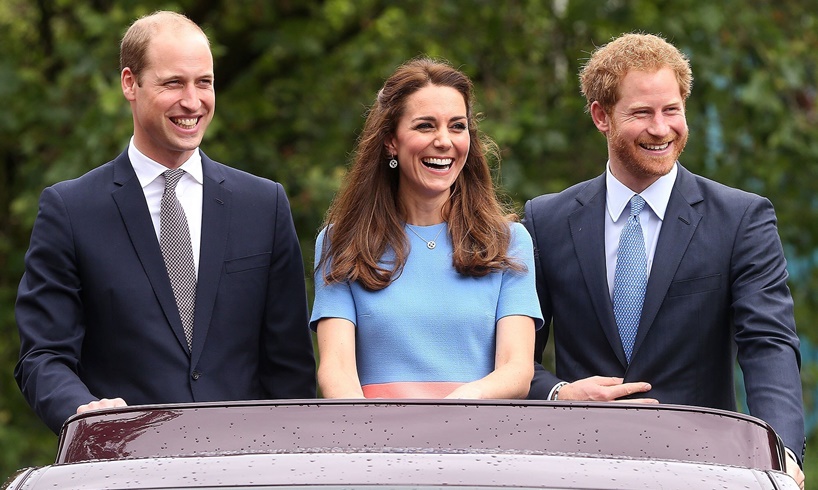
Instead of trying to pull attention back toward himself, commentators say he is comfortable allowing her to shine, something that becomes especially visible during joint engagements when Catherine takes the lead and William appears relaxed beside her.
Royal biographer Simon Vigar recently told Hello! that William “definitely visibly relaxes when Catherine is near,” adding that he is “very happy for Catherine to take the spotlight.” Vigar described William and Catherine as “clearly a double act” and suggested that their partnership could become even stronger when William eventually becomes King.
There is something important about that distinction.
William is not simply allowing Catherine to attract attention; according to these commentators, he appears to understand that her popularity can strengthen the institution he will eventually lead. Chard described Catherine as “the perfect future queen” and argued that William recognizes how valuable she is to the monarchy.
That makes the story about far more than a husband being proud of his wife.
It is about two very different approaches to life beside a highly popular royal woman: one in which attention can become a source of tension, and another in which that attention is embraced as something worth celebrating.
Whether that contrast will ultimately define William and Catherine’s future reign remains to be seen, but the message coming from the latest royal commentary is unmistakable: William does not appear to want Catherine’s star to become smaller so that his can shine brighter. He seems perfectly comfortable standing beside her and watching her shine.
Comments (0)