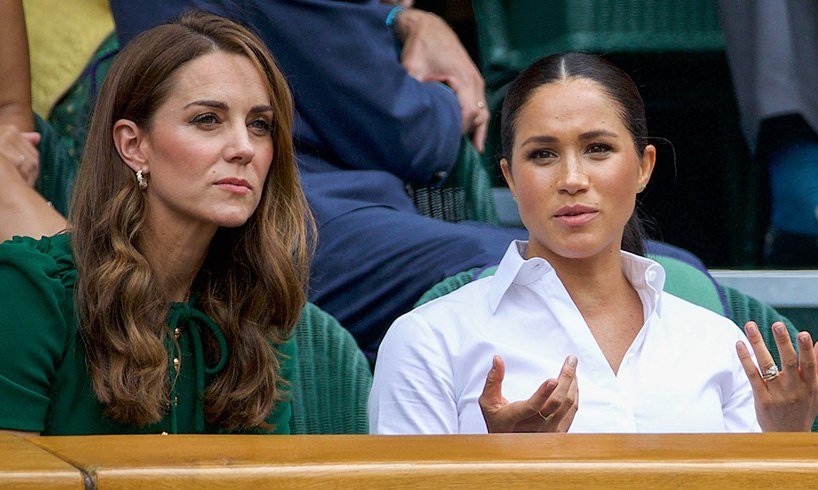
Princess Catherine has spent years carving out her own identity within the Royal Family, using her interests, charitable work and growing confidence behind the camera to show that there is far more to her than designer dresses and carefully coordinated royal appearances. Yet, just as the future Queen has been exploring a more personal and independent approach to her public work, a new debate has emerged over whether Meghan Markle’s formidable understanding of publicity and branding is making Catherine’s quieter strategy look less compelling by comparison.
The argument has been brought into sharp focus by former Conservative MP Nadine Dorries, who believes that Meghan understands how to capture attention and keep herself at the centre of the news cycle, while Catherine has become too restrained in the way she presents herself to the public. In her Daily Mail commentary, Dorries argues that the Princess of Wales needs a fresh approach to her public image, suggesting that her determination to place her work ahead of fashion may have come at the expense of another quality that keeps audiences interested.
But there is another way to look at the situation. Catherine’s decision to focus on her causes, develop her photography and occasionally step outside the usual royal formula can be seen as evidence of a woman establishing her own voice, rather than someone who has lost her sparkle. The uncomfortable question is whether a preference for substance and independence is being mistaken for a lack of personality simply because Meghan has become particularly skilled at making every appearance part of a wider public narrative.
Meghan Knows How to Command the Spotlight
Dorries makes little secret of her view that Meghan has an advantage when it comes to publicity. The Duchess of Sussex is no longer bound by the same expectations that govern a senior working royal, leaving her free to choose her appearances, experiment with her image and promote her commercial projects through social media.
As Dorries puts it, Meghan knows how to “snatch the spotlight,” and her recent activity has, in the commentator’s view, demonstrated just how effectively she can attract attention when she chooses to step into public view.
That advantage is not necessarily evidence that Meghan is doing anything wrong. As a former actress who has developed her own lifestyle brand, she understands the value of a recognisable image, carefully selected appearances and a story that audiences can follow. Her ability to connect personal moments with commercial announcements also gives her a degree of freedom that Catherine simply does not possess while representing the monarchy.
The problem arises when those different approaches are treated as though they are competing versions of the same job. Meghan can promote her own projects and control much of her public presentation, while Catherine must balance her personal interests with royal responsibilities, institutional expectations and the demands of representing the future of the monarchy.
Is Catherine Being Undervalued for Doing Things Her Own Way?
One of the most interesting aspects of Catherine’s public evolution has been her interest in photography and visual storytelling. Rather than relying exclusively on official photographers to document royal occasions, she has increasingly taken an active role in capturing moments that reflect her interests and family life.
Her photography has offered a more personal glimpse into the world around her, while also allowing her to contribute to how important family milestones and royal occasions are presented to the public. It is a creative pursuit that gives her a measure of independence within a role in which so much of her public image is shaped by tradition.
Yet the former politician pushed the argument that Catherine’s preference for placing her work ahead of what she wears has made her public image less exciting to the media at least. The commentator acknowledges that the Princess of Wales remains stylish, but suggests that her presentation could benefit from a fresh approach and a more engaging public persona.
Dorries writes that Catherine’s image risks becoming “stale,” before suggesting that she might need a new public-relations strategy or stylist.
That assessment, however, raises a question of its own: why should Catherine have to compete for attention on the same terms as Meghan? The Princess of Wales has responsibilities that extend well beyond maintaining public interest in her appearance, and her creative work should not automatically be judged by whether it generates the same immediate buzz as a carefully timed celebrity-style announcement.
There is a difference between a public figure losing relevance and a public figure choosing to direct attention towards something more meaningful than personal publicity.
The Problem With Turning Two Different Women Into Rivals
Dorries clearly believes that Catherine can do more to make her public image captivating, and there is nothing inherently unreasonable about suggesting that even the most established public figures must find ways to keep their audiences interested. But the comparison becomes less convincing when Meghan’s freedom to promote herself is treated as the standard Catherine should follow.
The Duchess of Sussex has the ability to choose her own projects, publish personal content and promote As Ever without having to navigate the same institutional constraints. Catherine, meanwhile, must consider how her decisions reflect not only on herself but also on Prince William, their children and the monarchy she is expected to help lead in the future.
That does not mean Catherine cannot be creative, glamorous or engaging. Indeed, her photography demonstrates that she has interests and talents that reach beyond the carefully polished image traditionally associated with royal life. The challenge is allowing those interests to develop naturally without turning every new decision into a contest with Meghan.
Dorries herself recognises that Catherine can be both stylish and focused on her work. Her argument is that the public should be allowed to appreciate both sides of the Princess of Wales, rather than being asked to choose between substance and glamour.
That is a fair point, but it should not obscure the fact that Catherine has already been finding ways to express herself within the limitations of her position.
Catherine Does Not Need to Become Meghan
At the end of the day, Catherine and Meghan have very different roles, and comparing the two as though they are competing for the same job misses the point. Meghan has built her own identity around lifestyle projects, branding and staying visible in the public eye, while Catherine has to think about how everything she does reflects on the Royal Family and her future role as Queen.
Meghan may know how to grab attention, dominate headlines and keep people talking, but that does not automatically make her approach more effective or meaningful. Catherine has her own priorities, from her charitable work and family life to her growing interest in photography, and those things matter even when they do not generate the same headlines as Meghan’s latest project.
The risk is that Catherine’s efforts to do things her own way will be overlooked simply because she is not constantly promoting herself. Her photography is a good example of how she is finding ways to express her personality and creativity while still carrying out her royal duties. She does not need to copy Meghan’s approach or turn every move into a publicity moment to prove that she has something of her own to offer.
Catherine may benefit from continuing to show the public more of her personality, interests and creativity, but that does not mean she needs to imitate Meghan’s methods. The future Queen should be able to develop her own style on her own terms.
If Meghan has mastered the art of commanding attention, Catherine’s challenge is not necessarily to outshine her. It is to ensure that the public recognises the value of a different approach — one that places her own creative instincts alongside her work, without allowing the constant comparison between the two women to define either of them.

Comments (0)