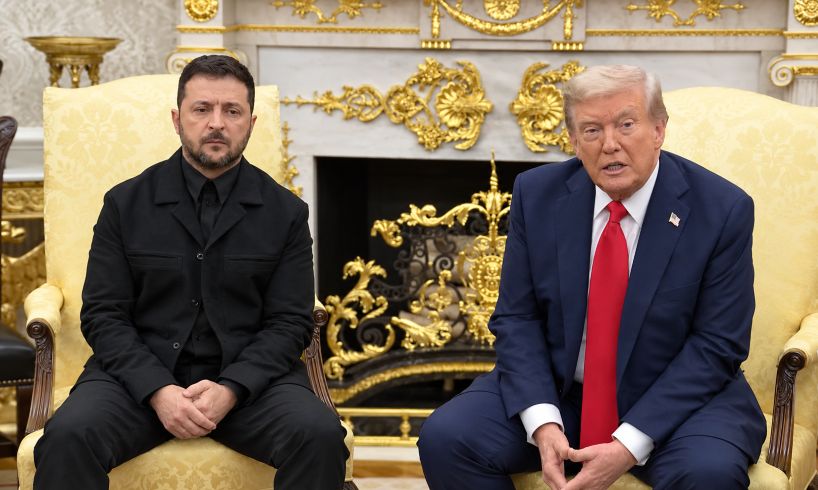
Volodymyr Zelenskyy has thrown down a fresh challenge to Donald Trump, questioning the logic behind the US president’s reported agreement to allow Russian diesel exports and proposing a deal of his own that would put Ukraine’s ability to disrupt Russia’s energy infrastructure at the center of negotiations.
Speaking by video link at the Warsaw Security Forum on October 12, the Ukrainian president argued that if Washington was prepared to make an arrangement with Moscow over fuel supplies, then Ukraine should be offered the same opportunity to negotiate directly with the United States, particularly because Kyiv’s military actions can affect whether Russian refineries operate and whether oil shipments reach their destinations.
“If there are such deals, then why doesn’t America conclude a ‘diesel deal’ with Ukraine?” Zelenskyy asked, according to Kyiv Post. “Let Ukraine offer a ‘diesel deal.’ We influence whether these ships sail or not, whether these refineries work or not.”
Zelenskyy put forward a concrete proposal that could open the door to a mutual halt in attacks on energy infrastructure.
The president bluntly suggested that Ukraine could halt strikes on Russian oil and diesel facilities if the United States could secure a commitment from Moscow to stop targeting Ukraine’s electricity infrastructure. The proposal gave Washington a possible opening to reduce attacks on energy sites on both sides.
“Electricity is important to us,” Zelenskyy said. “If we can be guaranteed protection for our electrical system, we will not respond against Russian diesel infrastructure.”
Zelenskyy Questions Whether Russia Can Deliver Lower Prices
The Ukrainian president also challenged the economic argument behind the reported Russian diesel arrangement, arguing that Moscow’s potential exports would be too small to make a meaningful difference to global fuel prices.
Zelenskyy estimated that Russia could export between 300,000 and 500,000 metric tons of diesel each month, compared with worldwide monthly consumption of approximately 120 million tons, and questioned what impact such a relatively small volume could have on the market.
“What impact could that have? I think none,” he said.
He separately estimated Russia’s influence on the global diesel market at 2.2%, although the report noted that he did not provide the methodology behind that figure.
He argued that Ukraine’s strikes on Russian refineries should not be blamed for the energy crisis, saying the bigger problems were the growing instability in the Middle East and the vulnerability of global fuel supplies.
An Energy Truce Remains Uncertain
The proposal comes amid uncertainty over a possible energy ceasefire. Trump had announced that Russia and Ukraine had agreed to an immediate halt to energy-related attacks, but Zelenskyy said Kyiv learned about the supposed arrangement through media reports and had not received confirmation that Moscow had accepted it.
According to Zelenskyy, Ukraine refrained from striking Russian refineries overnight, while Russia continued attacks on Ukrainian energy facilities, including a thermal power plant in Kharkiv.
He said Kyiv remained prepared to observe an energy ceasefire, provided Russia did the same and enforceable guarantees were in place.
Zelenskyy Warns of a Bigger Crisis
Zelenskyy also warned that the international focus on diesel prices risked overlooking another potentially devastating consequence of Russia’s disruption of Black Sea shipping: food shortages in countries that depend on Ukrainian agricultural exports.
“There will not be enough food for countries on the African continent, some Asian countries and the Middle East,” he said, accusing Russia of blocking maritime trade.
He warned that the consequences could become visible within one or two months if grain exports remained disrupted, arguing that the world should be paying attention not only to energy costs but also to the threat of a wider food crisis.
“This is another challenge. This is hunger, and it could affect many countries,” Zelenskyy said. “We can stop many different crises before they begin.”
Zelenskyy’s message to Washington was clear: if negotiations over Russian energy supplies are possible, Ukraine wants its own security concerns to be part of the conversation. His proposed diesel deal would link any Ukrainian restraint against Russian energy infrastructure to meaningful protection for Ukraine’s electricity system, putting the question of reciprocal commitments squarely before the United States.


Comments (0)