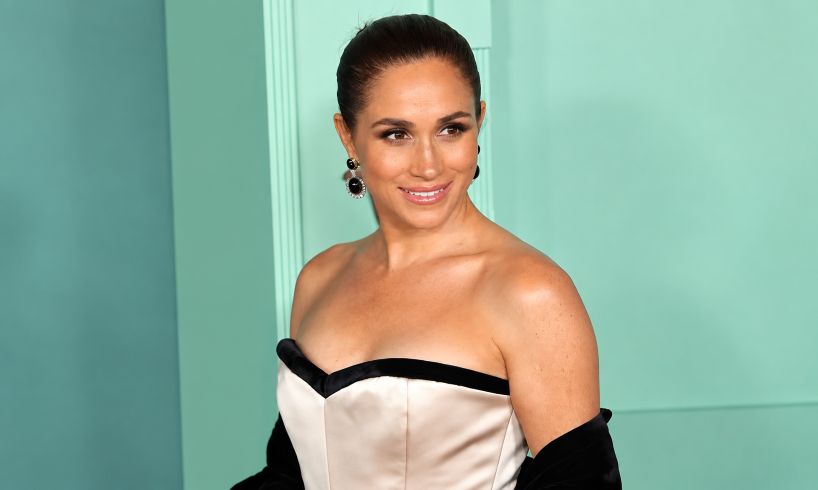
Meghan Markle has finally explained why she chose to keep her father, Thomas Markle, away from Prince Archie and Princess Lilibet, but her emotional explanation has opened a much bigger mystery, because while the Duchess of Sussex says she received disturbing allegations in 2018 and was assured they were being investigated, the Metropolitan Police has now confirmed that it received a letter containing claims about her father in January 2019, raising two uncomfortable questions that have yet to be answered: who actually wrote the letter, and why does the timeline appear to differ?
The story has taken a dramatic turn after the Met acknowledged that it received information about alleged offending outside the United Kingdom and passed the letter to the office of Prince Harry and Meghan, but did not share the details with other law enforcement agencies, with the force now reviewing how the matter was handled and considering whether an independent assessment is necessary.
For Meghan, the letter is not simply an old piece of correspondence resurfacing years later. It is central to her explanation for why the relationship with her father remained broken and why she did not allow him to meet her children, a decision that has attracted years of public criticism and speculation.
The Letter That Changed Everything
In a statement issued on October 23, Meghan said: “In 2018, a letter was sent to the Metropolitan Police and Royalty and Specialist Protection. That letter was subsequently shared with me. It made troubling and disturbing allegations against my father and I was given assurances that these were being investigated.”
She added that she hoped people would now understand that her decision to distance herself from Thomas was made “for one reason: to protect them,” referring to Archie and Lilibet. Meghan also expressed concern for any children who may have been harmed and said her hope was that justice would be served and that the safety of children would remain the priority.
Her statement offered a new explanation for a family estrangement that began around the time of her 2018 wedding to Harry, which Thomas did not attend. But the police confirmation has introduced a discrepancy that has quickly become one of the most important parts of the story.
Why Does Meghan Say 2018 While the Met Says 2019?
Meghan says she was made aware of the letter in 2018, while the Metropolitan Police has confirmed that it received a letter in January 2019. Those dates do not necessarily prove that either account is wrong: the letter could have been written or sent earlier, received by one party at a different time, or passed between people and departments over a period of months.
However, the public record currently does not fully explain the sequence of events, and that is precisely why the Met’s review matters in this serious matter. ITV News has reported that it has seen a copy of a handwritten letter that was passed to Meghan in the summer of 2018, while the police force says its own records confirm receipt of a letter in January 2019. Whether these accounts refer to the same document, separate communications, or different stages in the process remains unclear.
That leaves a central question unanswered: what exactly happened between the letter being written, the police receiving it, and Meghan being informed about its contents?
Who Wrote the Letter — and Who Knew?
Perhaps the biggest mystery is the identity of the person who wrote the letter and what prompted them to send it in the first place. ITV News reported that the handwritten letter was written by someone close to the Markle family who had connections with several family members, but the broadcaster has not publicly identified the author or disclosed the specific allegations contained in the document. And it is unknown hwo that family member obtained this information about Mr Markle.
That means there is still no publicly established answer about who initiated the warning, what evidence or information they relied on, or precisely what they expected the authorities to do after receiving it.
The question is especially significant because the letter was reportedly directed to a specialist police unit responsible for assessing potential threats involving prominent people. Yet the Met has said that the allegations concerned alleged offending outside the UK and that the information was not shared with other law enforcement agencies.
Why Was No Investigation Launched?
This is the question likely to draw the greatest public attention, but the distinction between a letter being received and a criminal investigation being opened is important. According to the media outlet that the letter contained no claims of illegality within the UK and no police investigation was launched at the time, with the force now reviewing its handling of the matter.
Thus far the Met has not publicly established that its handling was improper, and its current review should not be treated as proof of wrongdoing. Nevertheless, it raises legitimate questions about how the information was assessed, why it was not shared with other law enforcement agencies, and what assurances Meghan was given when she was told the allegations were being investigated.
The wider controversy has intensified following reports that Thomas Markle Jr. alerted authorities in the Philippines after allegedly discovering hundreds, if not thousands, of child sexual abuse material among his father’s belongings. Thomas Markle Sr. has strongly denied the allegations, describing them as “sick lies.” Philippine authorities have confirmed that the matter is under investigation. The claims remain allegations, and their substance must be established through the appropriate investigative process.
For Meghan, the renewed attention has brought a painful family history back into public view. For the authorities, it has raised questions about the handling of information that was reportedly considered serious enough to be passed to the Duchess.
But the two biggest questions remain: who wrote the original letter, and why did the information not lead to a wider investigation at the time?
Until the Met completes its review and more details become available, those questions remain unresolved. And that uncertainty, rather than any unproven allegation, is what makes the letter’s journey from a private warning to a public controversy so significant.
Comments (0)