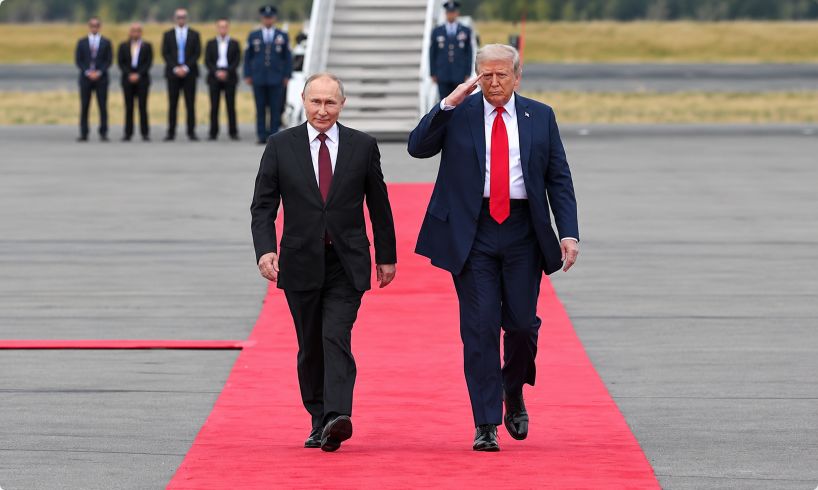
Vladimir Putin appears to be demonstrating once again that he intends to move on his own timetable, make decisions on his own terms and give Donald Trump very little reason to believe that the Russian leader is prepared to play by Washington’s expectations, with the latest twist in their controversial diesel deal raising uncomfortable questions about who is actually controlling the pace of this arrangement.
Trump presented the agreement as a potential win for American consumers, farmers and truckers, promising that Russia would immediately release substantial quantities of diesel to help ease fuel costs, but Putin has now revised the timetable for the first shipment, announcing that the tanker would leave in two to three days rather than on the previously announced date of October 22. The cargo itself is also considerably smaller than the initial volume Trump said would be released immediately.
And that is where the political optics become difficult for the American president.
Putin Changes the Timetable While Trump Defends the Deal
The first shipment is expected to carry 40,000 metric tons of diesel, representing approximately 13% of the initial 300,000 tons Trump said Russia would release immediately under the agreement. Putin has indicated that further shipments could follow, but the revised departure estimate means the arrangement is already unfolding differently from the original announcement.
For Putin, the distinction between announcing a deal and carrying it out matters because it leaves Moscow in control of the practical decisions surrounding its own exports. This includes when the first tanker departs and how the shipments proceed.
For Trump, meanwhile, the agreement was supposed to demonstrate that direct engagement with the Kremlin could produce tangible benefits for Americans. Trump caved to Putin, hoping to appeal to the voters struggling with fuel expenses. Yet the smaller initial cargo and the revised timetable have handed critics an opportunity to question whether the president has secured the sweeping results he promised.
The Russian leader will not publicly confirm or deny that Moscow is deliberately manipulating Washington. Nevertheless, the contrast between Trump’s initial awkward and boastful announcement and Putin’s subsequent timetable has created an awkward moment for the White House.
Trump Eases Pressure While Putin Keeps His Options Open
The controversy becomes even more significant when viewed alongside Washington’s wider approach to Russia.
After Trump announced the diesel arrangement, the US Treasury authorized certain transactions involving Russian diesel through April 7, 2027, temporarily easing restrictions on the trade. Trump also signed an October 16 executive order waiving sweeping Russia-related sanctions and tariffs shortly before the measures were due to take effect.
That sequence has intensified criticism from Ukraine and some American lawmakers, who argue that allowing additional Russian energy sales could generate revenue for Moscow while its war against Ukraine continues.
In a brutal statement, Ukraine’s presidential sanctions commissioner, Vladyslav Vlasiuk, dismissed the first shipment as a “rounding error for the market”. He also described the arrangement as “a sanctions loophole for the Kremlin.” A bipartisan group of US senators has urged Trump to reverse the diesel agreement, warning it could reward Moscow while offering limited relief to American consumers.
The question is whether Trump is receiving enough in return for the concessions his administration has made.
Who Is Really Setting the Terms?
Trump has portrayed his approach as a practical effort to lower prices and pursue results through direct negotiations, but Putin’s latest move illustrates the difficulty of dealing with a leader who retains control over his country’s exports and can announce changes whenever circumstances demand.
That is why the diesel deal has become more than a dispute over the departure date of a single tanker. It has turned into a test of whether Trump’s willingness to negotiate with Putin can produce the results he advertises, or whether Moscow can accept the advantages of renewed trade while retaining the freedom to proceed at its own pace.
Putin is not necessarily winning every part of this exchange, and the eventual impact of the shipments remains to be seen. But he has certainly complicated Trump’s effort to present the arrangement as an immediate success.
For a president who has repeatedly emphasized his ability to strike deals, that is an uncomfortable position to occupy.
Trump announced the promise. Putin revised the timetable. And now Washington must wait to see whether the promised deliveries materialize on the scale originally advertised.
The bigger question is whether Trump can turn his agreement with Putin into meaningful results without giving Moscow economic breathing room while its war against Ukraine continues.
For now, the Kremlin is still making its own decisions, and the White House is left explaining why the outcome looks rather different from the promise that started it all.

Comments (0)