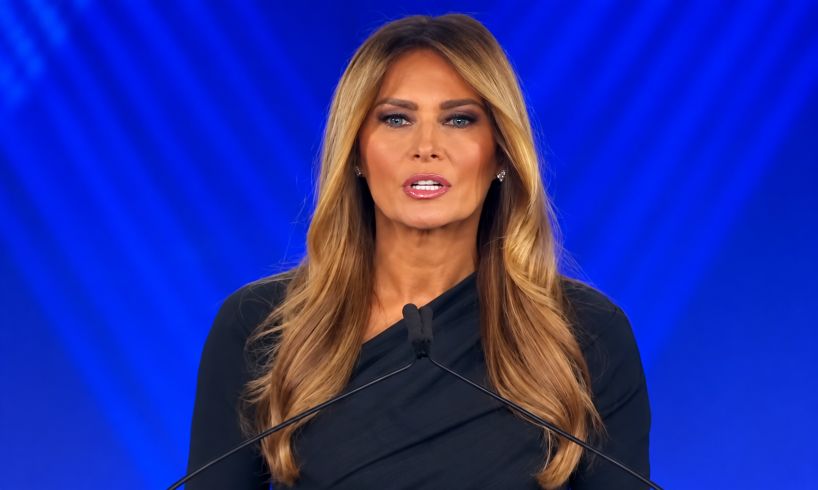
Melania Trump is facing a fresh storm of criticism after being accused of taking too much credit for a diplomatic breakthrough in Ukraine, with the controversy bringing back memories of the speech scandal that followed her onto the national stage in 2016, when passages from Michelle Obama’s convention address appeared almost word for word in Melania’s own speech.
This time, the dispute concerns a reported ceasefire agreement involving the Russian-occupied Ukrainian city of Oleshky, where humanitarian aid deliveries and evacuations of elderly residents are planned. The White House was quick to announce the agreement on October 23.
The former glamor model turned first lady presented herself as the heroine of the story. She pushed the narrative that her involvement was central to making the arrangement possible, but the Vatican’s account has raised questions about whether the Pope’s earlier diplomatic efforts received the recognition they deserved.
The Pope’s Role Raises Uncomfortable Questions
Melania described the situation in Oleshky as “dire” and “on the brink of disaster,” arguing that her intervention had been essential to securing humanitarian access.
“It was abundantly clear that without my intervention, the possibility to bring humanitarian aid into the city and to evacuate the elderly would be impossible,” she wrote, without mentioning Pope Leo XIV’s earlier involvement.
But the Vatican had already announced that the Pope contacted Russian President Vladimir Putin on October 16 to request a ceasefire that would allow aid and food into the city. The Kremlin acknowledged the Pope’s outreach, while Vatican Secretary of State Pietro Parolin subsequently identified the ceasefire initiative as the Pope’s.
That timeline has fuelled accusations that the First Lady’s announcement placed too much emphasis on her own role while overlooking the diplomatic groundwork that had already taken place.
There is, however, an important distinction: Ukrainian officials have also confirmed Melania’s involvement, and one Ukrainian official described the agreement as the result of a longer process involving both Melania and the Pope. The available reporting therefore does not establish that she invented the initiative or played no part in it.
The Michelle Obama Scandal Comes Back Into Focus
For Melania, the latest controversy carries an uncomfortable historical echo.
In July 2016, her Republican National Convention speech contained passages closely matching Michelle Obama’s 2008 Democratic convention address, including language about working hard, keeping one’s word, treating people with respect and passing those values to the next generation.
Melania had told NBC’s Matt Lauer that she wrote the speech “with as little help as possible,” a remark that attracted renewed scrutiny once the similarities emerged.
The Trump campaign initially pushed back against the plagiarism accusations, but the explanation changed when Trump Organization staff writer Meredith McIver acknowledged that she had included the overlapping language in the draft.
McIver explained that Melania had read passages from Michelle Obama’s speech to her as examples of messages she admired, and that McIver later incorporated some of the phrasing without checking the original speeches. She accepted responsibility and apologized for the mistake.
That history is why critics are now drawing comparisons between the two controversies: both involve questions about how Melania’s contributions were presented to the public and whether the people who helped make an outcome possible received sufficient recognition.
A Familiar Question Returns
The latest dispute does not prove that Melania deliberately misrepresented the ceasefire negotiations, just as the 2016 record shows that the speech’s overlapping passages were acknowledged by the staff writer who drafted them. But it has revived a familiar question about public credit, attribution and the way the White House presents its achievements.
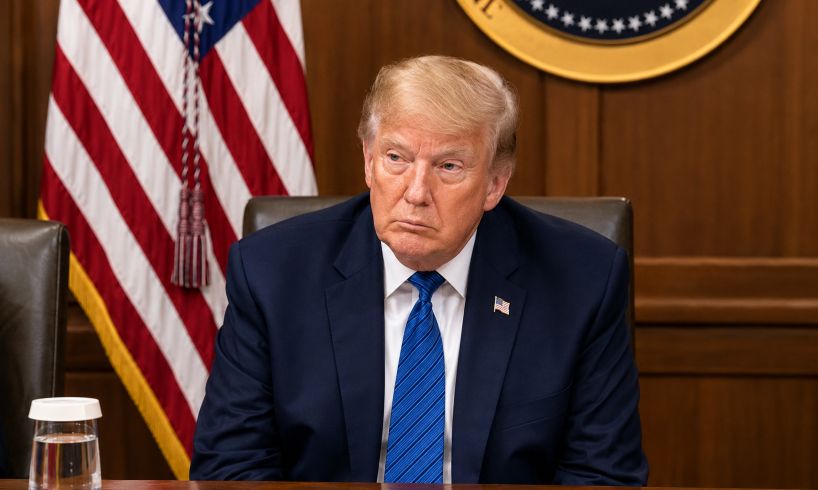
Donald Trump praised his wife’s role, saying she had contacted both sides and adding, “What she wants to do is save children.”
That praise may have been intended to celebrate a humanitarian effort, but the controversy now surrounding the announcement has made the Pope’s earlier intervention part of the story as well.
For Melania, the challenge is no longer simply explaining what she did. It is ensuring that the public account of the ceasefire reflects the contributions of everyone involved.
And with the memory of the Michelle Obama speech controversy still available for critics to revisit, the latest row has become a reminder that questions about credit can quickly become questions about credibility.

Comments (0)