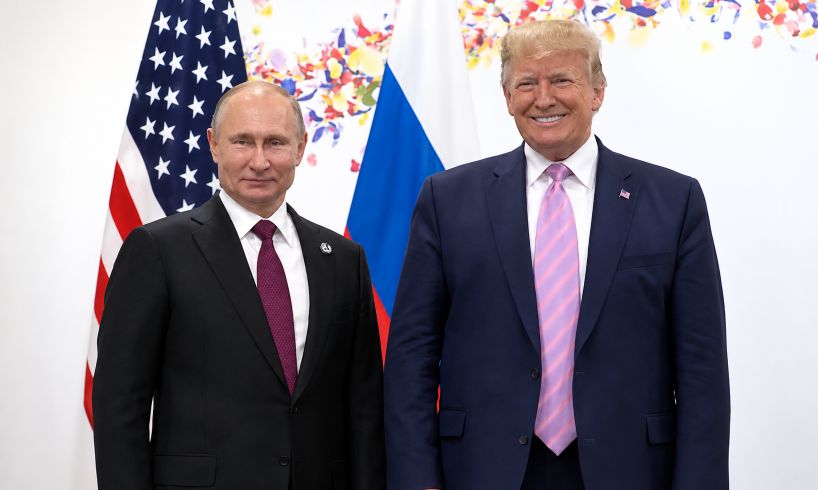
President Donald Trump has offered a revealing explanation for his latest decision to ease pressure on Russia, saying he does not want to risk pushing Vladimir Putin away from negotiations to end the war in Ukraine, even as the move raises fresh concerns about Washington’s approach to Moscow.
Trump signed an executive order on Friday that waived sanctions and tariffs on Russia just two days before they were due to take effect, reversing course on measures connected to legislation championed by the late Senator Lindsey Graham. The decision followed an earlier move allowing Russia to export diesel to the United States, as the administration faces mounting pressure to bring down fuel prices ahead of the November midterm elections.
In a Truth Social post on Sunday, Trump called it “a very simple” decision, arguing that he wanted to preserve the chances of peace rather than risk derailing negotiations with Russian leader Vladimir Putin.
“I am in the process of negotiating Peace in the war between Russia and Ukraine, and don’t want to do anything that will drive, foolishly, Russia away from the bargaining table,” Trump wrote.
The explanation puts the administration’s strategy into sharper focus: Trump appears willing to hold back measures that could anger Moscow if he believes doing so will keep diplomatic channels open. But the decision also risks deepening concerns in Kyiv that Ukraine’s position is being weakened while Russia receives economic relief.
Trump Says He Wants to Keep Putin at the Table
Trump also claimed that Russia has not been helping Iran in its war with the United States to the extent that it could, suggesting that he wants to preserve the situation rather than provoke Moscow into taking a more active role.
“Compared to what they could be doing, and I want to keep it that way, and will, unless stupid people get in the way,” he wrote.
His comments suggest that his calculations extend beyond Ukraine, with relations between Washington, Moscow and Tehran also shaping his decisions. The administration is balancing efforts to end the war in Ukraine against the wider consequences of its conflict with Iran and the pressure that rising energy costs are placing on American households and businesses.
Trump also took aim at Ukrainian President Volodymyr Zelenskyy over attacks on Russian energy facilities, arguing that strikes on the country’s diesel refineries were adding to pressure on global fuel markets.
He said farmers, ranchers and businesses were suffering, while Russia was still sending millions of barrels of diesel onto the world market at low prices. Trump did not present evidence in the post to establish the full extent to which Ukrainian attacks were responsible for American fuel costs.
With gasoline prices hovering around $4.30 per gallon, according to the figures cited in the original report, the economic pressure is politically significant for a president whose party faces voters in the midterms. Allowing additional Russian fuel exports could help ease supply concerns, but critics may question whether the economic benefit comes at the cost of giving Moscow greater room to maneuver.
Zelenskyy Warns of a Historic Mistake
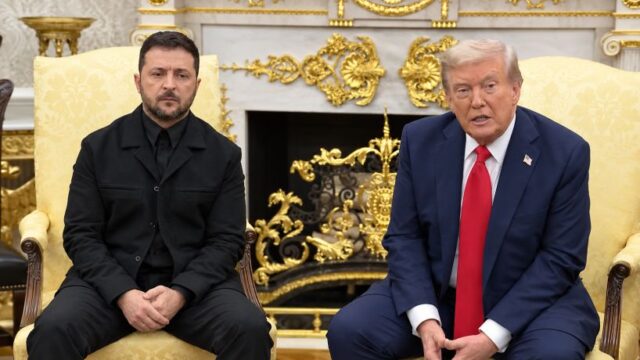
The decision has also sharpened the contrast between Trump’s approach and the concerns expressed by Zelenskyy, who warned in an interview with NBC’s Meet the Press that the United States formally siding with Russia would be a “historic mistake.”
The Ukrainian president acknowledged the difficult reality facing his country, particularly its reliance on American military assistance and intelligence cooperation as Russia continues its invasion.
“It’s all about losses… it’s about our people,” Zelenskyy said. “If United States will support Putin, it’s unbelievable… it’s historic mistake and big tragedy.”
He also made clear that Ukraine would struggle to prevail if Washington shifted its support toward Moscow.
“If the United States will take the side of Russia, of course we will not prevail,” Zelenskyy said.
The president’s remarks highlight the difficult position Kyiv finds itself in as it tries to maintain American support while continuing to defend itself against Russia. For the warring country the issue is not just whether negotiations move forward, but whether any deal leaves the country vulnerable to further attacks while Moscow benefits from easing economic pressure.
A Risky Balancing Act for Washington
Trump insists that his priority is ending the war and that he does not want to do anything that could derail negotiations. Yet easing sanctions and allowing Russian diesel exports also raise questions about how much economic leverage Washington is prepared to surrender in pursuit of a deal.
Trump’s supporters argue that keeping Putin engaged is necessary if diplomacy is going to make any progress. Critics, however, worry that offering concessions before a lasting peace deal is secured could convince Moscow that keeping up the pressure will eventually bring even more concessions.
For Zelenskyy, the stakes are high as Ukraine relies on American support while facing ongoing military strikes and security threats from Russia. For Trump, the new and complex challenge is to show that keeping Moscow engaged in negotiations can deliver real progress rather than giving Putin more time to wait out the pressure and pursue his objectives.
Whether the strategy brings the two sides closer to peace remains uncertain. What is clear is that Trump’s latest moves have renewed tensions over how the United States should balance diplomacy, economic interests and its commitment to Ukraine’s defense.

Comments (0)