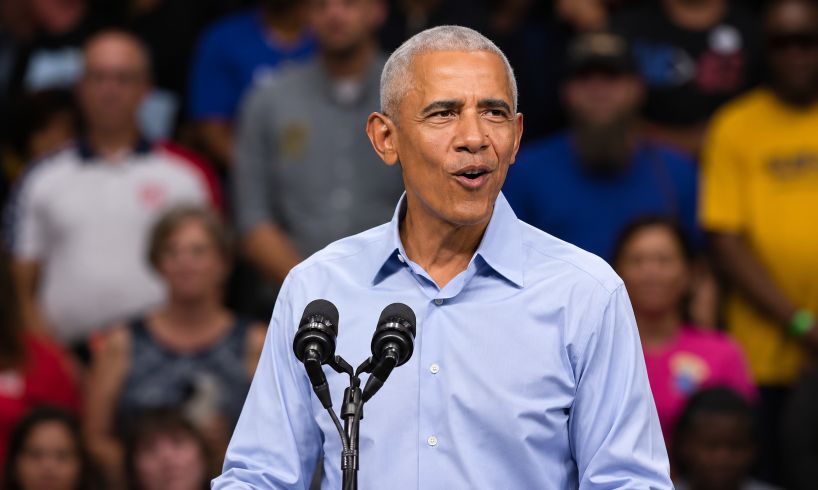
Barack Obama has delivered an unexpected reminder of his political influence after more than 30 former members of his administration and campaign operations won elected office in the 2026 midterm elections.
The development comes just weeks after Democrats captured control of both chambers of Congress, delivering a major setback to President Donald Trump’s Republican Party.
According to reporting by MS NOW, Obama’s former aides secured victories in congressional, gubernatorial, state, and local races.
The former president celebrated their achievements in an internal message to former staff members, reportedly describing himself as a proud parent watching the next generation succeed.
The comment reflects a particularly significant element of Obama’s political legacy.
Nearly a decade after leaving the White House, his influence is increasingly visible through politicians who began their careers inside his administration and campaign organization.
The Obama political network delivers measurable results.
The 2026 midterms were dominated by the question of whether voters would continue supporting Republican control of Washington.
Democrats won enough seats to take control of both the House of Representatives and Senate, with the new Congress scheduled to begin work in January. But beyond the overall results, an important pattern emerged.
More than 30 people who previously worked for Obama won elections. The group includes incoming members of Congress, governors, an attorney general, and officials at other levels of government.
Among the winners were Luke Bronin, Paige Gebhardt Cognetti and Katy Padilla Stout.
Their victories demonstrate how political experience gained during one presidency can translate into electoral influence years later.
Obama celebrates an unexpected political reunion.
The former president met several successful candidates during congressional first-year orientation.
One particularly revealing moment involved Padilla Stout, who reminded Obama that she had previously interned.
She had subsequently pursued her own political career and won a congressional seat in Texas.
Obama reportedly expressed surprise at how far her career had progressed. The interaction captured the unusual nature of the moment.
A former president met newly elected officials who had once worked in relatively junior positions within his political organization.
Their victories were not simply endorsements from a famous politician. They represented individual careers developed over many years.
The 2017 farewell message takes on new meaning.
When Obama left office in January 2017, he encouraged Americans dissatisfied with the political system to become actively involved in public life.
His farewell address emphasized civic participation, organizing, and the importance of ordinary citizens taking responsibility for democratic institutions.
Nearly ten years later, many former members of his political network have followed that path. Some worked in government.
Others moved into nonprofit organizations, campaigns, or local politics before seeking elected office.
Their victories illustrate the long-term consequences of political recruitment and professional development.
An administration’s influence does not necessarily end when its president leaves office.
It can continue through the people who acquired experience, contacts, and political ambitions while working there.
What this means for Donald Trump
The implications for Trump are institutional rather than personal. Democrats will enter January with majorities in both chambers of Congress.
That gives them greater ability to shape legislative priorities, oversee federal agencies, and investigate executive branch decisions.
The former Obama aides joining Congress will participate in that changed political environment. However, their previous employment does not mean that Obama will direct their decisions.
Newly elected officials represent their own constituents and have independent responsibilities. Nor does the presence of Obama alums prove that his influence was the decisive factor in every election victory.
Candidates succeeded under different local conditions, with distinct campaigns and voter coalitions.
The meaningful conclusion is that the Obama network has become one source of experienced Democratic political talent.
A different kind of presidential legacy
Former presidents are often remembered primarily through legislation, executive decisions, and international events.
But they can also shape politics through the people they recruit and train. Obama’s administration created opportunities for staff members who later pursued public office.
The current wave of election victories gives that legacy a tangible form. For Trump, the development arrives during a significant transition. His administration must prepare to work with a Congress controlled by the opposition party.
For Obama, the victories provide an opportunity to celebrate a new generation whose political careers developed partly through his organization.
And for American politics, the results remind us that political institutions are shaped not only by famous leaders but also by the less visible people who eventually succeed them.
Comments