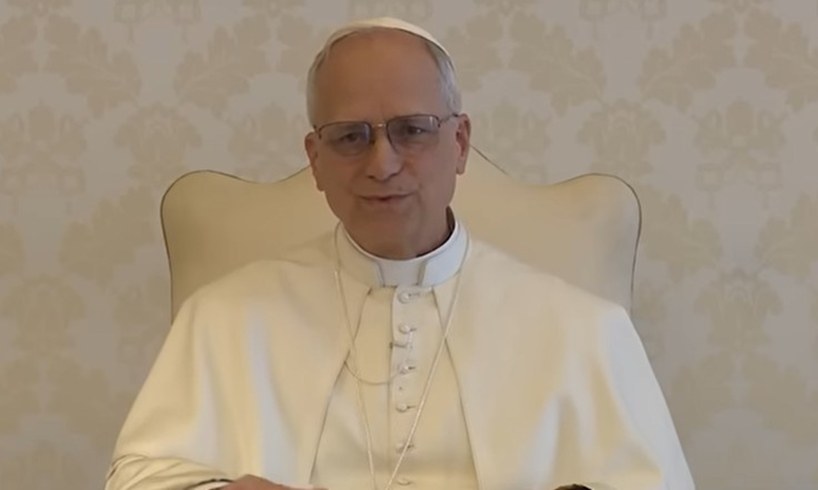
French devotees may be disappointed because they are not getting the miracle they prayed for. Pope Leo XIV is standing his ground on the projects the Catholic Church undertakes and where he will invest his time and energy.
The American Pope made a blunt decision on a massive cross and took the time to deliver a powerful lesson on why he shut down the construction and the endless discussion.
For more than five decades, the story of Dozulé, France, has been making headlines within certain Catholic circles. Between 1972 and 1978, Madeleine Aumont, a devout Catholic mother who died in 2016, claimed to have seen 49 apparitions of Jesus Christ near her home in Normandy.
She claimed Jesus ordered her — as he did with Noah, Solomon, and Moses — to build a significant, mighty structure in the small French town of about 2,200 people.
The religious mother claimed that Jesus expected her and the Catholic Church to construct the immense, illuminated cross — the “Glorious Cross of Dozulé” — which reached over 2,000 feet (738 meters) in height. It was meant to be visible from afar, serving as a symbol of universal redemption and a sign of the Lord’s Second Coming.
The locals have erected a similar and smaller cross in the town.
Pope Keeps It Real With The Verdict: “Not Supernatural in Origin”
Despite the specificity of Aumont’s claims—which compared the cross to Jerusalem and even located it at the “tree of Sin” to “take away all sin” — Pope Leo XIV has declared the alleged phenomenon to be “not supernatural in origin,” officially halting the project, and bringing an end to the devotion, speculation, and heightened media attention surrounding it.
The Pope used strong language in his brutal verdict, explaining why a monumental cross is unnecessary for faith and can cause confusion and distraction.
He stated: “Therefore, to compare the cross requested at Dozulé with the Cross of Jerusalem risks confusing the sign with the mystery, and risks giving the impression that what Christ has accomplished once and for all could be ‘reproduced’ or ‘renewed’ in a physical sense.”
He emphasized that authentic devotion is found in action, not architecture: “The Cross does not need 738 meters of steel or concrete to be recognized: it is raised every time a heart, moved by grace, opens itself to forgiveness… and even when, by kissing a small cross, believers entrust themselves to Christ.”
Warning Against Sacralizing the Sign
Pope Leo XIV further explained that these private revelations are not universally binding. He explicitly warned against “sacralization of the sign,” which leads people to consider a material object as a “guarantee of salvation.”
The man of God added: “Moreover, for a sign of faith to be authentic, it must lead people to Christ, not draw attention to itself. The Cross of Jerusalem is the ‘sacrament of the saving sacrifice,’ whereas a monumental cross such as that of Dozulé risks becoming ‘the symbol of an autonomous message,’ separated from the sacramental economy of the Church. No cross, no relic, and no private apparition can replace the means of grace established by Christ.”
The Pope cautioned that building another large cross risks confusing the Sign with the Mystery: As he put it, comparing it to the Cross of Jerusalem risks implying that what Christ accomplished once might need “physical renewal.”
The Cross Is Within: The Pope emphasized that the Cross is “raised every time a heart, moved by grace, opens itself to forgiveness.” People of faith do not need 738 meters of steel to find Christ; they just need compassion, love, and a steel faith.
Backing from Church Officials
The Pope’s decision received strong backing from high religious figures who had previously thoroughly investigated the phenomenon.
Reverend Jean Badré, who investigated the claims earlier on, stated: “In no case can the construction of a monumental cross undertaken in Dozulé by an association based in Paris be an authentic sign of the manifestation of the Spirit of God.”
He also criticized the “agitation, the collection of funds,” and the “fanatical propaganda” surrounding the message.
The Dicastery for the Doctrine of the Faith has also supported the Bishops of Bayeux-Lisieux in addressing the issues that have generated confusion for many in the Catholic faith.
The Final Word: Purifying Our Faith
Father Patrick Mary Briscoe, a Dominican friar based in Rome, Italy, applauded the pope’s announcement, saying that believers should understand his decision is not about suppressing faith; au contraire, it is about “purifying it.” The Church is concerned that the faithful may be distracted by sensationalism and mistake a physical sign for the spiritual mystery itself.
No Guarantee of Salvation
According to Father Briscoe’s interview with Fox News, the Vatican’s ruling strongly reminded people of faith that no private revelation, such as Aumont’s, is universally binding. He pointed out that the danger here is the “sacralization of the sign,” believing that a material object is a “guarantee of salvation.”
Briscoe shared that Pope Leo XIV surprised no one with the decision; he is true to his principles and prefers to focus on modern issues such as internet addiction and gambling rather than on giant constructions.
The father said the message is straightforward: “Pope Leo is maintaining the focus on Christ.” This approach encourages clarity and sincere devotion.