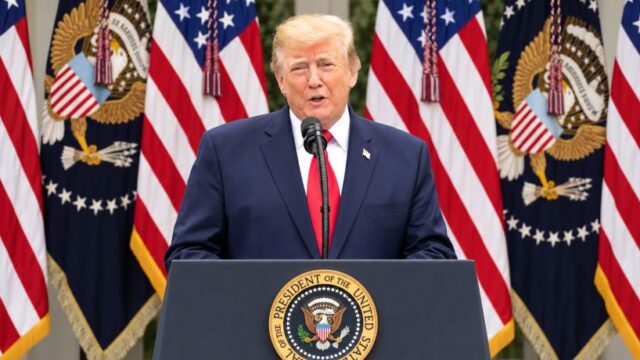
President Donald Trump is briefed on alarming intelligence as questions swirl around Mojtaba Khamenei and Iran’s fragile leadership during a rapidly escalating conflict.
For weeks, the narrative surrounding the conflict between the United States and Iran was one of a “prolonged quagmire.” What President Donald Trump initially signaled as a “quick fight” — a decisive strike to decapitate leadership and pave the way for the Iranian people to “decide their own fate and future” had rapidly devolved into a messy, high-stakes game of attrition.
But as of mid-March, the energy in the White House has shifted. The frustration of February has been replaced by a quiet, almost “delighted” confidence. The reason? Intelligence reports now suggest the new Iranian leadership is not just reeling, but effectively non-existent.
The “Quick Fight” That Wasn’t
When the first operations began in late February, the rhetoric from the Trump administration was similar to the approach used in Venezuela: act decisively, remove leadership, and let the regime fall. In various interviews and updates, Trump promised success, but he soon observed– as prior presidents had — that Iran is a resilient opponent. For over forty years, the Islamic Republic has used defensive strategies to outlast outside intervention.
By early March, the “short war” had become a “battle of the might.” The human and economic costs began to mount, and for a moment, Trump appeared to be struggling. He was facing a formidable “mosaic defense” that prioritized decentralization and asymmetric warfare. Lives were being lost, and the global economy was feeling the squeeze.
The Price of a Stalemate
As the conflict dragged on, the global economy is feeling the pressure. The effective closure of the Strait of Hormuz sent shockwaves through the markets. Oil prices surged, and in the United States, consumers were hit with a massive jolt at the pump. In multiple states, gas prices skyrocketed to record highs, complicating the inflation outlook and threatening to wipe out economic gains.
The Looming Threat of Retaliation
Beyond the economic fallout, the US homeland — and California specifically — is facing unprecedented threats as intelligence agencies warn of imminent Iranian retaliation. Governor Gavin Newsom and the LAPD were quick to address the situation after the FBI issued a high-level alert regarding a “surprise attack” involving kamikaze drones launched from unidentified vessels positioned off the California coast.
The report claimed Iran is targeting critical infrastructure and high-rise buildings.
Additionally, state officials have moved to a “shields up” posture following a surge in sophisticated Iranian cyberattacks aimed at the US healthcare and energy sectors.
Trump was being haunted by the specter of another “forever war” in the Middle East — the very thing he had campaigned against.
A Decapitated Regime: The Mojtaba Mystery
Trump’s confidence increased after the events of February 28, when Ayatollah Ali Khamenei was assassinated. His 56-year-old son, Mojtaba Khamenei, was named successor, but the White House received new intelligence: the new Supreme Leader is largely absent.
Reports from inside Tehran suggest that Mojtaba is currently in a coma at Sina University Hospital, unaware that he is even the leader of the country. A source in Tehran claimed, “He does not know of the ongoing war, the death of his family members… and of his own election as Supreme Leader.”
Separate, more graphic reports sent to exiled dissidents in London suggest Mojtaba is “disfigured,” with a source stating, “One or two of his legs have been cut off. His liver or stomach has also ruptured.”
This internal chaos is exactly why Trump has shifted from a stance of struggle to one of victory. He believes he is winning because the enemy has no one at the helm to give the orders.
The “Not-So-Supreme” Leader
The Trump administration is leaning heavily into this narrative of broken leadership. US Secretary of Defense Pete Hegseth recently told a press conference, “We know the new so-called, not-so-supreme leader is wounded and likely disfigured.”
This lack of leadership has left the Iranian military paralyzed. An Iranian official told The Telegraph: “No one knows anything about Mojtaba… He has no control over the war because he is not here.”
While regional commanders of the IRGC are reportedly under orders to fight on indefinitely, the lack of a central “obsessive” figure like Mojtaba — who former associates say is “obsessed with the end of days” — has given the US a strategic opening.
Trump’s Delighted Progress
President Trump’s newfound delight stems from the belief that the “Theocratic Crown” has not just slipped, but fallen into the dirt. To Trump, a leader in a vegetative state is a leader defeated. The administration is now moving forward with the belief that the “strategic degradation” of the regime is complete.
With the “Jaanbaz of Ramadan” (the wounded war veteran) hidden away in a sealed-off hospital wing, the path to a “temporary government” and eventual Iranian elections looks clearer to the White House than ever before. For Trump, the messy, complicated battle of the might has finally turned into the “quick victory” he promised — it just took a hospital bed to secure it.