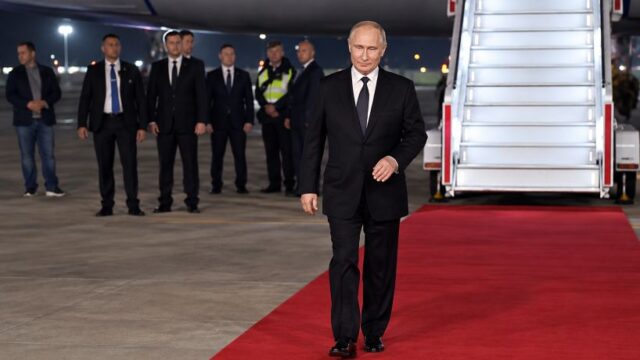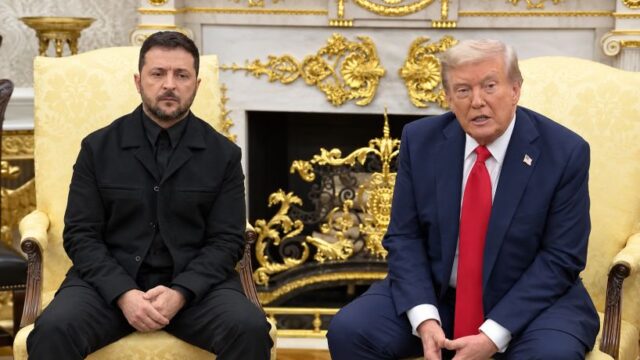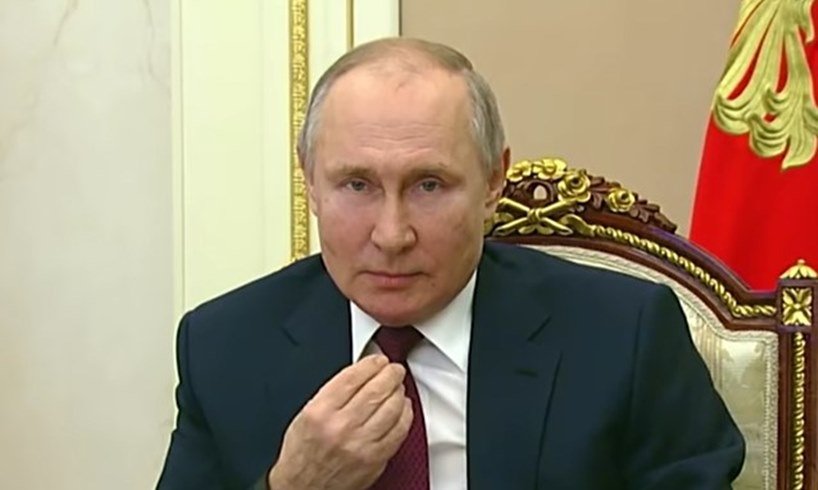
Russian President Vladimir Putin is trapped in his worst-case scenario, with no aid possible as his war machine suffers a catastrophic blow in combat casualties.
According to an official and explosive report from the General Staff of the Armed Forces of Ukraine, June was the deadliest month for Moscow’s forces since the full-scale invasion of Ukraine began in February 2022.
Ukrainian President Volodymyr Zelensky, in his address at the NATO summit, confirmed the horrific figures, more than ten thousand Russian soldiers have been wiped out or badly injured on the battlefield, as the relentless conflict continues to shred the Kremlin’s frontline battalion.
It has been estimated that more than 26,000 Russian soldiers were killed during the month, and 14,000 were injured in combat. The devastating milestone places severe operational pressure directly on the Russian president.
The sheer scale of the devastation underscores the staggering price Russia is still paying as its military command blindly throws mass numbers of troops after another into highly volatile combat zones with little regard for human life.
Leak reports from the front line paint a grim picture of survival rates, with some newly deployed Russian soldiers reportedly surviving only minutes after entering active combat.
As the sheer number of body bags arriving back in the federation mounts, signs of deep-seated internal cracks are beginning to ripple through the armed forces, evidenced by a recent incident in the Belgorod region where nine armed prisoners slated for the front line opted to desert their posts.
Ukraine Steps Up Deep-Strike Campaign With Long-Range Drone Blitz On Federation Oil Reserves As Strategic Initiative Shifts To Kyiv
Adding to the Russian nightmare carnage on the front lines, Ukraine has dramatically ramped up its deep-strike campaign well beyond the active battlefield, systematically targeting the industrial and energy centers that power the Russian military infrastructure.
Using sophisticated, long-range drone tech, Ukrainian forces successfully launched precision strikes on a key oil refinery in Ufa, an incredible 800 miles from the frontline, and a major weapons manufacturing plant in Penza.
This well-orchestrated economic war plan has touched off a big Russian fuel crisis, causing heavy, long-term structural damage that even the Kremlin has had to admit publicly.
Retired US Army officer Ben Hodges analyzed the profound and catastrophic transformation of the lengthy conflict and explained that strategic momentum has completely turned against Moscow due to the systematic dismantling of its logistics.
The former military commander told The Sun: “It’s clear to almost anybody that’s watching that the momentum has shifted in favour of Ukraine. The momentum has shifted because the Russian ground operations have been stopped and the Russian Navy is barely a factor anymore.”
He further warned that the continuous destruction of vital infrastructure will soon break the Kremlin’s capability to maintain its front-line deployments. Ben Hodges added: “Ukraine’s long-range missile strikes are wrecking Russia’s oil and gas infrastructure, and if they can continue this over the coming weeks, then it will be long-term damage. If they can sustain this through the end of the year, it will be very, very difficult for the Russians to support their own operations. I don’t think they’ll be able to sustain it at this sort of level deep into next year.”
Concurrently, former British intelligence officer Philip Ingram confirmed that the long-term investments made by Kyiv are finally paying off, putting unprecedented strain on the state’s energy resilience.
Philip Ingram stated to the news outlet: “It’s taken Ukraine a significant amount of time to develop the technology, build the manufacturing capacity and build the number of drones that they have. They’re starting to have an effect because Vladimir Putin himself has admitted the difficulties that Ukrainian drone attacks are having on fuel supplies across Russia.”
High Ranking State Insiders Issue Rare Public Denunciations Calling For Immediate Peace
The dire battlefield losses combined with the crippling economic threats from within have fractured the illusion of total domestic solidarity inside the Russian Federation, prompting unprecedented public pushback from the state’s elite.
In an astonishing display of defiance broadcast live on Kremlin-controlled state television, the chief of Russia’s largest state-owned financial institution broke ranks to plead for an immediate end to the ongoing hostilities.
This public crack in the regime’s united front signals growing panic among oligarchs and political power players who have come to realize the current trajectory is unsustainable.
Detailing the deep anxieties shared across the highest echelons of Russian society, the prominent state banker signaled that the desire to halt the war is entirely universal. German Gref stated on state television: “I think what’s worrying every one of us is one and the same thing. I don’t think there’s a single person who isn’t concerned about anything other than a rapid end of hostilities, that’s clear.”
Vladimir Putin has put himself in an unprecedented position. The leader has been forced to openly admit the growing damage and concede that the federation is facing major “problems,” as pressure mounts from within his own banking sector.
Ukrainian President Volodymyr Zelenskyy has reasserted the baseline requirements for resolving the conflict, promising an intensive 40-day campaign to secure a total negotiation.
Volodymyr Zelenskyy stated: “Peace is needed, and this is what the Russian leadership should realize. Russia must end its war.”
Russia might be ready to switch gear.