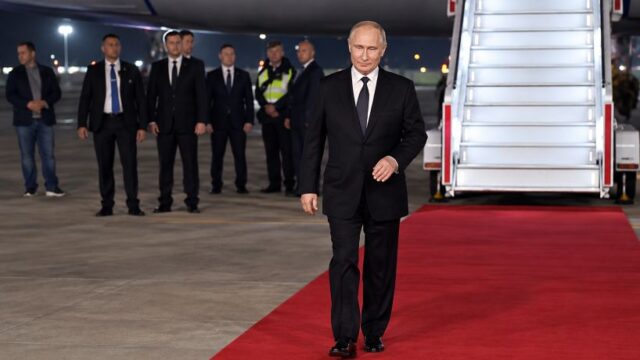
Russian leader Vladimir Putin faces embarrassment in the Kremlin after intelligence reports revealed that top military commanders repeatedly gave him false updates about battlefield progress in Ukraine.
The deception scandal has shown how high-ranking officers changed frontline maps, exaggerated enemy casualty numbers, and hid major military setbacks to protect their positions within the Russian high command.
Frontline Inventions Mask High Losses
Military analysts and intelligence officials said senior commanders created false victory reports to hide the true situation from the Kremlin leader.
By hiding growing equipment losses and infantry casualties, military leaders let false information shape Putin’s strategic life and death decisions about the war.
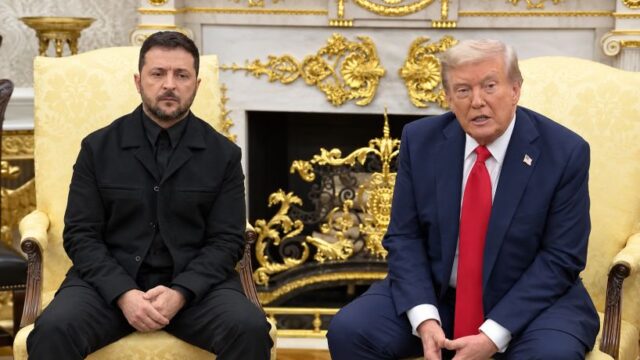
Highlighting this pattern of misrepresentation in Russia’s military leadership, Ukrainian President Volodymyr Zelenskyy said: “Putin publicly lied, claiming that Russian forces had already taken the city. So I went to Kupyansk myself to show the world that Putin is lying.”
Exposing the stark contrast between extremely polished official claims and the horrific ground reality, Ukrainian officials pointed out that Russian forces suffered immense losses while claiming nonexistent gains.
A senior defense analyst, illustrating the sheer scale of the deception, told the media: “The facts on the ground simply do not support this defeatist assessment.”
Deception Triggers High-Level Blame
The unraveling of the fake reports triggered immediate panic and finger-pointing among top Russian officials and state media figures, who struggled to reconcile official statements with undeniable battlefield facts.
Despite evidence showing systemic fabrication within the command chain to appease the leader, Kremlin spokespeople made the stunning move to divert blame away from its military leadership.
The lies must be blamed on the Western intelligence agencies and Ukrainian psychological operations, according to the Kremlin. Rejecting international criticism and defending the state narrative, Russian Foreign Ministry spokesperson Maria Zakharova claimed: “NATO and the EU declared a policy of zero tolerance toward terrorism, but now they themselves have become part of international terrorist activity.”
Attempting to shift focus away from domestic military failures, regional officials echoed claims that external forces were manipulating public perception.
Condemning foreign involvement and deflecting internal responsibility, Krasnodar region Governor Veniamin Kondratyev claimed: “What happened today was a deliberate attack by the Kyiv regime on the civilian population, which has no connection whatsoever to military infrastructure.”
Kremlin Power Dynamics Shaken
The scandal has severely weakened trust between the Russian autocrat and his inner circle of military leaders, raising urgent questions about how long top generals can hide battlefield failures.
As frontline realities continue to be deliberately excluded from the Kremlin’s information bubble, the exposure of these fabricated reports leaves leadership isolated and struggling to control its war narrative.
With international observers watching the internal fallout, the revelation confirms that ongoing dishonesty within the Russian command structure continues to hurt Moscow’s strategic ambitions.
This type of deception is not new. In fact, it reflects a long tradition of bureaucratic survival in Russia. In the past, autocratic regimes created a culture of fear in which lower-ranking officers preferred to fabricate victories rather than report bad news.
For example, during the early stages of the 1939 Winter War, commanders afraid of Joseph Stalin’s purges hid large troop losses, which led the Kremlin to launch failed attacks against Finland based on false reports.
Later, during the Soviet-Afghan War, military officials downplayed casualties and failures to protect themselves from Brezhnev and the Politburo.
Today, in the blooming Russian-Ukrainian war, Vladimir Putin’s intimidating and ruthless character and unforgiving comments have recreated this culture of alternative truths and narratives.
In this intimidating environment, questioning official narratives carries serious political and legal risks, making truth a dangerous topic in Moscow. Top generals know that reporting retreats or heavy losses can lead to career ruin, demotion, imprisonment, or other dire consequences.
As a result, systemic fraud or vranyo in Russian military terms, meaning the practice of telling obvious lies to satisfy leadership, becomes the safest option for commanders.
To avoid angering the leader, generals change frontline maps, fabricate enemy casualties, and turn major setbacks into paper victories.
This habit of hiding bad news keeps the Kremlin from seeing the real situation, leaves Russian decisions disconnected from battlefield realities, and therefore paints an illusion that the war is winnable.