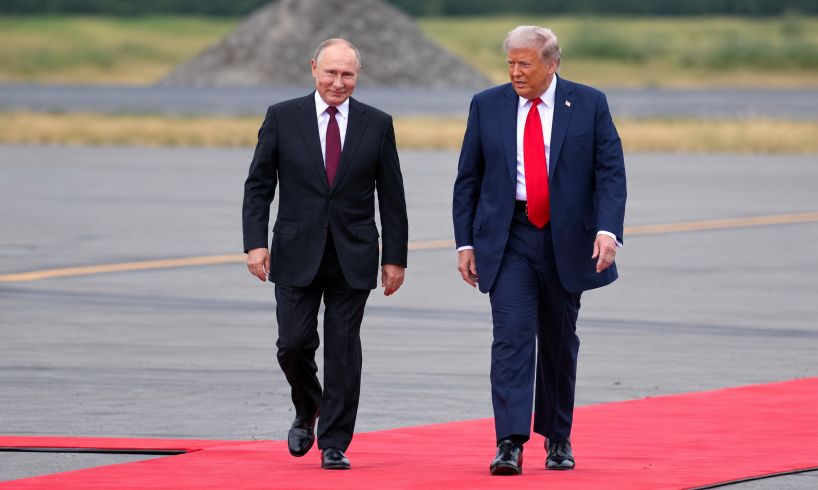
Congress has finally sent Donald Trump a Russia sanctions bill with some serious economic weapons attached to it. But the biggest question now is not whether lawmakers passed the legislation; it is whether the president will actually use the powers Congress has handed him.
Because a bill becoming law and the White House aggressively enforcing it are two very different things, and that distinction could determine whether Vladimir Putin faces meaningful additional pressure or simply another round of warnings and diplomatic maneuvering.
The House passed the Lindsey O. Graham Sanctioning Russia and Iran Act of 2026 by a 262–159 vote, after the Senate approved it 86–11 in August, sending the measure to Trump’s desk. The legislation targets Russian officials, financial institutions, energy interests and the so-called shadow fleet, while giving Trump authority to impose tariffs of up to 100 percent on major purchasers of Russian oil and gas.
That sounds enormous, but here is the catch: Trump still has to decide how aggressively to use those powers. And that is where the story becomes much more complicated.
Supporters of the bill are already describing it as a powerful tool against Moscow. Senator Katie Britt said the legislation would give Trump “the tools” to act and said Congress was giving him the ability “to hold Putin accountable for his aggression” and “drive him to the table.”
House Speaker Mike Johnson similarly described the legislation as putting “maximum pressure on … the Russian war machine,” including Putin.
But those are statements about what the law is intended to accomplish, not evidence that Putin will actually face the maximum pressure available under it.
The real test begins when Trump has to decide whether to deploy the legislation’s toughest provisions against the Russian leader. The bill gives the president substantial authority, including tariffs that could reach 100 percent against major buyers of Russian energy, meaning implementation could affect countries such as China and India and potentially complicate broader US diplomatic and economic relationships.
And Moscow is already warning Trump about the consequences. Kremlin spokesman Dmitry Peskov called the proposed measures “unfriendly actions” and bluntly warned that additional sanctions would make negotiations over Ukraine more difficult.
“We are, of course, monitoring the progress of this document. It falls under the category of unfriendly actions, and of course the imposition of any additional sanctions by the U.S. would certainly complicate efforts to find a peace settlement in Ukraine,” Peskov told reporters.
That puts Trump in a familiar dilemma: he has repeatedly pursued negotiations with Moscow while simultaneously warning Russia that continued fighting could bring additional economic pressure. The new law gives him another instrument, but it does not automatically tell him how aggressively to use it. No precedent shows how to successfully beat a veteran manipulator like Putin.
That is why the coming weeks may tell more than the congressional vote itself.
Will Trump impose the toughest sanctions immediately? Will he use the threat of tariffs as leverage in negotiations? Will waivers or exemptions limit the impact? Or will the administration take a more cautious approach while pursuing diplomacy?
Those questions matter because Congress has now made its move.
The legislation is real, the sanctions authority is real and the economic consequences could be substantial. But whether Putin actually feels the full force of the measure depends on what happens after the president signs it.
For now, the headline is that Congress passed the sanctions bill and Trump signed it on Friday.
The bigger story is whether Trump turns that legislation into real pressure on Putin — or whether it becomes another powerful threat that remains largely unused.

Comments (0)