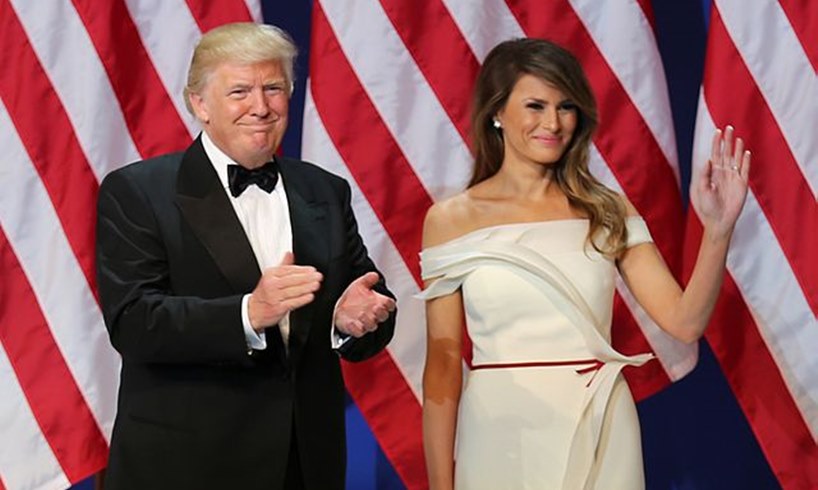
President Donald Trump has often said his diplomatic work deserves a Nobel Peace Prize, claiming he ended eight wars. However, this year the Norwegian Nobel Committee chose to honor someone whose career has focused more on holding people accountable for atrocities than on brokering peace deals.
South African jurist Navanethem “Navi” Pillay, 85, received the 2026 Nobel Peace Prize on October 9 for her decades of work defending human rights and strengthening international law.
A day earlier, the Swedish Academy awarded the Nobel Prize in Literature to Canadian poet and classical scholar Anne Carson, whose writing repeatedly revisits ancient stories of power, suffering and human motivation.
The two committees decide independently, but their choices together highlight how divided the world is over the rules meant to prevent major conflicts.
Navi Pillay’s victory comes as international law faces a crisis
Pillay’s selection recognized more than just her distinguished legal career.
Born under apartheid in South Africa, she became a lawyer, international judge and eventually the United Nations High Commissioner for Human Rights.
Her work at the Rwanda tribunal helped establish an important legal precedent: Sexual violence could be prosecuted as an act of genocide. She subsequently served as a judge at the International Criminal Court.
More recently, she chaired a UN commission investigating alleged violations of international law in the occupied Palestinian territories.
That work generated considerable controversy, particularly after the commission concluded that Israel had committed genocide in Gaza. Israel rejected the findings and accused the investigators of bias.
It is a familiar pattern in international politics. Governments praise international courts when the decisions go their way, but their enthusiasm can quickly disappear when their own conduct comes into question.
When announcing Pillay’s award, the Nobel Committee stressed that the global legal system is under increasing political pressure.
Their message was clear: peace cannot rely only on what powerful governments want.
Trump’s Nobel ambitions reveal a different view of peace
It’s hard to miss how different Trump’s approach is.
During remarks on October 7, the president again insisted that he had settled eight wars and suggested his achievements justified receiving the Peace Prize.
His administration has focused on diplomatic deals and trying to end conflicts, though independent observers question whether some of these situations were truly resolved.
Pillay’s award was not formally presented as a rejection of Trump’s candidacy.
Still, the timing points to two different ideas about how peace is achieved.
Trump regularly emphasizes negotiations, political leverage and agreements between national leaders.
Pillay’s career shows a longer process—investigating atrocities, establishing legal responsibility, and building institutions that can hold powerful people accountable.
These approaches do not have to be at odds with each other.
Negotiations can stop violence right away, while holding people accountable in court may help prevent it from happening again.
Problems come up when political deals mean ignoring crimes, or when courts do not have the power to enforce their decisions.
A UN vote exposes the growing international divide
Events at the United Nations this week showed more of the tensions around international cooperation.
On October 12, the General Assembly approved a declaration on pandemic prevention, preparedness and response by 153 votes to three.
The United States, Israel and Argentina opposed the measure, while New Zealand and Paraguay abstained.
The declaration was not binding, but the lack of agreement on how to stop future pandemics shows how divided international cooperation has become.
Elsewhere, Colombia continues to struggle with violence a decade after its landmark peace agreement with FARC rebels.
The agreement ended a major part of the country’s conflict, but other criminal and insurgent groups still threaten communities.
Both examples show the limits of international agreements.
Signing an agreement is one thing. Making it work over time is another.
Anne Carson’s Nobel offers a different kind of warning
Carson’s literary award adds a historical angle to this discussion.
Known for works including Autobiography of Red and her reinterpretations of ancient Greek literature, Carson frequently explores grief, desire, conflict and the consequences of human will.
Her writing connects today’s experiences with stories from thousands of years ago.
The point is not that ancient literature gives easy answers to today’s global problems.
Instead, it reminds us that struggles with authority, pride, and violence have always been part of human history.
Empires have fallen, governments have justified wars, and ordinary people have lived with the results of decisions made by those in power.
Carson’s writing keeps these experiences alive, challenging the comforting idea that modern society has left them behind.
The bigger message of the 2026 Nobels
Pillay and Carson work in very different fields, and neither prize should be seen as just a political statement.
But their awards come at a time when international institutions are under more scrutiny than usual.
Pillay’s career shows that lasting peace needs accountability, even when powerful governments push back.
Carson’s writing asks us to remember the human stories that last long after political leaders and their victories are gone.
Trump can continue making his case for the Nobel Peace Prize.
But this year’s awards raise a question that goes beyond any president or government:
What is peace worth if the agreements that create it cannot protect people, and the laws meant to keep it are ignored?

Comments (0)