
Barack Obama has delivered a sobering warning to Democratic donors as the party looks toward the November midterm elections. Obama cautioned that even though Democrats are beginning to compete in states that once appeared beyond their reach, the apparent momentum could disappear just as quickly as it arrived, leaving candidates and their financial backers facing a much tighter contest than they might have hoped.
This week the former president spoke at a Democratic Senatorial Campaign Committee fundraiser in Virginia. Obama acknowledged that the political map was shifting in ways he had not anticipated, particularly in states where Democrats are now seeing opportunities to challenge Republicans. But rather than allowing the encouraging numbers to turn into premature celebration, Obama urged donors to understand just how fragile those advantages could be.
“I don’t want anybody to think this is a sure thing. It’s not,” Obama warned, according to remarks reported by ABC News.
He then offered a blunt assessment of how quickly a promising polling position could turn into disappointment, saying, “We could end up, all these races that are showing we’ve got a two- or three-point lead or it’s a tossup, we could end up losing all of them by two points.”
His description of the political landscape was striking: the races were “on the razor’s edge.”
The Map Is Expanding — But So Is the Risk
Obama reportedly told donors that the Senate map now includes states such as Texas that he “would not have imagined being in play,” while also pointing to Kansas and Nebraska as unexpected areas of potential competition. The possibility that Democrats could seriously contest races in traditionally Republican territory is significant, but Obama’s warning made clear that being competitive is not the same as being on course to win.
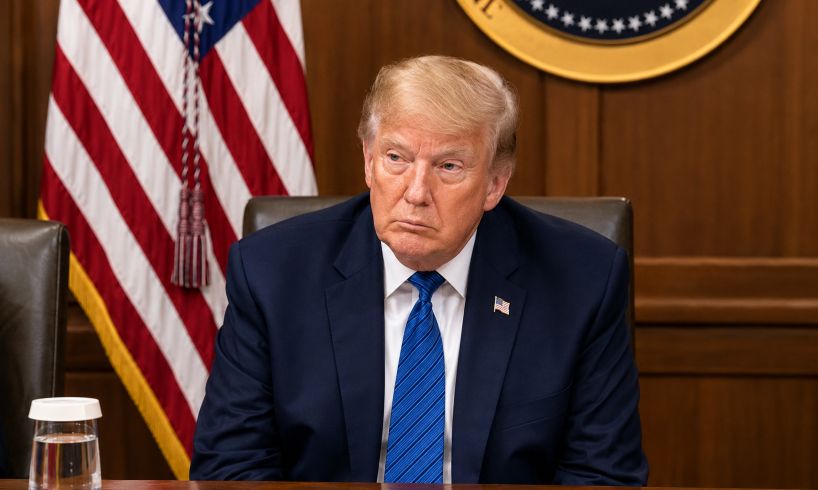
That distinction matters because close races need more than encouraging poll numbers to become actual victories. With Donald Trump making one appearance after another and Elon Musk injecting unlimited funds into the Republican Party the other side still needs money, strong organization, candidates who connect with voters, and enough support on Election Day to turn narrow leads into actual wins.
Obama has increasingly stepped into the midterm campaign, raising money, appearing in advertisements and recording endorsements for Democratic candidates across several states. According to ABC News, the Virginia fundraiser raised $3.6 million, bringing his total fundraising for party committees during the current cycle to $13.6 million.
Democrats are counting on his ability to attract donors and energize voters as they work to turn their opportunities into real gains in Congress.
Obama’s Message to Democrats: Do Not Get Complacent
Obama also defended the breadth of the Democratic coalition, joking that leading a party with such a wide range of ideological views could be “a pain in the butt.” He argued that candidates should be judged by whether they are addressing people’s concerns, rather than simply by how neatly they fit into a particular political label.
“Any place, politics starts with people feeling as if they are seen,” Obama said.
That observation offered a glimpse into the message he hopes Democrats will carry into the final weeks of campaigning: voters need to believe that politicians understand their lives and are responding to the issues affecting them.
The “razor’s edge” warning is the key point: Obama is not saying Democrats are guaranteed to win or that they have already turned things around. He is saying they have a real shot, but the race is still tight, and even a small lead of two or three points could disappear before Election Day.
With Election Day approaching, Democrats have reasons to be encouraged by the races now appearing competitive, but Obama’s message is that optimism alone will not be enough.
The political map may be changing, and states once considered out of reach may now be within striking distance, but the former president’s warning leaves little room for complacency: the races are close, the stakes are high, and the outcome remains uncertain.

Comments (0)