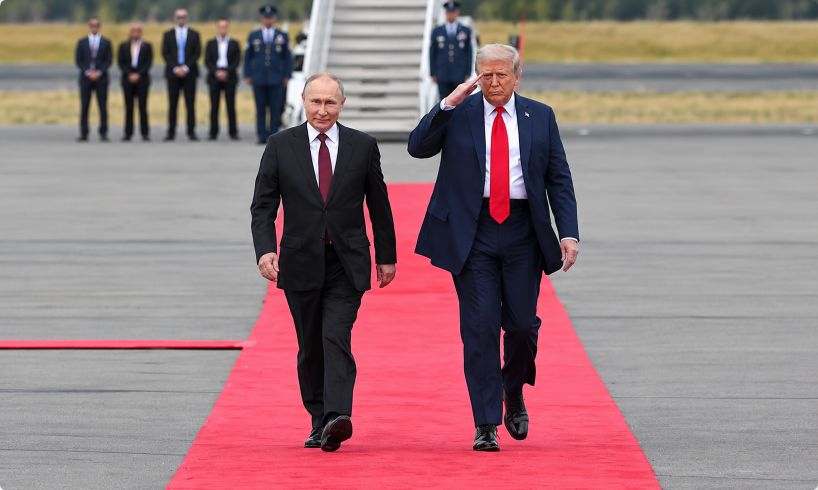
Three leaders, three very different messages, and one war that still shows little sign of slowing down — that is the striking picture emerging as Donald Trump, Vladimir Putin and Volodymyr Zelenskyy find themselves once again at the center of the international effort to end Russia’s war against Ukraine.
At the United Nations, Trump delivered perhaps his bluntest message yet to the Kremlin, telling Putin to “Settle the war” as he pressed for an end to the fighting. Trump has repeatedly said he wants the conflict brought to a close, and during his September 22 UN appearance he expressed confidence that a resolution could come sooner than many expect.
But while Trump was talking about ending the war, Zelenskyy was talking about preparing for what could come next.
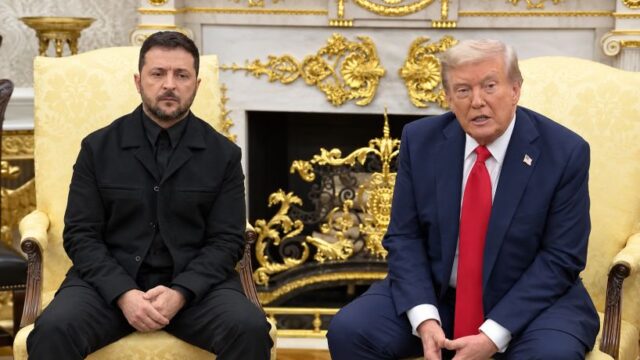
Following his meeting with Trump in New York, Zelenskyy described the discussions as “positive and productive” and said the two sides had discussed possible de-escalatory steps that could create a path toward diplomacy. Yet at almost the same time, the Ukrainian president issued a warning that sounded dramatically different from the language of imminent peace.
“There’s intelligence right now that Russia is preparing a new massive attack against Ukraine,” Zelenskyy said after meeting British Prime Minister Andy Burnham.
That contrast captures the extraordinary position Ukraine finds itself in: diplomatic conversations are taking place at the highest level while Ukrainian officials are simultaneously preparing for another potentially devastating wave of Russian attacks.
Zelenskyy has also attempted to put a concrete proposal on the table. He said Ukraine is prepared for an “energy ceasefire” under which Kyiv would stop striking Russian energy facilities if Moscow stopped attacking Ukraine’s power and other critical infrastructure.
“We are ready for energy ceasefire,” Zelenskyy said. “If they don’t want us to attack their diesel and refineries, and etc, we are ready – if they will not attack our energy system, our electricity, heating system, water supplies.”
That proposal is particularly significant because both sides have increasingly targeted energy infrastructure, while winter is approaching and Ukraine remains heavily dependent on functioning electricity and heating systems.
Trump, meanwhile, has focused attention on the economic consequences of the Ukrainian strikes against Russian oil infrastructure. Before meeting Zelenskyy, the president acknowledged that the attacks were damaging Russia but also pointed to their effect on fuel markets.
“It is a serious hit on the Russians. It’s also a serious hit on the price of diesel,” Trump said.
That is another important difference in the three-way picture. Trump is emphasizing the need to end the war and is also looking at the broader consequences of the fighting, including energy prices. Zelenskyy is trying to turn that concern into a reciprocal arrangement that would protect Ukraine’s energy system while offering Russia an incentive to stop its own attacks.
And then there is Putin.
The central problem for all of these diplomatic efforts is that Russia and Ukraine continue to attack one another even while ceasefire proposals are being discussed. The Institute for the Study of War reported that Russia had previously rejected proposals for a mutual energy-strikes moratorium, while both countries continued long-range attacks against energy infrastructure.
That makes Trump’s short message — “Settle the war” — much more complicated in practice than it sounds.
Zelenskyy is also pushing beyond the immediate energy proposal. He has told Trump that Chinese President Xi Jinping could have a role in negotiations because of what Zelenskyy describes as Beijing’s influence over Putin. He has also said he remains willing to participate in a trilateral meeting involving Trump and Putin.
At the same time, Ukraine is preparing for the possibility that diplomacy does not move quickly enough.
One of Zelenskyy’s biggest concerns is air defense. During his discussions with Trump, he asked for additional Patriot missiles as Ukraine prepares for another winter in which Russian attacks could again target electricity, heating and other essential infrastructure. Zelenskyy said Trump had not yet agreed to the request, although discussions were continuing.
That leaves the three leaders speaking from three very different positions.
Trump is calling for the war to end.
Zelenskyy is calling for diplomacy while warning that Russia could be preparing another massive attack and asking for the defenses needed to survive it.
And Russia continues to fight while negotiations and ceasefire proposals remain unresolved.
The most striking part may be that all three messages are now colliding at exactly the same moment. Trump wants an end to the war. Zelenskyy says Ukraine is prepared to take a step toward de-escalation but insists it must be reciprocal. And despite those diplomatic efforts, Kyiv says its intelligence indicates another major Russian attack could be coming.
For Ukraine, that means there is no luxury of waiting for diplomacy to succeed before preparing for the possibility that it fails.
The coming weeks could therefore become a critical test of whether the words being exchanged in New York can actually produce something different on the battlefield. Trump has made his message clear: “Settle the war.” Zelenskyy has answered with an offer: “We are ready for energy ceasefire.” But until Moscow agrees to meaningful reciprocal steps, the distance between those diplomatic words and the reality facing Ukraine remains enormous.

Comments (0)